Austin police, state troopers clash with anti‑ICE demonstrators; bikes used to clear blocked intersection, multiple detained
An “End ICE Terror” protest in downtown Austin Saturday night prompted confrontations with Austin police and Texas state troopers; officers deployed pepper munitions and bicycle units to clear a blocked intersection, resulting in multiple detentions.
Key takeaways
- What: An anti‑ICE rally, “End ICE Terror,” responded to the fatal shooting of Renee Nicole Good by an ICE officer, drawing dozens downtown. (Sources: CBS Austin, KUT, Fox7 Austin)
- Where/When: Action began ~6:30 p.m. near the J.J. Pickle Federal Building (300 E. 8th St.), moved through downtown and later blocked South Congress & East 6th. (Sources: CBS Austin, News4SanAntonio, Fox San Antonio)
- Tactics: Officers on bikes charged to clear the roadway after ~10 minutes; pepper munitions described as “pepper balls” were also fired. (Sources: CBS Austin, News4SanAntonio, KUT)
- Arrests: Organizers reported at least seven arrests; APD confirmed at least five. Agency responsibility for specific arrests remains unclear. (Sources: CBS Austin, KUT)
What happened
Protesters gathered in downtown Austin early Saturday evening. The action began near the J.J. Pickle Federal Building (300 E. 8th St.) at about 6:30 p.m., a site associated with ICE operations. Organizers, including groups such as Dare to Struggle Austin, called the event an anti‑ICE action and demanded justice for Renee Nicole Good, who was shot earlier this week by an ICE officer in Minneapolis. (Sources: CBS Austin, KUT, Fox7 Austin)
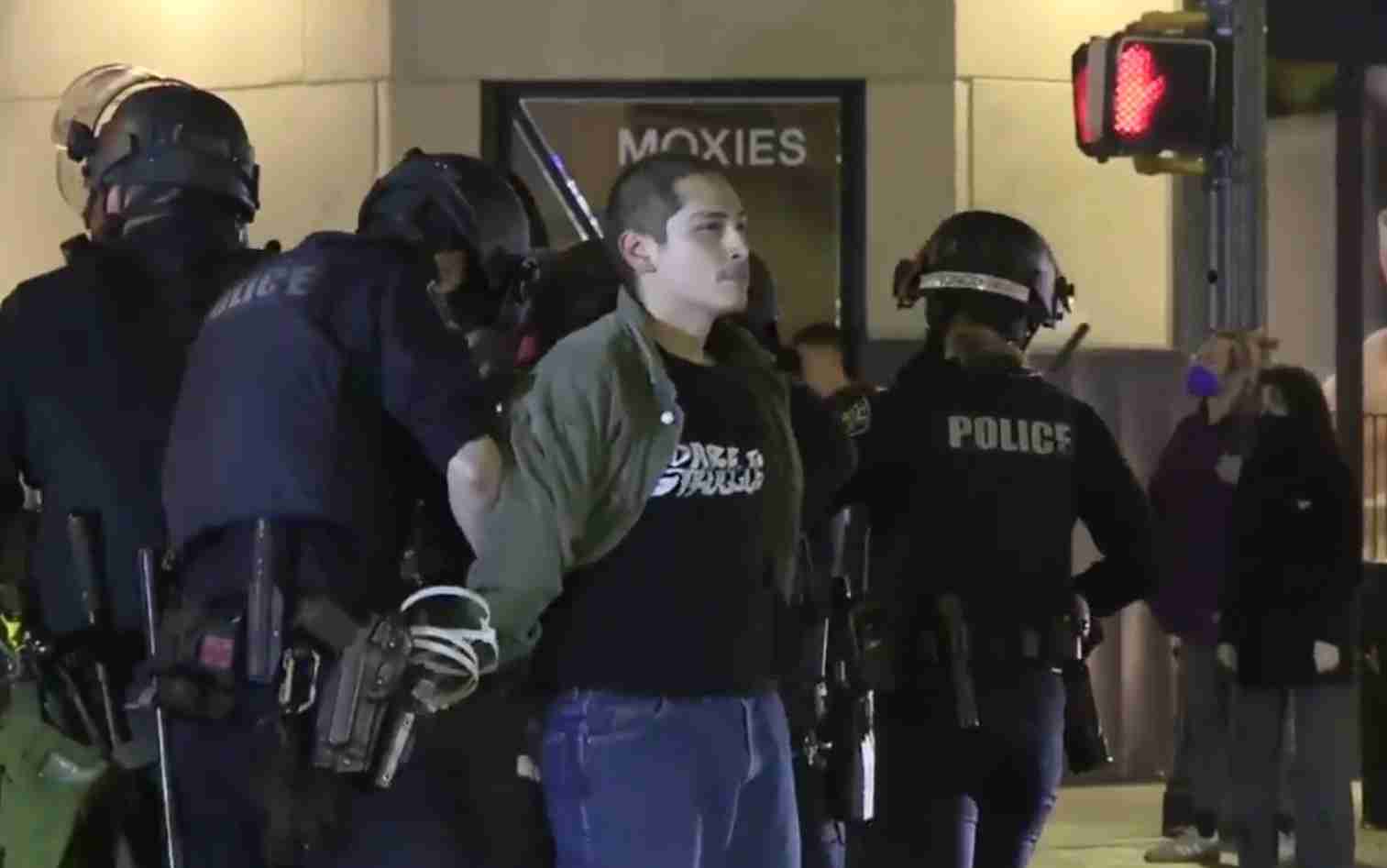
The crowd marched through downtown, repeatedly returning to the federal building. Later, marchers moved to Congress Avenue and East 6th Street and blocked the busy intersection. After about 10 minutes of traffic obstruction, police on bicycles moved in and charged the crowd to clear the roadway. Multiple people were detained at or near the intersection, according to local TV reports. (Sources: CBS Austin, News4SanAntonio, Fox San Antonio)
Escalation and use of force
Witnesses and protesters reported that Texas Department of Public Safety (DPS) officers earlier in the evening fired multiple rounds described as pepper balls or pepper spray pellets into the crowd outside the federal building. APD later told KUT that pepper balls had been deployed, though it did not immediately clarify which agency fired specific rounds. Protesters and organizers called the munitions and bike charges aggressive and disproportionate. (Sources: CBS Austin, News4SanAntonio, Fox San Antonio, KUT)
“Organizers and demonstrators said bike units charged through crowds and officers used pepper munitions on people who were not violent,” organizers said, calling for accountability. (Source: CBS Austin)
Arrests, jail watch and demands
Organizers said at least seven people were arrested; APD confirmed at least five arrests but did not specify which agency made each arrest. Following detentions, activists staged a jail watch outside the Travis County Jail from about 9 p.m. into Sunday as people awaited release. (Sources: CBS Austin, KUT)
At a Sunday press conference, organizers demanded the release of arrested protesters and called for murder charges against ICE officer Jonathan Ross and other agents involved in Renee Good’s death. They also urged charges for officers they accuse of using excessive force during the Austin protest and called for an end to ICE operations in the city. (Source: CBS Austin)
Statements from officials and elected leaders
Gov. Greg Abbott amplified video of the confrontations and wrote on social media, “Texas is not Minnesota,” saying DPS would not tolerate defiant protesters and that law enforcement have the right to defend themselves when threatened. He framed the actions as protecting public safety and backing “the men and women in uniform.” (Sources: CBS Austin, Fox San Antonio)
DPS spokesperson Lt. Chris Olivarez said the agency supports peaceful assembly but will not tolerate “violence, threats to the public or law enforcement, obstruction of roadways, and damage to property.” The statement was posted on X. (Source: CBS Austin)
Context: why this matters nationally
The Austin anti‑ICE protest is one of several demonstrations nationwide responding to the death of Renee Nicole Good. The national debate centers on protest tactics, street safety, and the role of federal immigration enforcement in local communities. Officials citing blocked roadways and threats to officers defend forceful dispersals, while civil liberties advocates warn such tactics can chill lawful protest and escalate tensions. (Sources: CBS Austin, KUT, Fox7 Austin)
Implications for the United States
Public safety and protest policy
Use of pepper balls and bicycle charges in Austin raises national questions about how law enforcement balances traffic flow, officer safety and the public’s right to assemble. Law enforcement agencies nationwide may look to Texas’ response as a model for handling demonstrations that block roadways. (Sources: CBS Austin, News4SanAntonio)
Legal and civil‑liberties concerns
Divergent reports about arrest counts and which agency deployed pepper munitions underscore the need for clear public accounts and review. Civil‑rights groups and local advocates may press for independent investigations when crowd‑control munitions are used or when protesters allege excessive force. (Sources: KUT, CBS Austin)
Political consequences
Governor Abbott’s public backing of law‑and‑order tactics ties local policing to national partisan debates about protest tolerance and state intervention; his remark “Texas is not Minnesota” may influence other governors weighing state deployments to control demonstrations. (Source: CBS Austin)
Community relations and local enforcement of federal policy
The clash highlights friction where federal immigration enforcement intersects with local communities. Calls to remove ICE from Austin and demands for criminal charges in the Renee Good case may spur further demonstrations and potentially prompt either more aggressive policing or renewed community‑law enforcement dialogue. (Sources: CBS Austin, Fox7 Austin)
Practical effects for bystanders and organizers
Organizers nationwide may weigh the tactic of blocking roads against the risk of detention and use of crowd-control munitions. Residents and businesses in cities hosting demonstrations should expect possible traffic disruptions and law enforcement responses aimed at keeping roadways open. (Sources: News4SanAntonio, CBS Austin)
Sources and reporting
This article draws on local reporting and law‑enforcement statements: CBS Austin; CBS Austin (follow-up); News4SanAntonio; Fox San Antonio; KUT (Austin NPR); Fox7 Austin.
Reporting note: Officials provided statements via social media and agency spokespeople; discrepancies remain in arrest counts and which agency deployed pepper munitions. Further official accounts and body‑camera footage, when released, will be key to clarifying the sequence and responsibility for force used during the downtown Austin events. (Sources: CBS Austin, KUT)
Additional coverage on this story and related demonstrations will appear as officials and organizers provide more detail.