Blue Jays stun Dodgers in World Series Game 1 — Addison Barger’s pinch‑hit grand slam makes history; Shohei Ohtani hits first World Series homer
Toronto’s Blue Jays erupted for an 11-4 Game 1 win over the defending Los Angeles Dodgers at Rogers Centre, powered by a historic pinch‑hit grand slam from Addison Barger and a milestone homer by Shohei Ohtani.
Key takeaways
- Final score: Blue Jays 11, Dodgers 4.
- Historic play: Addison Barger’s pinch‑hit grand slam — the first pinch‑hit grand slam in World Series history — capped a nine‑run sixth; highlights.
- Shohei Ohtani: hit his first World Series home run (two‑run shot in the seventh).
- Attendance: 44,353 fans at Rogers Centre.
- Series: Game 2 is Saturday night at Rogers Centre; Toronto leads the series 1‑0.
Historic sixth‑inning eruption
Turning point: Toronto trailed 2‑0 early before Daulton Varsho tied the game with a two‑run homer in the fourth. The game flipped in the sixth when the Blue Jays loaded the bases with none out, forcing Dodgers starter Blake Snell from the game and exposing the Los Angeles bullpen to pressure (ESPN recap, MLB.com recap).
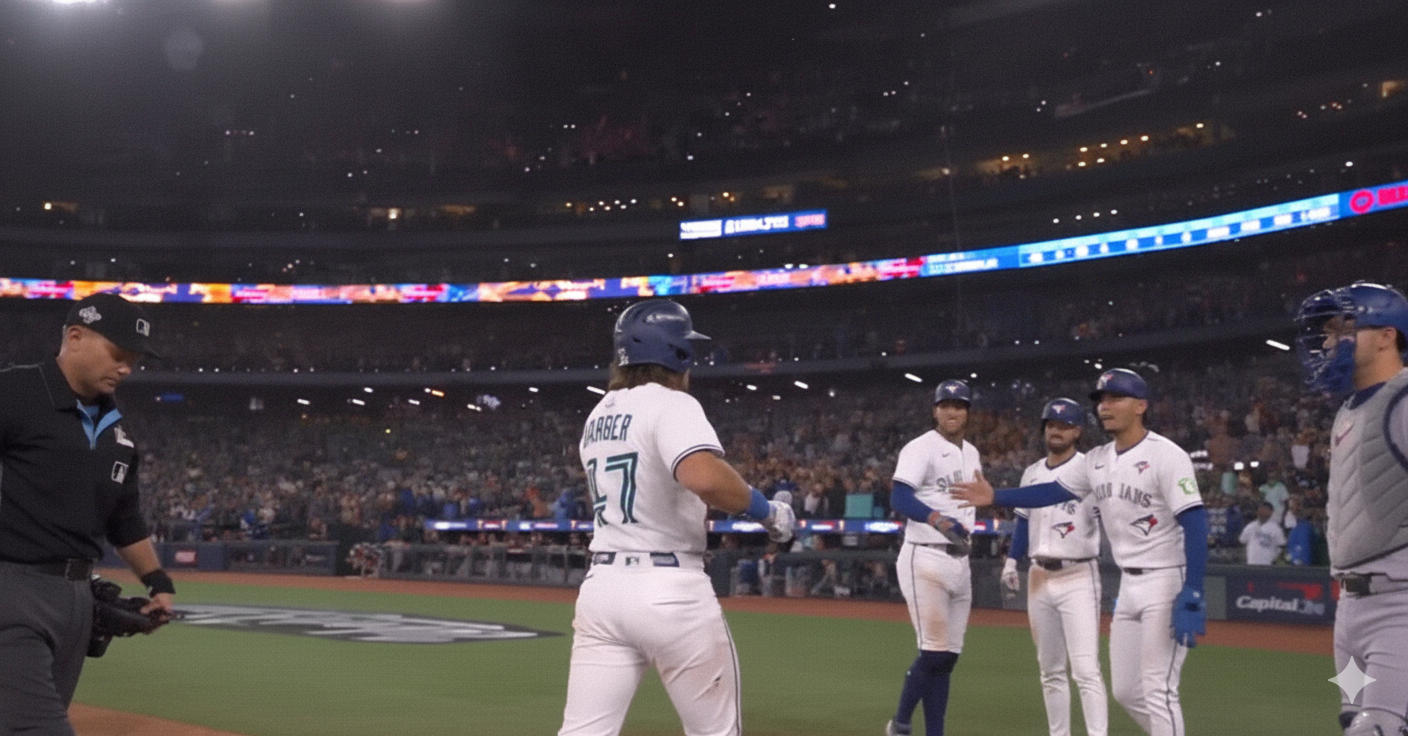
Addison Barger, making his World Series debut, came off the bench and crushed a breaking ball to deep right‑center for a grand slam — the first pinch‑hit grand slam in World Series history — transforming a close game into a rout and igniting the Rogers Centre crowd (MLB.com, video highlights).
That sixth inning grew larger: Alejandro Kirk had an RBI single to give Toronto its first lead, then later homered twice (including a two‑run shot in the sixth and another in the eighth), helping push the score to 11‑2 before a Dodger rally and Ohtani’s seventh‑inning shot made it 11‑4 (highlights, MLB.com).
Pitching, matchups and bullpen questions
Blue Jays starter Trey Yesavage gave Toronto four innings with five strikeouts, providing enough length early for the offense to attack the Dodgers’ pitching staff (video, MLB.com).
The Dodgers entered the Series with a dominant rotation and an approximately $320 million roster; their postseason starters had combined for a 1.40 ERA in the lead‑up, making them favorites. Friday’s result exposed vulnerabilities: long counts against Snell and rapid damage from the bullpen after his exit (MLB.com, ESPN).
Investigative takeaway: Toronto forced high‑leverage matchups, disrupted Los Angeles’ plan to lean on expensive middle‑inning arms, and produced clutch swings when relievers were on the ropes — the nine‑run sixth turned a pitching duel into a stress test of LA’s relief depth.
Ohtani’s milestone amid defeat
Shohei Ohtani launched his first career World Series home run in the seventh — a two‑run shot off Braydon Fisher — a personal milestone that arrived too late to change the outcome (ESPN recap).
The moment carried extra heat because Ohtani signed with the Dodgers in December 2023 after Toronto and other teams pursued him. Rogers Centre fans chanted “We don’t need you!” during a later at‑bat, tying on‑field events to off‑field roster decisions and fan sentiment (LA Times column, ESPN).
Historical and statistical context
Toronto’s Game 1 win is the franchise’s first World Series victory since Joe Carter’s walk‑off in 1993 and marked Canada’s first Fall Classic game since the early 1990s, increasing national attention and pressure on the Blue Jays (MLB.com, historical footage).
Series advantage: Historically, teams that win Game 1 of a best‑of‑seven go on to win the series about 64.8% of the time; that advantage is stronger (≈67.6%) when Game 1 is won at home in a 2‑3‑2 format — making Friday’s result significant beyond a single game (MLB.com).
Nationwide audience and financial stakes
A high‑scoring World Series game with historic firsts draws national attention. For U.S. broadcasters and advertisers, marquee names like Ohtani and a dramatic offensive display tend to lift viewership and sponsorship value, benefiting networks and the sport’s profile (ESPN, MLB.com).
Implications for United States
Economic impact: Big innings and star players raise TV ratings and ad revenue. A Game 1 upset over a high‑payroll Dodgers club will likely boost viewership and cross‑border merchandise sales, especially around star names like Ohtani (MLB.com, ESPN).
Political and civic consequences: Extended international series spotlight cross‑border coordination for public safety, media rights and civic services, and can influence local debates about stadium investment and emergency planning (MLB.com).
Social effects: U.S. fans will debate roster construction and accountability for postseason outcomes. The chant directed at Ohtani exemplifies evolving player‑fan interactions shaped by free agency and social media, fueling national discussions about team loyalty and big contracts (LA Times, ESPN).
Cultural relevance: The World Series remains a national moment. Toronto’s win and Barger’s historic slam will feed storylines about small‑market vs. big‑market narratives, youth inspiration, and baseball’s global reach through stars like Ohtani (MLB.com).
Practical applications for residents: Expect TV schedule shifts, sports‑bar promotions and active debate on morning shows. Bettors and fantasy players should note Game 1 impacts lines and projections for Game 2 and the remainder of the series (ESPN).
Political‑leaning audience note: For a moderate conservative readership, the upset reinforces themes of planning, depth and execution over spending alone — Toronto’s win suggests strategy and timely performance can outmatch a higher payroll (MLB.com).
Game 2 coverage and what to watch
What to watch: Game 2 at Rogers Centre will test whether Toronto can sustain offensive pressure and whether the Dodgers can repair bullpen issues. Look for Los Angeles adjustments, Toronto’s pitching management, and how Ohtani and the Dodgers reset after a lopsided opener (ESPN recap).
Source notes and attributions
- Game recap and story detail: MLB.com, “Blue Jays win World Series Game 1”
- Game recap and play‑by‑play: ESPN recap
- Video highlights and fan reactions: YouTube highlights and historical footage: YouTube historical footage
- Commentary on fan reaction to Ohtani and LA perspective: Los Angeles Times column