Quad God’s Night to Forget: Ilia Malinin Falls to Eighth After Free Skate Struggles at 2026 Winter Olympics
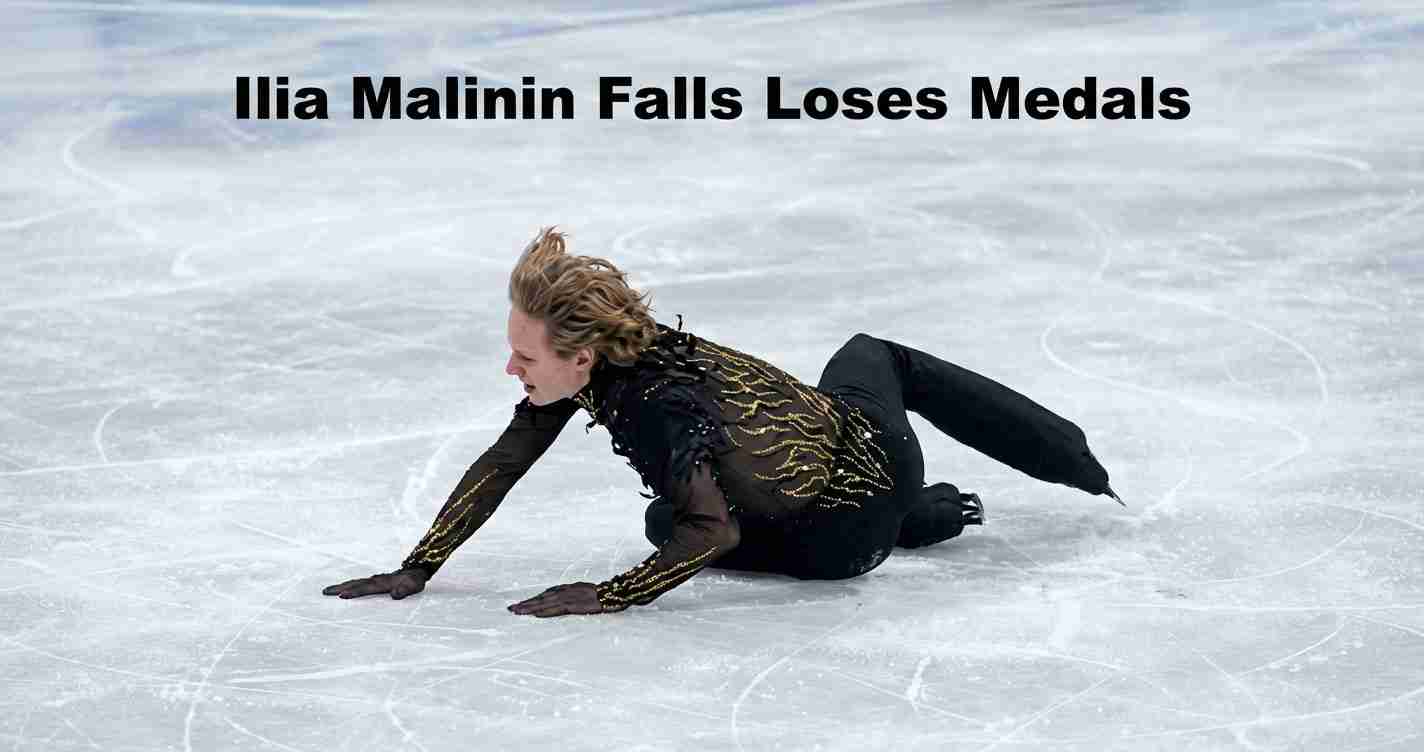
Ilia Malinin, the “Quad God,” entered the free skate leading after the short program but suffered under-rotations, downgrades and two falls in the free skate, scoring 156.33 and finishing eighth overall with 264.49 at the 2026 Olympics.
Key takeaways
- Short program lead: Malinin led with 108.16 in the short program but a troubled free skate produced a 156.33 free and 264.49 total — sources: CBS Sports live updates and the ISU bio.
- Podium: Mikhail Shaidorov (KAZ) won gold (291.58), Yuma Kagiyama (JPN) silver and Shun Sato (JPN) bronze; Shaidorov posted a personal-best free of 198.94 (CBS Sports live updates).
- Errors cost dearly: Multiple downgrades, under-rotations and falls — including on a quad Lutz attempt — erased Malinin’s short-program advantage and dropped him to eighth (CBS Sports live updates).
- Context: Malinin holds a personal-best total of 333.81 and a world-record free skate of 238.24 (Dec. 2025); he is also the first to land a quadruple Axel in competition (ISU bio).
Main content
What happened on the ice
Opening and unraveling: Malinin began his free skate by landing the signature quad flip cleanly, but the program unraveled after that. Judges marked several jumps as under-rotated or downgraded; he also fell twice, including on a quad Lutz attempt. Where he often strings multiple quads and clears the 200+ mark in a free skate, this night produced a 156.33 free-skate score — well below his world-record free of 238.24 from December 2025 (CBS Sports live updates; ISU bio).
“Judges marked several jumps as under-rotated or downgraded, and Malinin fell twice, including on a quad Lutz attempt.” — competition summary from live reporting (CBS Sports live updates).
Technical breakdown
Key technical issues: After the opening quad flip, several planned quads were downgraded or missed. Elements included a single Axel where a higher rotation had been expected, a double loop substituted for a planned quad loop, and falls on a quad Lutz and another element. Those errors led to reduced Grades of Execution (GOE), lost base value and fall deductions that compounded across the program (CBS Sports live updates).
The final standings and podium
- Gold: Mikhail Shaidorov (Kazakhstan) — 291.58 (free skate 198.94, personal best) — CBS Sports live updates.
- Silver: Yuma Kagiyama (Japan) — CBS Sports live updates.
- Bronze: Shun Sato (Japan) — CBS Sports live updates.
- Ilia Malinin (USA): 8th place, 264.49 total — CBS Sports live updates.
Malinin’s profile and recent form
Background: Ilia Malinin, 21, from Fairfax, Virginia, trains in Reston, Virginia and is coached by his parents Tatiana Malinina and Roman Skorniakov and by Rafael Arutiunian. He trains roughly 25 hours a week, and his résumé includes multiple 2025 Grand Prix wins, the Grand Prix Final free-skate world record (238.24), and a personal-best total of 333.81 from Skate Canada in November 2025 (ISU bio).
Technical arsenal: Malinin is the first skater to land a quadruple Axel in competition and has performed as many as seven quads in one program. He also reintroduced a choreographic backflip in competition after rule changes legalized the element for 2024/25 — a move that added to his cultural profile and technical reputation (ISU bio; CBS Sports live updates).
Why high-risk programs sometimes fail
Reward vs. risk: High-difficulty quads carry large base value but are severely penalized when under-rotated or when falls occur. Judges reduce GOE and apply fall deductions; a single failed quad can break a program’s flow, drain energy and affect subsequent elements. Malinin’s heavily loaded free skate made him vulnerable: several downgraded jumps and falls added up to the deficit that removed him from medal contention (CBS Sports live updates).
Team gold vs. individual disappointment
Contrast in formats: Malinin contributed to the United States winning the Olympic team event earlier in the Games, showing he can deliver under shared pressure. The individual free skate, however, places spotlight, expectations and psychological weight on one program — and that concentrated pressure can magnify errors and outcomes (ISU bio).
What this means for Malinin’s career
Outlook: A single poor free skate does not erase Malinin’s record of world firsts, Grand Prix dominance and historic scores. Yet the result will likely prompt questions about strategy — whether to temper technical ambition for consistency, adjust competition ramp-up, or change mental-preparation tactics. Expect the U.S. figure-skating community and Malinin’s team to review technical plans, training cycles and competition-day routines. Recovery and careful planning will be key; given his youth and previous highs, a return to top form is realistic (ISU bio).
Implications for the United States of America
Economic impact:
- Medal visibility drives sponsorships and broadcast interest. Malinin’s eighth-place finish may blunt immediate commercial momentum tied to his brand, though his youth and record keep long-term endorsement potential intact.
- Local rinks and private coaches may see mixed enrollment signals; medal results tend to spike local participation more than non-medal outcomes.
Political consequences:
- While a single result is unlikely to shift federal sports policy, it can influence state and local decisions about funding training centers and youth programs.
- Public discussion may emphasize resilience, accountability and balancing elite funding with broader youth-sport opportunities.
Social effects:
- Young skaters may be inspired by Malinin’s technical ambition but also take caution from his inconsistent night — prompting debates on when to prioritize quads versus consistency.
- The episode underscores mental-health and pressure issues in elite sport, likely increasing calls for psychological support and competition simulation training.
Cultural relevance:
- Despite the result, Malinin’s “Quad God” persona and trailblazing feats keep him culturally relevant across social media, fashion and youth culture.
Practical applications:
- Coaches may reassess risk-reward programming, blending high-difficulty quads with safer elements to protect against single-day collapse.
- Organizations might increase emphasis on competition-day routines, mental coaching and recovery strategies.
- Parents and young skaters can use this as a case study in balancing technical progression with injury prevention and consistent scoring.
Sources and further reading
- CBS Sports, Winter Olympics 2026 live updates, results and highlights
- International Skating Union athlete biography and results for Ilia Malinin (ISU bio)
Note: The fallout from Friday’s free skate will shape conversations in rinks, boardrooms and living rooms across the U.S. How Malinin and his team respond in training and future competitions will determine whether this night becomes an outlier or a turning point in a career that has already reshaped men’s figure skating.