
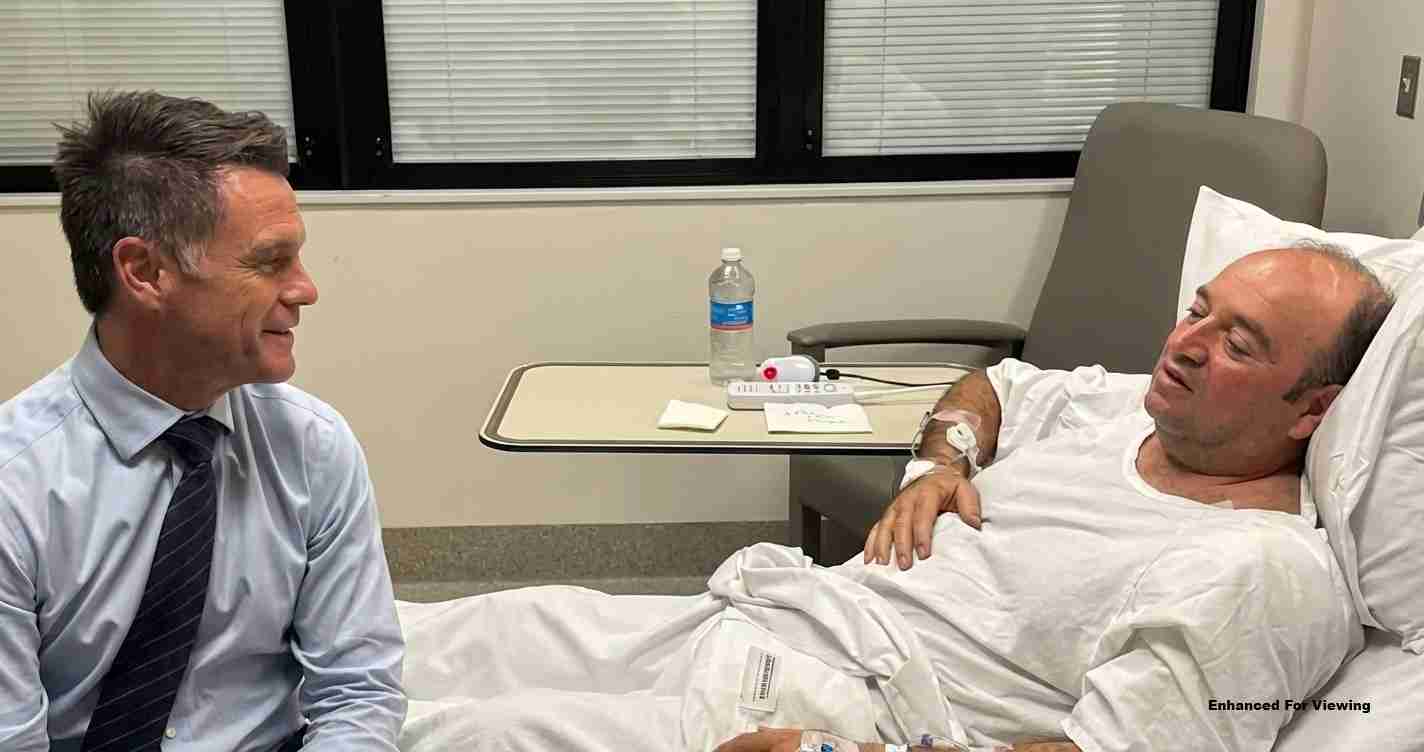
Hero at Bondi: Ahmed al-Ahmed Tackled Gunman in Deadly Sydney Hanukkah Mass Shooting
Ahmed al-Ahmed, 43, tackled a gunman at a Hanukkah event near Bondi Beach on December 14, 2025, potentially saving lives before being shot multiple times; the attack left 15 people dead and more than 40 injured.
Key takeaways
- Attack: Mass shooting at a Hanukkah event and nearby Bondi Beach on December 14, 2025 — declared a terrorist incident and described as antisemitic (Source).
- Casualties: At least 15 people killed and more than 40 injured (Source).
- Suspects: Two assailants described as a father and son; police fatally shot one and arrested the other. Authorities said one suspect had legally acquired six guns over the past decade (Source).
- Hero: Ahmed al-Ahmed, 43, tackled one shooter and was shot several times by the second attacker; he is recovering at St George Hospital (Source).
What happened
Video and eyewitness accounts show confusion and panic at the Hanukkah gathering near Bondi Beach. People ran for cover as gunfire broke out. Footage released after the attack shows Ahmed al-Ahmed crouching behind a parked car before moving toward one of the shooters. He wrestled the attacker and forced him back, an action witnesses say likely stopped further killing (Source).
New South Wales Police described the incident as a terrorist attack motivated by antisemitism. Officers said one of the gunmen was shot and killed by police during the response, and the other was taken into custody. Investigators noted that at least one suspect had lawfully acquired multiple firearms over many years, raising questions about regulation and oversight (Source).
Ahmed al-Ahmed: the man who tackled a gunman
Ahmed al-Ahmed is a 43-year-old Australian-born father of two. Born after his parents arrived from Syria, he has lived in Australia since 2006, according to family and witness accounts. Footage shows him rushing toward the shooter at great personal risk; witnesses hailed his bravery, calling him a “national hero” and an “international hero” for running toward danger while others fled (Source).
“What can I even say? I went through a tough time that only God knows about,” Ahmed told reporters from his hospital bed, asking for prayers and offering positive messages to Australians (Source).
Al-Ahmed was hit multiple times by the second gunman and was taken to St George Hospital; reporters say bullets remain lodged in his body as he recovers. Family members expressed pride in his actions and said his instinct was to protect others amid the bloodshed.
Eyewitnesses and community reaction
On-the-ground reporting captured shocked families, first responders, and bystanders in the hours after the attack. Witnesses described chaotic scenes of injured people receiving first aid on the sand, families searching for missing loved ones, and crowds consoling one another. Many pointed to al-Ahmed’s intervention as a turning point that may have reduced the number of casualties (Source).
Political and government response
Australian leaders framed the attack as both a criminal and a security failure. Prime Minister Anthony Albanese pledged to propose tougher gun laws following the attack. Home Affairs Minister Tony Burke and New South Wales Premier Chris Minns praised al-Ahmed as a “real-life hero” and called for a full review of weapons laws and how potentially dangerous individuals amass firearms (Source).
Officials noted the weapons used had been legally obtained, complicating immediate fixes but strengthening calls for reform. The government emphasized the need to review licensing, enforcement, and risk-assessment protocols.
The police investigation
New South Wales Police opened a counterterrorism investigation and said they were treating the shooting as an antisemitic terrorist incident. Investigators are reviewing the suspects’ backgrounds, how the firearms were acquired, and whether any online or local networks influenced or supported the perpetrators. Police also said they would examine timeline and tactical decisions made during the response to learn what worked and what could be improved in future mass-casualty incidents (Source).
Legal and regulatory questions
Authorities disclosed that one suspect had legally amassed six guns over the past decade. That detail has sharpened the national debate on gun control in Australia, a country that tightened its gun laws after the 1996 Port Arthur massacre. Prime Minister Albanese said current laws aim to prevent mass attacks by restricting rapid-fire rifles, but the legal acquisition of weapons in this case suggests gaps remain in enforcement and assessment of risk (Source).
Lawmakers and safety experts urged a close look at licensing, storage, mental health checks, and tracking purchases over time as part of any reform package.
Implications for United States of America
Economic impact: Immediate effects for the U.S. are limited but notable in sectors tied to security and travel. High-profile international attacks can slow tourism for affected areas and raise demand for private security services and safety technology. U.S. venues may face higher insurance costs and new spending on security upgrades.
Political consequences: The Bondi shooting may influence U.S. debate about gun policy and terrorism prevention. The fact that attackers obtained weapons legally could reinforce arguments for tighter licensing checks and better tracking of firearm purchases in the U.S.
Social effects: The antisemitic nature of the attack highlights threats to religious communities. American Jewish communities may increase security at synagogues, schools, and community centers; community training in first aid and active-shooter awareness can save lives.
Cultural relevance & practical applications: Bondi’s Hanukkah shooting reinforces the importance of protecting freedom of worship and peaceful public celebrations. U.S. local governments and institutions can draw lessons: review permit and background-check systems, improve information sharing between agencies, and ensure rapid police communication and crowd-management plans for large public events.
Sources and reporting
This article draws on on-the-ground footage, eyewitness accounts, and statements from New South Wales officials and Australian leaders. Key raw materials and video reporting are available here: Source and Source. Additional reporting and public statements were used to verify casualty figures, suspect information, and government responses.
Ongoing questions and investigation
Police investigations are continuing. Authorities have not released full details about motive beyond describing the attack as antisemitic and terrorist in nature. Officials are examining how the firearms were acquired and whether existing licensing systems could have flagged risks earlier. The role of community prevention, intelligence sharing, and public safety protocols remain central to inquiries underway (Source).
Care for survivors and community healing
Hospitals treated dozens of injured people following the shooting. Ahmed al-Ahmed, who remains hospitalized with bullets lodged in his shoulder, asked for prayers and offered messages of hope from his bed. Community leaders and politicians called for calm and unity while they support victims’ families and examine long-term measures to prevent similar attacks (Source).



