Trump Reassigns Kristi Noem to Shield of the Americas Role as Summit Launches Americas Counter Cartel Coalition
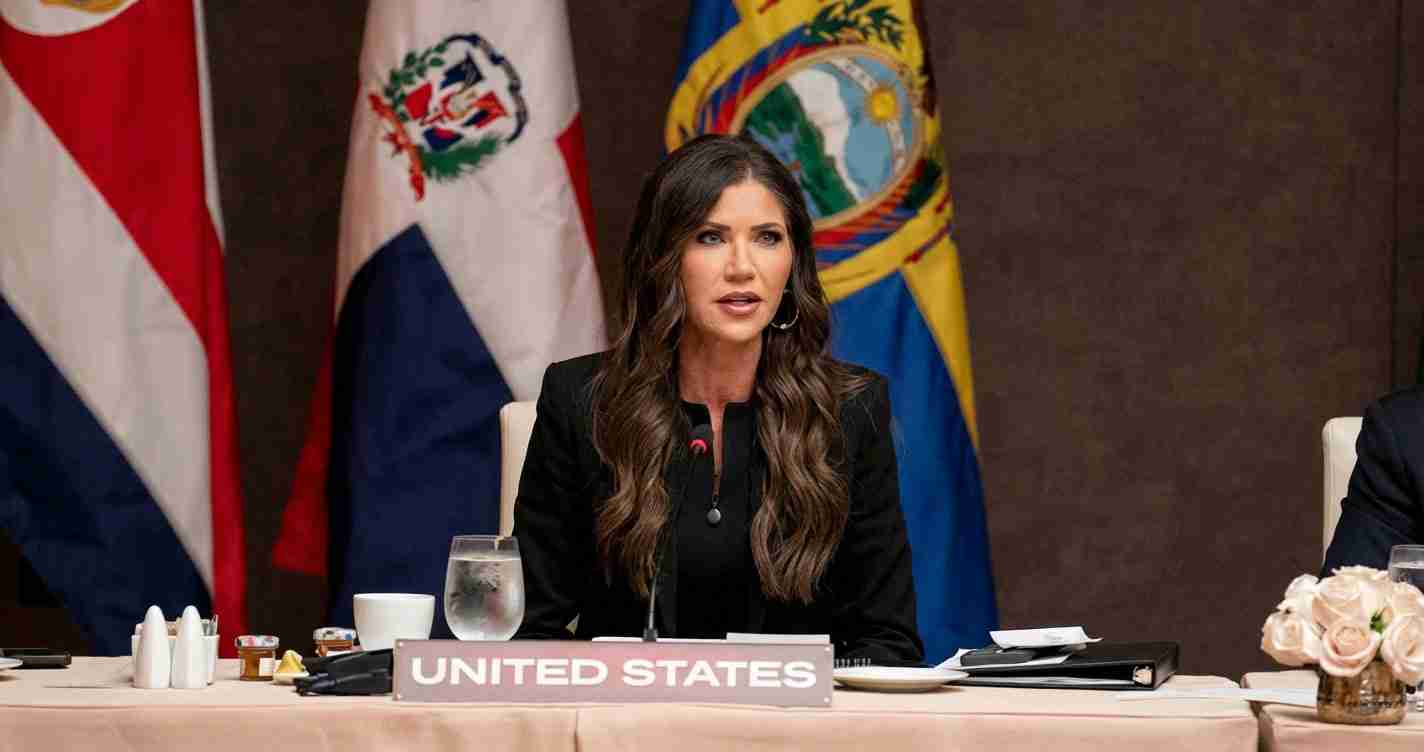
Kristi Noem was removed as Homeland Security secretary and reassigned as a special envoy for the Shield of the Americas initiative during the March 7, 2026 summit at Trump National Doral, which launched the proposed Americas Counter Cartel Coalition.
- Personnel move confirmed: Major outlets report President Trump shifted Noem from DHS to a special envoy role tied to the Shield agenda; see ABC News and WLRN.
- Summit focus: The Shield of the Americas summit emphasized hemispheric security and announced the proposed Americas Counter Cartel Coalition, as reported by Politico.
- Coverage limits: Many detailed quotations and performance claims about Noem’s remarks at Doral are unverified in major reporting (see National Interest analysis and available official releases).
- Primary sources: Readers should consult official releases and recorded video for verification, including the State Department release and available video coverage.
What happened at Doral
The Shield of the Americas summit convened at Trump National Doral on March 7, 2026, where President Trump and allied figures presented a broad plan for hemispheric security. The centerpiece announcement was the proposed Americas Counter Cartel Coalition, described as a multinational effort to coordinate military and enforcement tools against cartel networks. Coverage from ABC News and Politico emphasized the summit’s security focus and the policy framing presented by the administration.
Attendance and posture
Reports indicate the gathering included a mix of nationalist and anti-establishment leaders rather than formal delegations from every country. Named participants in coverage included figures such as Javier Milei of Argentina and Nayib Bukele of El Salvador. The administration said Secretary of State Marco Rubio would join the summit; reporting highlighted political theater alongside announced policy initiatives. For local coverage see WLRN and the State Department release.
Noem’s reassignment: what is verified
Multiple outlets reported that President Trump removed Kristi Noem from the DHS secretary position in the days before the summit and reassigned her to a role connected to the Shield initiative. WLRN described the change as a firing followed by an appointment as a “special Shield of the Americas envoy,” and ABC News reported Trump announced the shift during the summit. These reports constitute the primary public basis for saying Noem was reassigned to the Shield effort (see WLRN and ABC News).
What reporting does not support
A number of specific claims and long-form quotations widely circulated about Noem’s Doral remarks and her account of DHS’s record are not corroborated in major outlets’ coverage. Contemporary reporting does not reproduce precise phrasing attributed to Noem — for example, statements thanking the president for “creating this” position or asserting that DHS “secured the border” with exact deportation counts. Those specific lines do not appear in reporting by ABC News, Politico, WLRN, the State Department release, or the available video coverage.
Why verification matters
Coverage from major outlets focused on strategic announcements — the coalition against cartels, the so-called “Donroe Doctrine” framing, and the political optics at Doral — rather than long, self-justifying speeches attributed to Noem. Given a fast-moving political environment and competing narratives, journalists and readers should rely on direct quotes from primary reporting and on recorded statements rather than secondhand paraphrases. Official releases and available video should be treated as the baseline for confirming what was said.
Background on the Shield of the Americas and the Americas Counter Cartel Coalition
Shield of the Americas is presented by the administration as a multilateral security initiative focused on cartel networks, migration flows and countering hostile influence in the hemisphere. The Americas Counter Cartel Coalition is described in administration statements and reporting as a 17-country effort to coordinate military and law-enforcement pressure on transnational criminal organizations. Critics warn this approach could expand U.S. military involvement in Latin America and raise sovereignty concerns (see ABC News, Politico, and National Interest).
Noem’s record and the questions that remain
Kristi Noem arrived at DHS with experience as a member of Congress and as governor of South Dakota. National reporting frames her tenure at DHS as turbulent, noting internal clashes and political controversy. However, the detailed performance claims attributed to her in some narratives — including precise deportation counts and sweeping assertions that the border was entirely secured — are not substantiated in immediate summit reporting. For enforcement numbers, readers should consult the Department of Homeland Security’s official statistics and congressional records for verification.
Political and policy context
The reassignment of a DHS secretary into a politically charged special envoy role at a summit hosted at a Trump resort raises questions about personnel decisions, messaging, and the overlap of domestic enforcement and foreign policy. The Shield agenda aligns with a harder-line enforcement posture: proponents argue it could reduce migration and disrupt cartel networks; critics warn of mission creep, expanded military footprints, and strained diplomatic relations with regional partners.
Implications for the United States
- Economic impact: A military-style campaign against cartels could increase defense and foreign-aid spending and require congressional debate over funding and oversight (see ABC News).
- Political consequences: The personnel move and summit reinforce a hardline posture on borders and security, likely energizing the president’s base while raising concerns among moderates; expect oversight questions from congressional Republicans and Democrats alike (see Politico).
- Social effects: Changes in interdiction or migration policy could affect border communities and prompt scrutiny from civil liberties and immigrant-rights organizations.
- Practical expectations: Anticipate congressional hearings, requests for detailed operational plans, and new public reporting if U.S. forces or funds engage more directly under the coalition framework; monitor the State Department release for official updates.
Sources and further reading
- ABC News, “Trump speech at Shield of the Americas summit aimed at taking on cartels” — ABC News
- Politico, coverage of Trump’s Doral summit and policy framing — Politico
- WLRN, local reporting on the Shield summit and personnel changes — WLRN
- State Department release, announcement of U.S. hosting the summit — State Department release
- National Interest, analysis of the Shield of the Americas strategy — National Interest
- Video coverage of summit speeches — Video 1; Video 2
This report relies on contemporaneous coverage and official releases. Where detailed quotations and claims about Kristi Noem’s remarks or DHS statistics could not be found in major reporting, this article marks those statements as unverified and directs readers to primary sources for confirmation.