
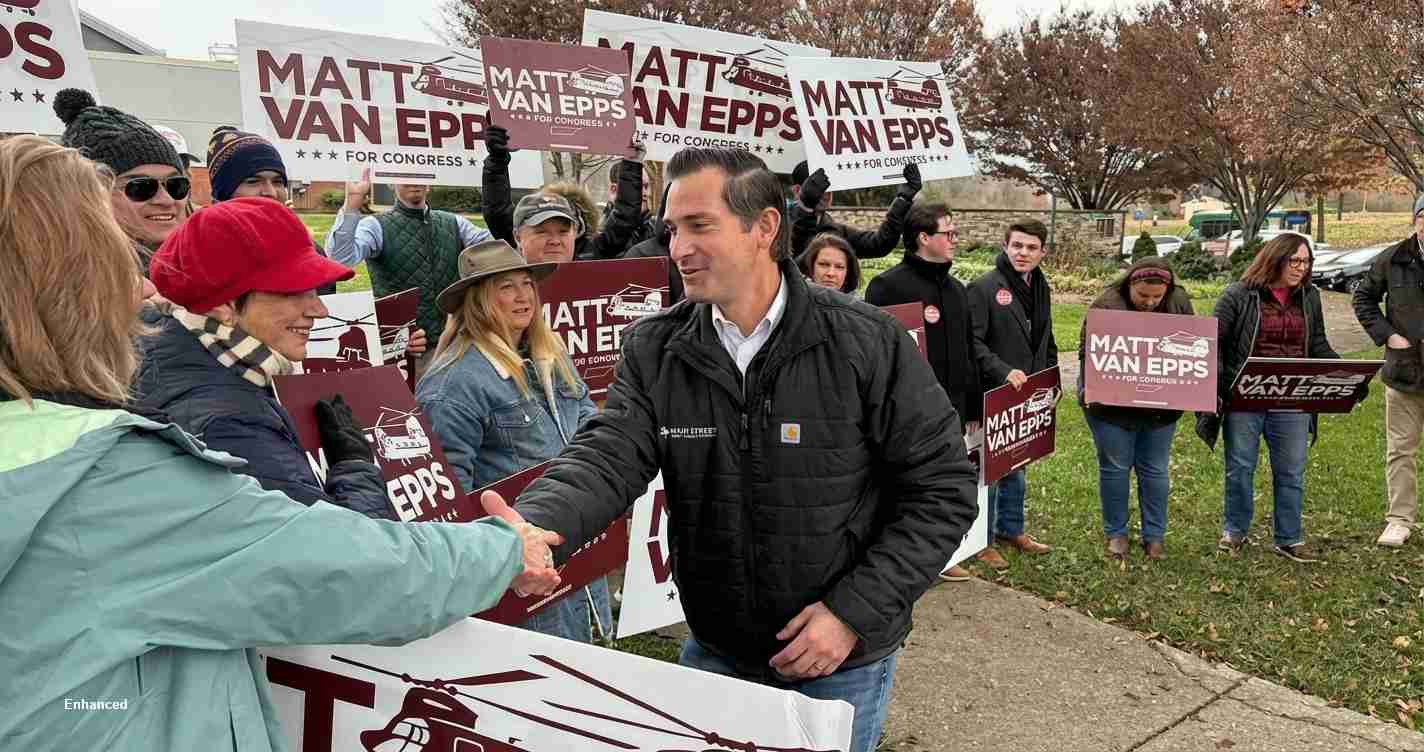
Trump-backed Republican Matt Van Epps holds Tennessee 7th in special election, seen as bellwether for 2026
Republican Matt Van Epps won Tennessee’s 7th congressional district special election on December 2, 2025, defeating Democrat Aftyn Behn and retaining the seat vacated by Mark Green — a bellwether for 2026 trends, turnout and suburban shifts.
Key takeaways
- Winner: Matt Van Epps (Republican) — 96,988 votes, 53.9%
- Runner-up: Aftyn Behn (Democrat) — 81,044 votes, 45.0%
- Margin: 8.9 percentage points; seat remained GOP-held
- Context: Seat was vacated July 20, 2025; Van Epps will serve through January 3, 2027. See official summary of the 2025 Tennessee’s 7th congressional district special election.
Background and context
The special election was called after Rep. Mark Green resigned his seat in July 2025. Candidates filed by October 7, 2025, with primaries held that same day; early in-person voting ran from November 12 to November 26. Observers treated the race as a test of both parties’ ground games and messaging in a district that historically leans Republican but has shown competitive shifts. For a full timeline and official data, consult the 2025 Tennessee’s 7th congressional district special election record.
Candidates and campaigns
Matt Van Epps — The Republican nominee and former Tennessee commissioner of the Department of General Services (2024–2025). He ran as a mainstream conservative, secured endorsements from groups such as the Club for Growth and the With Honor Fund, won the GOP primary with 51.56% (19,006 votes), and carried 12 of 14 counties in the general election.
Aftyn Behn — The Democratic nominee and state representative for Tennessee’s 51st district (since 2023). Behn won a narrow Democratic primary, performed strongly in Montgomery and Davidson counties, and closed margins in several suburban pockets but ultimately fell short on December 2.
Campaign finance contrasted sharply: Van Epps reported $992,716 in total funds raised (including $231,167 in loans), while Behn reported $1,230,629 in total receipts (including $521,737 in loans). See detailed results and filings in the 2025 Tennessee’s 7th congressional district special election summary.
Polling, turnout and results
An Emerson College poll (Nov. 22–24) showed a tight race — Van Epps 48%, Behn 46%, others 2% and 5% undecided — but the final returns favored Van Epps by a wider margin: 53.9% to 45.0%, roughly a 9-point advantage. Early voting ran mid-November through Nov. 26; turnout patterns favored Van Epps in rural and exurban counties while Behn made gains in urban and suburban areas. Official tallies and county breakdowns are available in the 2025 Tennessee’s 7th congressional district special election documentation.
“A test of both parties’ ground games and messaging in a shifting district,” analysts said as national attention tracked the contest.
Why the race mattered
Strategists watched the contest for several reasons:
- Democratic traction: Behn’s improved showing in populous suburbs suggested targeted Democratic investments can narrow margins even in red-leaning districts.
- Republican durability: Van Epps’ win — under a Trump-backed banner — signaled the GOP can hold when aligned and organized locally.
- Money vs. organization: Despite outraising Van Epps, Behn could not flip key counties, underscoring that funding alone does not guarantee victory.
Complete context and analysis accompany the official record for the 2025 Tennessee’s 7th congressional district special election.
National implications and signals for 2026
For Republicans: Holding the seat reassures the party that many red-leaning districts remain defensible when the party unites behind a clear nominee with local ties and endorsements.
For Democrats: Narrow gains in populous counties indicate opportunity — but also the need for broader messaging and turnout strategies to flip entrenched seats in 2026.
Special elections have unique dynamics and lower turnout, yet parties will mine precinct-level data from this contest to refine targeting and messaging for next year’s midterms. See the full official summary at the 2025 Tennessee’s 7th congressional district special election.
Implications for United States of America
Economic impact
Direct economic effects of a single House seat are limited, but political outcomes influence federal negotiating posture. A GOP hold may affect messaging and leverage around budgets and spending decisions heading into 2026.
Political consequences
Washington will read the result closely: a Republican win in a competitive district bolsters GOP fundraising narratives, while Democrats point to narrowed margins as evidence of suburban opportunity. Both parties will apply lessons from field operations to 2026 planning.
Social effects
Locally, the contest highlights demographic shifts — suburban gains for Democrats versus continued GOP strength in rural and exurban areas — and reinforces that local issues shape outcomes as much as national headlines.
Cultural relevance
The race underscores cultural divides that animate U.S. politics: rural and exurban voters remain central to GOP strength, while suburban and urban voters fuel Democratic competitiveness. Campaigns will likely recalibrate cultural and community messaging for 2026.
Practical applications for voters and campaigns
- Campaigns: Invest in precinct-level data, local endorsements and ground games where turnout matters most.
- Voters: Expect intensified outreach in similar districts next year — even well-funded challengers struggle without deep local organization.
Reporting and sources
This article draws on official results and reporting compiled in public records for the 2025 Tennessee’s 7th congressional district special election. All facts, figures and URLs in this article preserve the original reporting and public record.



