
Narco-banners in Los Cabos Warn Americans — Officials Say No Physical Evidence as Experts Urge Caution
Reports of narco-banners warning Americans in Los Cabos circulated in early October 2025, prompting investigations; Baja California Sur authorities say they found no physical evidence, while security experts caution the tactic signals real risks for tourists and residents.
Key takeaways
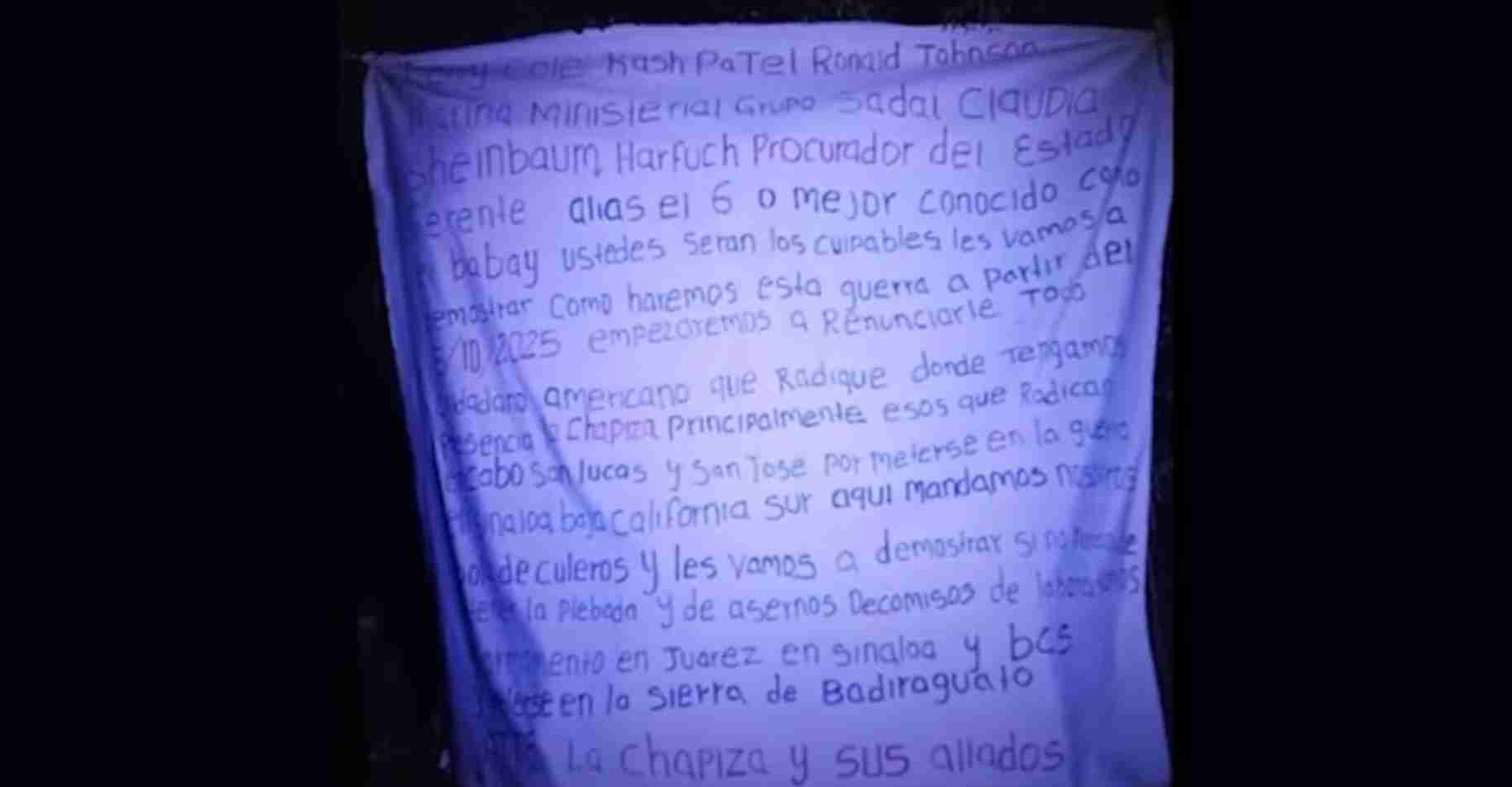
- Images circulated online: Two alleged banners shared on social media warned Americans to avoid Los Cabos and threatened violence.
- Authorities found no trace: Baja California Sur officials called the specific reports unsubstantiated and reported no verified physical evidence.
- Experts urge caution: Even disputed banners fit a pattern of cartel intimidation that can increase extortion, kidnapping or violence risks.
- Verification is hard: Rapid removal and viral sharing complicate on-the-ground confirmation; rely on official channels for updates.
Main content
What was reported
Photos of two long printed sheets with block text began circulating online in early October 2025. The images, shared across platforms, showed messages warning Americans to “stay out” of areas where the group claimed presence and stating U.S. citizens would be “the ones to blame.” Many outlets compiled those video clips and social posts and reported on the images.
The banners were said to be signed by La Chapiza, a faction tied to the Sinaloa Cartel, a group analysts link to enforcement, extortion and territorial control in parts of Baja California Sur. Public displays of such messages — commonly called narcomantas — are a known criminal tactic to intimidate rivals, officials and the public.
Authorities’ response and the question of evidence
Baja California Sur officials, including state Attorney General Antonio López Rodríguez, said investigators found no trace of the banners in reported areas and described the specific posts as unsubstantiated. Local police reported no verified sightings to document the banners.
Officials and local reporting note a complicating pattern: posted banners are sometimes removed within hours. Between April and July 2025, local reporting documented dozens of threatening banners across the state — a rapid placement, viral spread, then removal cycle that leaves little time for verification and can amplify fear even when physical proof is scarce. See an overview from Mexico Travel Secrets for regional context.
“Images and videos often emerge from anonymous accounts and are rapidly shared outside their original context,” making authenticity and location difficult to verify, journalists said.
Expert perspectives: don’t dismiss the threat
Security experts and former advisers caution that whether or not the banners were physically located, the messages reflect a real threat landscape. Joe Peters, a former White House drug policy adviser, told reporters the warnings fit a longstanding pattern of narco-terrorism and intimidation used to enforce control and extract ransom or extortion payments.
Analysts emphasize that tourist towns with concentrated foreign visitors and high demand for services can become targets for organized-crime groups seeking money or leverage. When cartels act in a mafia-like manner they may target expatriates, wealthy visitors or businesses for extortion; vulnerability often falls on visitors unfamiliar with local risks.
Travel and safety guidance
Travel experts recommend U.S. travelers exercise caution. The U.S. State Department maintains travel advisories and resources; consult the State Department travel guidance before traveling. Practical steps include registering plans with the STEP program, staying in areas with visible security, avoiding isolated travel at night, and monitoring official channels for updates.
Experts also advise maintaining local contacts, verifying information through consular and police channels, and avoiding responding to viral social posts that lack confirmation.
Social media and misinformation concerns
The rapid spread of alleged narco-banners demonstrates how social media can amplify fear. Anonymous posts can go viral before authorities can confirm facts, affecting tourism bookings and local economies. Local officials urged reliance on verified statements from police and state authorities while investigations continue.
Journalists noted many source materials originate from anonymous accounts; some posts may be repurposed from other incidents or regions, raising disinformation concerns. Verification on the ground — police logs, camera footage or eyewitness statements — is often required to confirm claims.
Reporting and verification challenges
Covering the story required cross-checking viral posts with local authorities and security analysts. Rapid removal of banners, lack of precise location metadata and circulation from anonymous accounts make timely verification difficult. Media partners of the Times Media Service cross-referenced social content while noting verification limits.
Sources and further reading
- Fox News report
- YouTube coverage compiling social posts
- AOL report
- Mexico Travel Secrets overview
- U.S. State Department travel guidance
Implications for United States
Economic and travel impact
Los Cabos is a major draw for U.S. tourists; news of threats aimed at Americans can reduce bookings, hurt airlines and hotels, and affect local employment. Even when physical evidence is disputed, perception of danger can rapidly cut tourism income and ripple back to U.S. businesses tied to travel to Mexico.
Security and law enforcement cooperation
The incident underscores the need for continued U.S.–Mexico cooperation on cartel violence and public safety. U.S. law enforcement and policymakers monitor cartel strategies that cross borders; experts call for enhanced intelligence-sharing, mapping of groups like La Chapiza, and joint investigations to protect citizens abroad.
Political consequences
Such incidents can influence public opinion on border policy, foreign aid and bilateral security cooperation. For some audiences the story raises questions about protecting U.S. travelers while maintaining travel and trade ties. Officials in both countries face pressure to curb cartel influence without undermining local economies.
Social and community effects
U.S. expatriates and seasonal residents in Los Cabos and Baja California Sur may experience increased anxiety. Families in the U.S. track cartel activity closely; consulates, community groups and insurers may need to increase outreach and clear communication to aid decision-making for travelers and residents.
Practical steps for travelers and policymakers
- Check the State Department travel advisories and enroll in STEP.
- Stay in well-secured resort areas and avoid isolated travel after dark.
- Maintain local contacts, monitor official channels, and report suspicious activity to police and consular posts.
- Policymakers should consider bolstering consular services and supporting Mexican law enforcement capacity in tourist corridors.
Ongoing investigation
Baja California Sur officials say investigations remain active despite reporting no physical trace of the specific banners. Given the state’s history of narco-banners and the speed of social media, authorities and security experts urge vigilance. Travelers and U.S. citizens in the region should follow official updates and report suspicious activity to local authorities and U.S. consular posts.



