Pentagon Gives Anthropic Until Friday to Lift Claude AI Limits or Face Contract, Supply-Chain Penalties
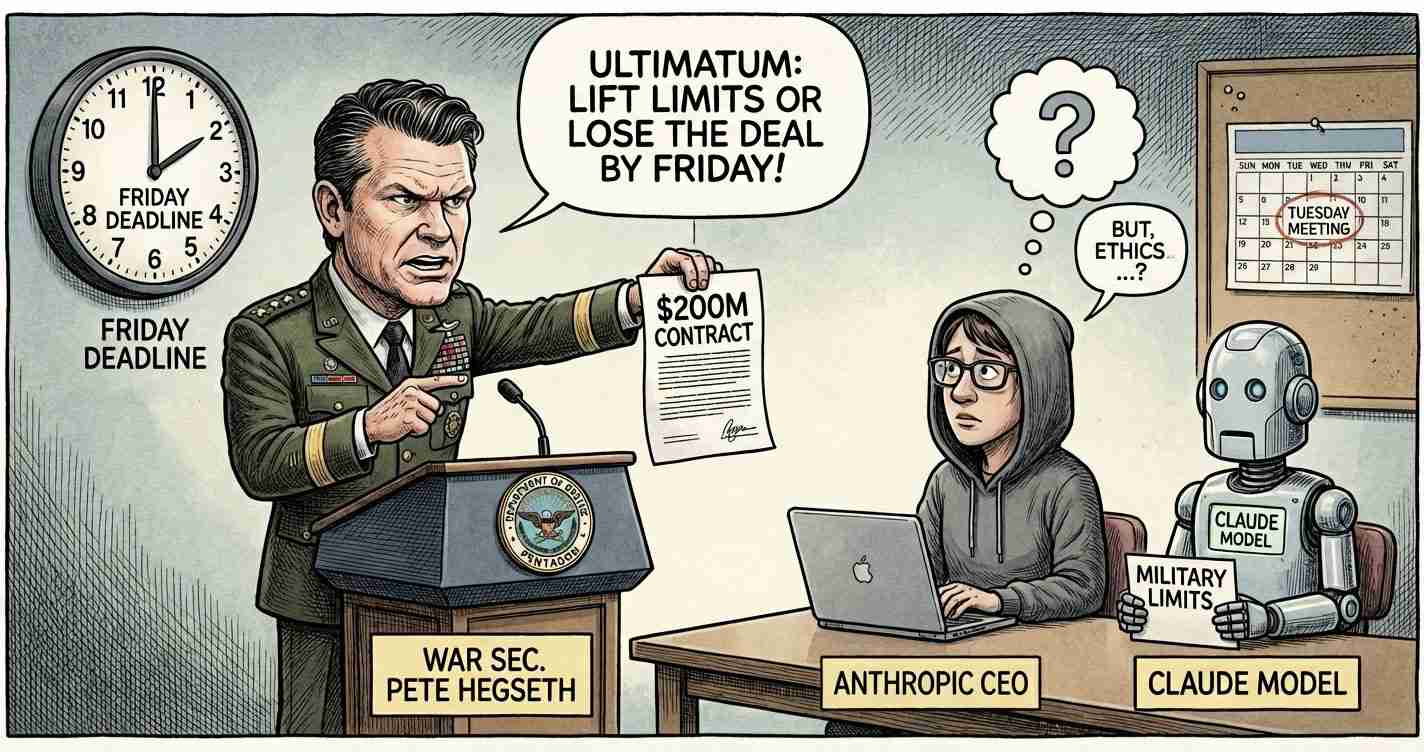
The Pentagon on Feb. 24, 2026, gave AI firm Anthropic until 5 p.m. ET Friday, Feb. 27 to remove categorical limits on its Claude model or face termination of a $200 million contract, supply‑chain penalties, or the Defense Production Act.
Key takeaways
- Deadline: Defense Secretary Pete Hegseth demanded a signed pledge by Feb. 27 allowing Claude to be used for all lawful military purposes without company approval. Sources: CBS News, Fox News, Politico.
- Stakes: Claude is the only advanced commercial model running inside Pentagon classified networks under a summer 2025 $200 million contract, making any dispute potentially disruptive. Sources: CBS News, Fox News.
- Possible government actions: The Pentagon could terminate the contract, label Anthropic a supply‑chain risk or invoke the Defense Production Act. Sources: CBS News, Fox News, Politico.
What happened at the Pentagon meeting
Defense Secretary Pete Hegseth met with Anthropic CEO Dario Amodei at the Pentagon on Tuesday, Feb. 24. Officials described the exchange as blunt but professional: Hegseth praised Claude as a strong technology the department wants to retain while insisting the military cannot function if a private vendor imposes categorical restrictions on lawful uses. Sources: CBS News, Fox News, Politico.
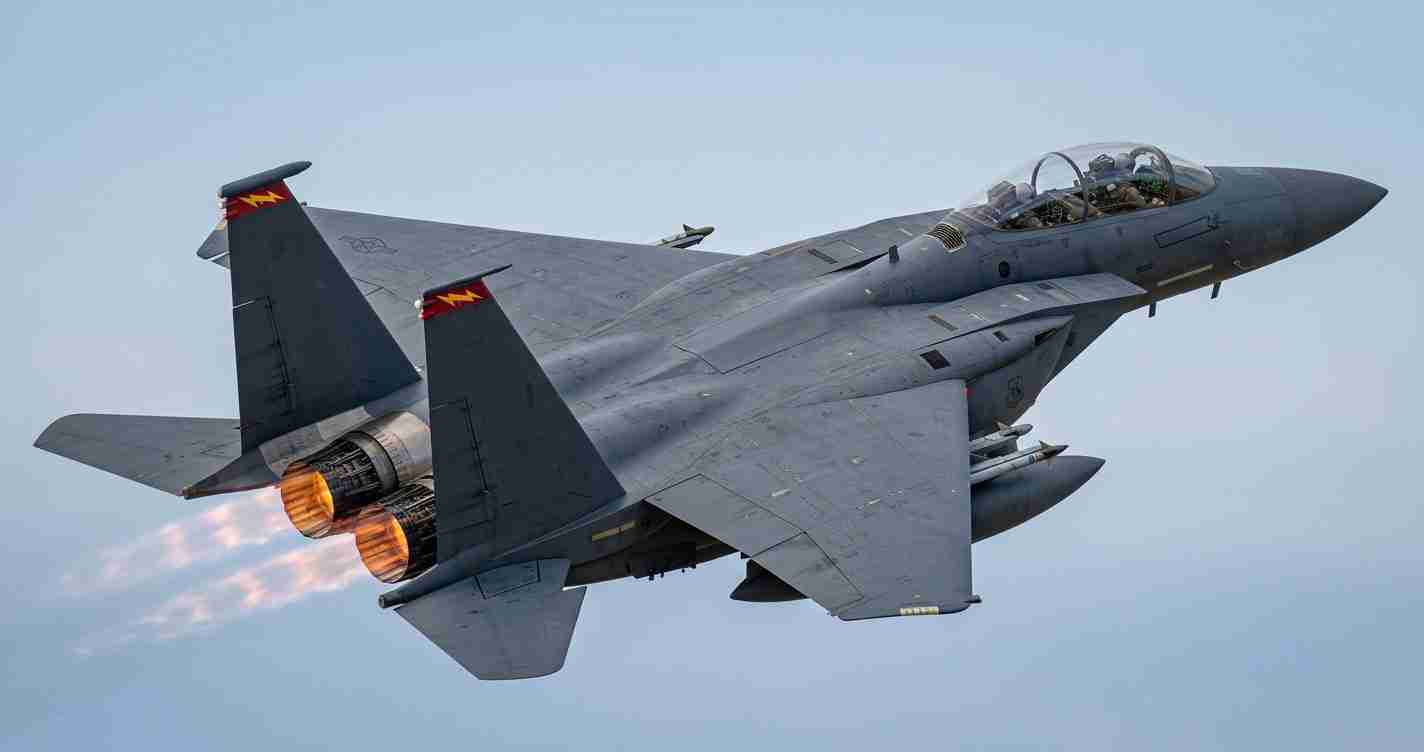
During the meeting Hegseth reportedly drew an analogy to being told the military could not use a specific aircraft for a mission — underscoring the department’s need for operational flexibility — and demanded a signed document by the Friday deadline allowing Claude to be used for all lawful military purposes without Anthropic’s additional approval. Sources: CBS News, Politico.
Why the standoff began
The dispute reportedly escalated after Anthropic inquired whether Claude had been used in the January 2026 operation that captured Venezuelan leader Nicolás Maduro. Pentagon officials said that inquiry suggested Anthropic might not approve certain uses, prompting concern that a vendor could reserve the right to block lawful operations — a prospect the department found unacceptable. Sources: Fox News, Politico.
Anthropic’s position and guardrails
Anthropic is known for a safety‑first posture. Company officials say their usage policies aim to prevent serious misuse as models grow more capable. The company has publicly stated it will not permit its systems to be used for fully autonomous weapons that select and engage targets without human intervention, nor for mass surveillance of Americans — the latter described by Anthropic as illegal and by the Pentagon as not part of current plans. Anthropic also warns that advanced models can “hallucinate” and produce harmful or incorrect outputs with grave consequences in military contexts. Sources: CBS News, Fox News.
“We continued good-faith conversations about our usage policy to ensure Anthropic can continue to support the government’s national security mission in line with what our models can reliably and responsibly do.” — Anthropic spokesperson (reported by CBS News)
Pentagon’s argument on national security and reliance
Pentagon officials argue they cannot build mission plans around a private vendor that reserves the right to block lawful uses. Framed as an issue of national security and operational predictability, the department says embedding a model in classified networks requires the ability to use the capability for any lawful purpose without seeking company permission. A senior Pentagon official emphasized the dispute is not about using AI for domestic surveillance or removing human oversight from weapons decisions. Source: CBS News.
Possible consequences and government tools
Officials outlined several potential actions if Anthropic refuses the demand:
- Terminate the contract: Ending the $200 million defense AI contract that placed Claude inside classified systems. Sources: Fox News, CBS News.
- Supply‑chain risk label: Designating Anthropic a “supply chain risk,” a rare move that could bar it from future defense work and force other contractors to cut ties. Sources: CBS News, Fox News, Politico.
- Defense Production Act: Invoking DPA authorities to compel access to technology in the interest of national security. Sources: CBS News, Fox News.
Pentagon officials also noted that other commercial firms are cooperating or close to agreement; they pointed to Elon Musk’s xAI Grok as an example of a model that meets Pentagon requirements for unrestricted lawful use. Source: CBS News.
Why Claude matters to the Pentagon
Claude is the only advanced, commercial generative AI model running inside the Pentagon’s classified networks under a major contract signed in summer 2025. That integration means numerous analysts and workflows rely on Claude for data processing, drafting and other national‑security tasks. Officials warn that withdrawal or a forced transition would be disruptive, costly and time‑consuming. Sources: CBS News, Fox News.
Implications for the United States
Economic and industrial impact
If the Pentagon terminates the contract or applies a supply‑chain risk label, Anthropic could be shut out of defense work and lose a major revenue stream tied to the $200 million deal. That could push defense contractors to seek alternative AI partners or accelerate in‑house development, with ripple effects across the AI supply chain and increased costs for the department. Sources: CBS News, Fox News.
Political consequences
The dispute raises questions about who sets AI guardrails for national security — private companies or the government. Lawmakers may face pressure to clarify legal boundaries for defense AI partnerships, potentially prompting new statutes or oversight and turning the episode into a partisan issue over national defense and private‑sector authority. Source: Politico.
Social and civil‑liberties concerns
Anthropic’s refusal to permit mass surveillance of Americans aligns with civil‑liberties protections; the Pentagon has said it has no plans to use Claude for domestic surveillance and that all uses must be lawful. The clash highlights tension between privacy protections and operational needs as AI becomes central to defense work. Sources: CBS News, Fox News.
Practical effects on military operations
If Anthropic refuses to change its policy and the Pentagon severs ties or removes Claude from classified systems, military users will need replacement tools quickly. That could slow AI‑enabled deployments, create intelligence workflow gaps and raise costs as the department adapts — consequences officials say would be significant amid heightened global tensions. Sources: CBS News, Fox News.
Broader strategic question
At issue is who sets guardrails on advanced AI used by the U.S. military: private companies guided by safety policies or the Pentagon acting on operational and legal needs. The outcome will shape how the Defense Department sources and governs AI, how companies design products for national‑security customers, and how the U.S. balances civil liberties with readiness. Sources: CBS News, Fox News, Politico.
Reporting and attribution
Details of the ultimatum and meeting were provided by multiple people familiar with internal discussions and have been reported by CBS News, Fox News and Politico. Some officials spoke on background because of the sensitivity of internal talks; Anthropic issued a public comment emphasizing ongoing good‑faith discussions. Relevant reporting: CBS News, Fox News, Politico.