
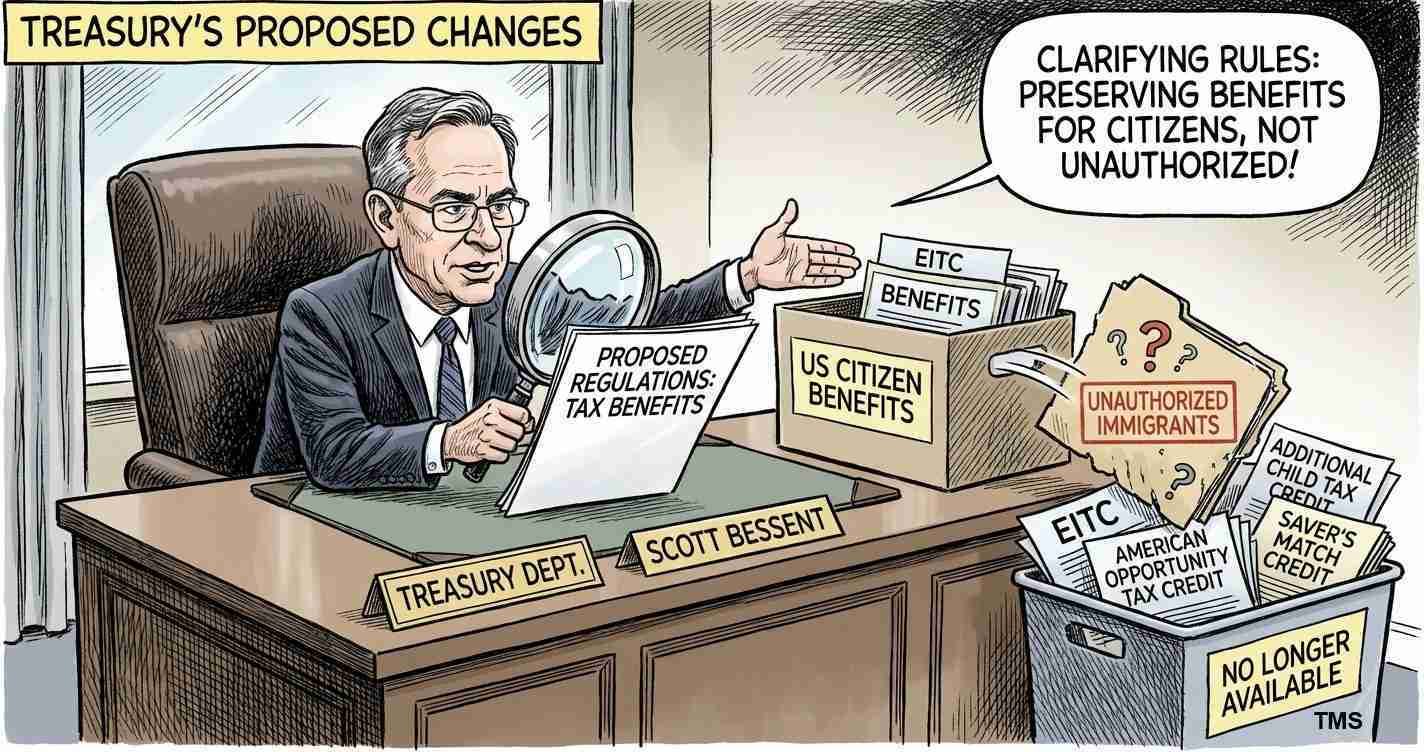
Treasury moves to bar undocumented immigrants from refundable tax credits in new rule
Treasury Secretary Scott Bessent announced proposed regulations to reclassify refundable portions of several tax credits as federal public benefits, aiming to bar undocumented and other non‑qualified aliens from refundable credits beginning with the 2026 tax year.
Key takeaways
- Proposed reclassification: Treasury will propose rules treating refundable portions of certain credits as federal public benefits, making them unavailable to undocumented and other non‑qualified aliens (Fox Business, ABC News).
- Credits affected: Earned Income Tax Credit, Additional Child Tax Credit, American Opportunity Tax Credit, Saver’s Match Credit (Fox Business, ABC News).
- Implementation: Changes are expected to apply beginning with the 2026 tax year; Treasury’s Office of Tax Policy and the IRS will draft language and guidance (Fox Business, ABC News).
What the Treasury announced
Treasury Secretary Scott Bessent said the department will issue proposed regulations that reclassify the refundable portions of several individual income tax benefits as “federal public benefits.” That reclassification would render those refundable credits unavailable to people in the United States illegally or otherwise not qualified under immigration rules. Sources cited by Treasury include Fox Business and ABC News.
Specific credits listed: the Earned Income Tax Credit (EITC), the Additional Child Tax Credit (ACTC), the American Opportunity Tax Credit (AOTC), and the Saver’s Match Credit. These credits include refundable components that can produce refunds even when no income tax is owed; the proposed rule would remove refundable payouts for those classified as non‑qualified aliens under federal immigration law (Fox Business, ABC News).
Why the Treasury says it is doing this
Bessent framed the move as protecting taxpayer resources and enforcing the law. He said the department is “preserving” these benefits for U.S. citizens and lawful residents and preventing “illegal aliens” from claiming tax benefits meant for Americans. He added that if someone is in the country illegally, there is no place for them in parts of the financial system the Treasury oversees (Fox Business).
“We are preserving these benefits for Americans and lawful residents, and preventing those here illegally from taking advantage of parts of the financial system we oversee.”
Treasury also sought a reinterpretation from the Justice Department to support the legal basis for the rule; officials described this as a significant legal readjustment of how tax law and immigration rules intersect (ABC News).
Implementation timeline and agency roles
Treasury officials told reporters the proposed regulations are expected to apply for the 2026 tax year. The Office of Tax Policy at Treasury and the Internal Revenue Service will lead implementation, drafting regulatory language and guidance for taxpayers and tax preparers. Agencies will follow the normal notice-and-comment rulemaking process before any final rule takes effect (Fox Business, ABC News).
Financial surveillance and enforcement steps
In a related step, the Treasury’s Financial Crimes Enforcement Network (FinCEN) issued an alert to banks and other financial institutions aimed at preventing misuse of the U.S. financial system by undocumented individuals moving illicit funds. The alert emphasized obligations for money services businesses to file suspicious activity reports on transactions of at least $2,000 they know or suspect may involve unlawful employment or other legal violations. Treasury officials said these steps are meant to close loopholes that could let illicit funds move through U.S. institutions (Fox Business).
Legal and political context
The move comes amid broader immigration policy shifts under the Trump administration; officials linked the action to the president’s stated aim to limit unauthorized migration and protect government benefits for eligible Americans. The announcement followed a statement by President Trump about a “permanent pause” on migration from certain countries after a violent incident involving an Afghan national. Treasury officials said the tax-rule change aligns with the administration’s priorities (Fox Business).
Critics and legal questions
Legal scholars and immigrant advocacy groups signaled that the proposed change could face court challenges. Some observers contend Treasury may be stretching regulatory authority to change how tax credits interact with immigration statutes; others call it a lawful effort to reserve federal tax benefits for those eligible under immigration law. Treasury’s request for a Justice Department reinterpretation underscores the contested legal ground (ABC News).
Implications for United States of America
Economic impact
Budget and households: Treasury says the change will protect taxpayer dollars by ensuring refundable tax credits go only to eligible people. If implemented, the rule could reduce refundable payouts to some households that currently claim those credits while lacking qualifying immigration status, potentially modestly lowering federal outlays for those programs. The administration has not released detailed fiscal estimates (Fox Business, ABC News).
Political consequences
National debate: For voters prioritizing law enforcement and fiscal restraint, the policy reinforces that federal benefits are for citizens and lawful residents. For opponents, the rule may deepen disputes over immigration policy and executive authority. Legal challenges could make the rule a focal point in courts and elections (Fox Business, ABC News).
Social effects
Families and communities: Changes to eligibility for the EITC and ACTC could affect low-income families, including children who rely on refundable credits for economic support. The administration emphasizes that those eligible under law will continue to receive benefits; advocates warn the rule could harm households already facing financial strain (Fox Business, ABC News).
Cultural relevance
Public trust and fairness: The administration frames the change as protecting fairness for American taxpayers. Supporters say it restores integrity to benefit programs; opponents argue it may stigmatize immigrant communities and create confusion for families and tax preparers (Fox Business, ABC News).
Practical applications for taxpayers and institutions
- For taxpayers: Tax preparers and families should follow Treasury and IRS guidance once the proposed rule is published. The normal rulemaking process will include comment periods and final guidance before the rule takes effect for tax year 2026 (Fox Business, ABC News).
- For financial institutions: Banks and money services businesses should heed the FinCEN alert and existing suspicious activity reporting rules; firms handling cross-border transfers or large transactions tied to suspicious employment income may need to file reports and strengthen monitoring (Fox Business).
Reporting and next steps
Treasury officials said proposed regulations will be released for public comment. The Office of Tax Policy and the IRS will publish guidance explaining who is affected and how the rule will be applied. Legal challenges are likely if the rule advances to a final regulation; journalists, taxpayers and advocates will watch the notice-and-comment process and any court challenges closely (Fox Business, ABC News).



