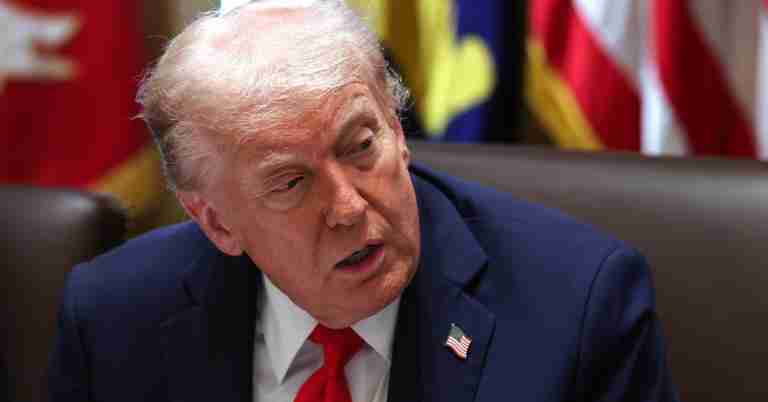
Trump orders Pete Hegseth to pay troops amid government shutdown standoff, rails at Schumer
President Donald Trump ordered Defense Secretary Pete Hegseth to ensure military paychecks are issued by Oct. 15 amid the federal government’s eleventh day of shutdown, saying he will “use all available funds,” while offering no specific funding details.
- President’s order: Trump instructed Pete Hegseth to “use all available funds” to get troops paid on Oct. 15 (reporting from Just The News and The Daily Beast).
- Funding unclear: The administration said it has “identified funds” but gave no account of which Treasury accounts or mechanisms would be used (KFGO).
- Scale of impact: About 2 million active-duty troops and roughly 750,000 federal employees face delayed pay or furloughs during the shutdown (Times of India).
Key information
President’s announcement: Trump posted on Truth Social that he is “using my authority, as Commander in Chief, to direct our Secretary of War, Pete Hegseth, to use all available funds to get our Troops PAID on October 15th.” Reporting and context appeared in Just The News and The Daily Beast.
The Presidential directive
Trump framed the move as a direct exercise of his powers as commander in chief, naming Pete Hegseth and instructing him to “use all available funds” to ensure service members are paid on Oct. 15. The post aimed to blunt immediate harm to military families and shift public messaging about responsibility for the shutdown.
“Use all available funds to get our Troops PAID on October 15th.” — President Donald Trump (Truth Social)
Legal and logistical questions remain
The statement offered little detail. The White House said the administration had “identified funds to do this,” but did not specify which Treasury accounts, contingency funds, reprogramming authorities, or other mechanisms might be tapped. Pentagon and White House spokespeople had not provided clarification by the time of the announcement (KFGO).
Legal uncertainty: Federal law and budget practice set strict rules for how appropriated funds may be moved or spent. Without an explanation of the funding source, it is unclear whether the directive requires new legal authority, internal reallocation, or short-term advances that must be reconciled later.
Political context and public blame
Trump publicly blamed Senate Minority Leader Chuck Schumer and congressional Democrats, disputing Schumer’s comment that “Every day gets better” and accusing Democrats of holding the military and national security “HOSTAGE.” The president called on Democrats to back a House-passed funding bill (Just The News).
The broader disagreement reflects Senate rules: most spending measures require 60 votes to advance, meaning Senate GOP leaders need Democratic support to break a filibuster. Democrats seek expanded Affordable Care Act subsidies as part of a continuing resolution; Republicans have pushed textured clean bills without those measures (KFGO; Times of India).
Recent votes: A GOP-backed measure failed in the Senate 55-45, short of the 60 votes needed; a Democratic plan also lost 53-47. Earlier, House Republicans blocked a Democratic bid to ensure military pay during the standoff (The Daily Beast).
Shutdown dynamics and stakes
The federal government has been shut down since Oct. 1 — the first shutdown since 2019 and the third during Trump’s presidency. The 2018–2019 lapse lasted 35 days and centered on border wall funding; the Congressional Budget Office estimated roughly $3 billion in lost economic activity from that episode (Times of India).
Essential operations continue — air traffic controllers, TSA agents, ICE officers and military personnel typically stay on duty, but their pay is deferred until appropriations resume or alternate arrangements are made, creating immediate financial strain on families.
Impact on military personnel and families
About 2 million active-duty service members and roughly 750,000 federal employees face delayed pay or furloughs. Military families often live on tight budgets; a missed payday can disrupt childcare, mortgage and rent payments, and other essentials, affecting morale, recruitment and readiness (Times of India).
Funding questions and oversight
Officials have not said whether the funds referenced are emergency balances, transfers from other departments, unobligated defense account balances, or temporary advances that Congress would have to retroactively authorize. Each option carries legal and political risk; unapproved transfers could prompt legal challenges or congressional inquiries (KFGO).
Oversight coming: Investigative reporters and lawmakers will likely press the Pentagon and White House for documentation. Transparency will show whether the action is a practical stopgap or a political posture with limited long-term effect.
Implications for United States
Economic: A short-term disbursement for military pay would ease immediate hardship but would not address unpaid federal workers or the broader economic drag of a prolonged shutdown. The last extended shutdown erased roughly $3 billion in output; a longer lapse risks similar losses (Times of India).
Political: The directive reframes the messaging battle by placing blame on Democrats and positioning troop welfare as the administration’s priority. Legal ambiguity over funding could, however, open Republicans to criticism if the move proves temporary or costly (Just The News).
Social: Delayed pay forces many to use credit or seek outside help; quick, clear disbursements would reduce stress, while partial measures would leave families vulnerable (Times of India).
Practical applications for everyday life
If the directive succeeds, service members should see pay on Oct. 15 as promised. Families should monitor official Pentagon or Defense Department announcements for confirmation and guidance. Federal employees outside the military should follow agency communications about furloughs and potential back pay (KFGO).
Reporting notes and sources
This article draws on the president’s Truth Social post and reporting from Just The News, KFGO, The Daily Beast and context on shutdown impacts from the Times of India.
Pentagon and White House officials were not available for detailed comment on funding sources at the time of publication; follow-up reporting is expected as agencies respond to the president’s directive.