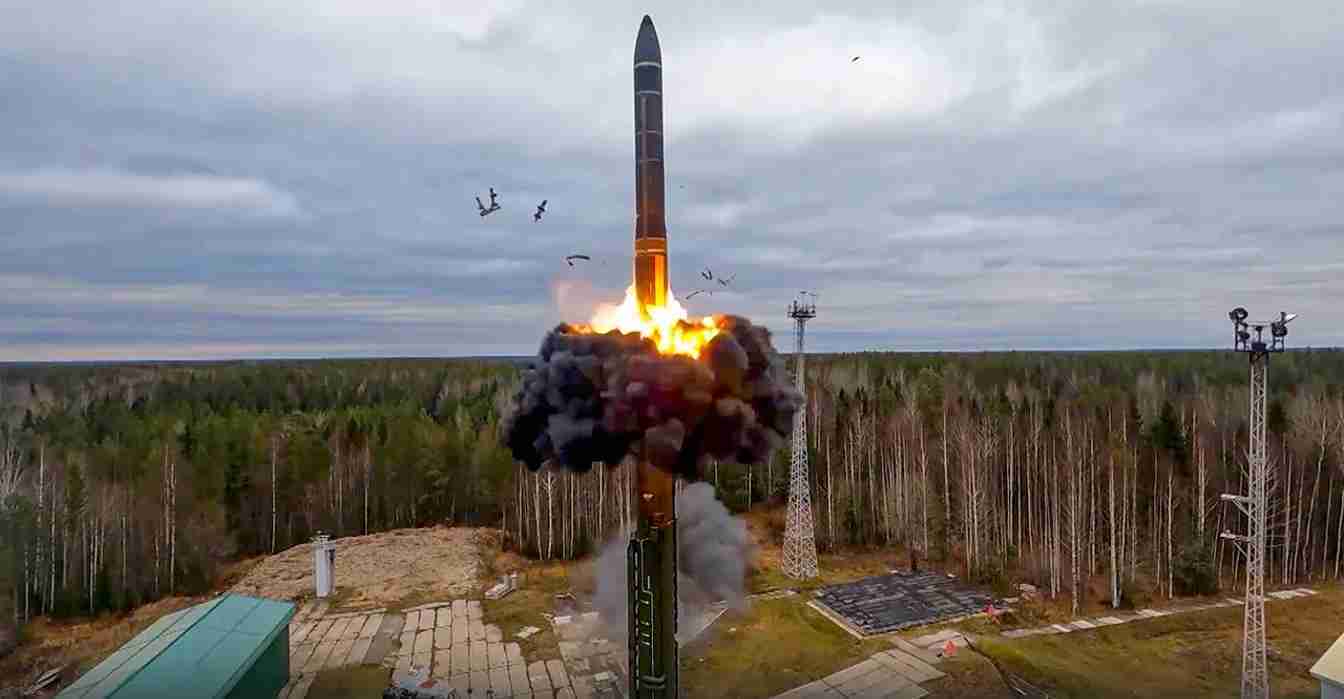
Trump orders Pentagon to begin U.S. nuclear weapons testing “on an equal basis” after Russia missile tests
President Donald Trump ordered the Defense Department to begin planning U.S. nuclear weapons testing “on an equal basis” with other nations, announced Oct. 30, 2025, on Truth Social ahead of a meeting with Chinese President Xi Jinping.
Key takeaways
- Ordered the Defense Department to begin preparations for U.S. nuclear weapons testing “on an equal basis” with other countries.
- The announcement was posted on Truth Social on Oct. 30, 2025, ahead of Trump’s planned meeting with Chinese President Xi Jinping at APEC in South Korea.
- Trump framed the move as a response to Russia’s Oct. 21 test of the Burevestnik cruise missile and China’s expanding nuclear force.
- The U.S. has not conducted a nuclear explosive test since 1992; the announcement directs planning rather than an immediate detonation.
Background: Russia missile tests and China’s buildup
Trump linked his directive to recent Russian missile tests and to what he described as China’s expanding nuclear force. He singled out Russia’s Oct. 21 test of the Burevestnik — a nuclear-powered cruise missile Moscow says can fly long ranges and approach defenses unpredictably. Times Media Service reporting notes the program’s technical problems but that Russian officials framed the Oct. 21 event as progress.
Nuclear testing moratorium and legal context
Since the early 1990s the United States, Russia and China have avoided live nuclear explosive testing. The Comprehensive Nuclear-Test-Ban Treaty (CTBT) has broad international support but was not ratified by the U.S. Senate in 1999. Because the treaty is not in force globally, any policy shift sits in a complex legal and diplomatic space. Read more.
What Trump’s order actually means
The announcement directs the Defense Department to begin planning and preparations for testing. It does not indicate that a nuclear device has been detonated or that final authorization for a test has been given. Agency and defense leaders have not released steps, timelines, test locations, or environmental plans. As reported by Times Media Service, the order so far is to plan rather than to execute.
Technical and strategic implications
Restarting live nuclear tests would be a major shift. Tests could verify new designs, calibrate yields, and ensure reliability after modernization. They would also send a clear signal of U.S. resolve to deter Russia and China. Yet live tests risk prompting reciprocal actions and international criticism — a trade-off national security officials must weigh. Source.
Military, fiscal and environmental considerations
A return to explosive testing involves significant costs: facilities, monitoring, safety protocols and environmental remediation. The U.S. has relied on the stockpile stewardship program, simulations and subcritical tests to certify warheads without detonations. Restarting full-scale tests would require new readiness programs and funding, and will likely draw congressional oversight. Communities near former test sites express longstanding concerns about contamination and exposure.
“Any plan to test would have to address safety protocols, monitoring, and cleanup — matters that can delay operations and draw legal challenges.”
Detailed environmental and health risk assessments would be prerequisites, and legal challenges are probable. Full coverage.
Diplomatic and alliance ramifications
The announcement is likely to complicate relations with allies who favor arms control. Many NATO and Asian partners support non-testing norms as stabilizing. A U.S. return to testing could strain ties ahead of high-level meetings such as the planned Trump-Xi encounter at APEC in South Korea and could give adversaries justification to accelerate their own programs.
Russia and China may use the U.S. announcement in domestic and foreign messaging: Moscow could highlight its missile tests, while Beijing might frame U.S. testing as justification for its own expansion — increasing the risk of intensified strategic competition. Read.
What remains unclear
Key questions remain: what does “on an equal basis” mean in practice — subcritical tests, full-yield detonations, or both? Where would tests occur, what timelines apply, and what legal reviews and congressional notifications are required? At the time of the announcement, the White House cited a government shutdown as limiting briefings and provided no further detail. Details.
Implications for the United States
Economic: Restarting tests would require substantial funding for infrastructure, environmental safety and monitoring, pressuring defense budgets and sparking congressional debate. Defense contractors may see new contracts while local economies near test sites could see both short-term boosts and long-term cleanup costs.
Political: The issue will likely become a partisan flashpoint. Some lawmakers may support testing to maintain a credible deterrent; others will demand oversight, legal review and evidence that tests are necessary.
Social: Communities near potential test sites face safety and health concerns. Transparency on monitoring and safeguards will be essential to limit local pushback and legal challenges.
Strategic and cultural: The announcement signals a shift from norms discouraging explosive testing and may normalize a harder-edged U.S. posture on nuclear weapons, reviving debates about arms control, deterrence and the costs of nuclear arsenals.
Practical next steps for officials and lawmakers
Defense officials will likely begin planning and technical assessments. Congress may demand briefings and could enact measures to direct or limit funding. Independent technical reviews, environmental impact studies and legal analyses are probable prerequisites before any live testing. Until those steps are complete, the announcement remains an order to plan rather than a final decision to detonate. Source.
Sources
Times Media Service reporting; initial public statement posted on Truth Social and summarized in Times Media Service coverage.