More than 5,000 cold-stunned invasive green iguanas removed in two days as Florida waives permit requirement
South Florida saw 5,195 invasive green iguanas collected during a two-day permit exemption Feb. 1–2, 2026, after record cold left many cold-stunned and immobile, prompting the Florida Fish and Wildlife Conservation Commission to coordinate swift removals.
Key takeaways
- 5,195 iguanas were turned in to four designated FWC offices during the Feb. 1–2 exemption authorized by FWC news release.
- Collection breakdown: Sunrise — 3,882; Tequesta — 1,075; Marathon (Florida Keys) — 215; Fort Myers — 23, totaling 5,195.
- Handling: Animals were transferred to permitted holders for possible sale outside Florida when appropriate; others were humanely euthanized by trained staff.
- Policy note: The two-day window came under Executive Order 26-03, enabling public collection without permits for a limited time.
How the two-day collection worked
Cold-stunning occurs when reptiles are exposed to unusually low temperatures and enter torpor — becoming immobile but potentially recoverable if warmed. Following a record cold snap, the governor issued Executive Order 26-03 permitting the public to capture live, cold-stunned iguanas without the usual permit on Feb. 1 and Feb. 2 only.
The FWC established four drop-off points where residents, visitors, agency staff and partners could bring live, cold-stunned iguanas. The agency coordinated staff from multiple divisions to accept, process and transfer animals as appropriate, and local footage captured homeowners collecting stunned iguanas from yards and public areas.
Collection breakdown and logistics
The agency reported intake totals by location as follows:
- Sunrise: 3,882
- Tequesta: 1,075
- Marathon (Florida Keys): 215
- Fort Myers: 23
Those figures add to the 5,195 total documented by the FWC in its news release. After intake, FWC arranged transfers to permitted holders; holders may resell iguanas outside Florida under applicable laws. Animals not transferred were humanely euthanized by trained staff per agency protocols.
Why green iguanas are treated as a control priority
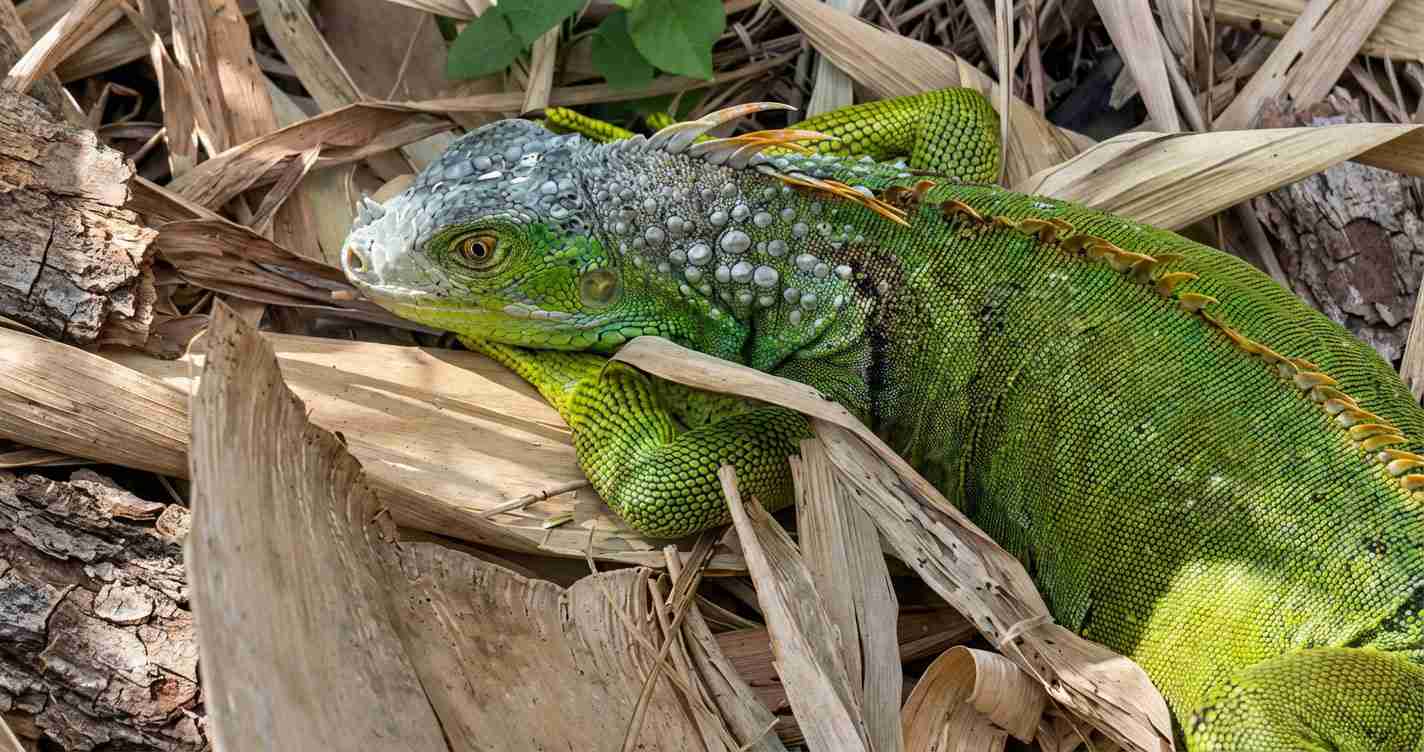
Green iguanas are a prohibited nonnative species in Florida. The FWC and partner agencies label them invasive because they reproduce prolifically and cause environmental and infrastructure damage: burrowing undermines canal banks, seawalls and docks; they damage gardens, crops and private property; and their droppings and burrows affect native wildlife and public spaces.
Florida reports more than 600 nonnative animal species, with 139 considered established. The FWC attributes roughly 80% of those introductions to the live animal trade and focuses on control and removal to protect property and ecosystems. See the FWC news release for additional agency context.
Cold-stunning: a temporary but dangerous state
A cold-stunned iguana may lose muscle control and fall from trees; they can appear lifeless but may revive when warmed. The FWC warns against bringing cold-stunned iguanas indoors because once warmed they can awaken suddenly and defend themselves with whipping tails, teeth and claws. The agency urges professional handling and caution.
Local footage of residents collecting stunned iguanas is available as local video, and the agency’s release summarizes handling guidance.
What officials and residents said
“The removal of over 5,000 of these nonnative lizards in such a short time span was only possible thanks to the coordinated efforts,” said FWC Executive Director Roger Young at a Feb. 4 commission meeting in Tallahassee.
Young credited staff, partners and residents for participating in the response. Local news footage highlighted neighborhoods and volunteers collecting stunned iguanas during the cold snap, reinforcing the role public participation played in the rapid removal effort.
Handling, euthanasia and accountability
The FWC stated animals were either transferred to permitted holders or humanely euthanized by trained staff when transfers were not feasible. The agency emphasized adherence to anti-cruelty laws and professional protocols. However, the release does not provide a detailed public breakdown of how many animals were transferred versus euthanized, where transferred animals ultimately went, or long-term tracking procedures once animals left Florida.
Those operational questions — including transfer counts, tracking and follow-up monitoring — remain areas where public records requests or further reporting could provide clarity.
Implications for the United States
- National invasive-species planning: Sudden surges tied to weather highlight the need for clear state and federal protocols to manage temporary windows for safe removals (FWC).
- Live-animal trade scrutiny: The FWC cites the live-animal trade as a major driver of nonnative introductions; tighter rules and monitoring may be considered nationwide.
- Property and infrastructure costs: Burrowing and other damage have fiscal impacts for homeowners and municipalities; technical and funding assistance may be needed elsewhere.
- Emergency response tools: Temporary exemptions—like Executive Order 26-03—can help in short windows but require safeguards to prevent misuse and ensure humane treatment.
- Transparency and oversight: Large-scale removals invite calls for detailed reporting on transfers vs. euthanasia, destination tracking, and long-term plans to limit future outbreaks.
What to watch next
The two-day exemption has expired and the FWC is returning to standard rules. Year-round, green iguanas remain unprotected except for anti-cruelty statutes; property owners may remove or humanely kill iguanas on private land or hire professionals. The FWC continues to encourage public reporting and education about invasive species and their impacts.
Further reporting, public records requests and follow-up releases could clarify transfer numbers, destinations and long-term agency plans for preventing similar surges.
Sources and further reading
- FWC news release — details on removals, logistics and Executive Order 26-03.
- Local footage — video of residents collecting stunned iguanas.
- Fox News summary — external reporting summarizing the event and totals.
Preserved facts and URLs above reflect official agency reporting and local coverage cited by the Florida Fish and Wildlife Conservation Commission and media outlets.