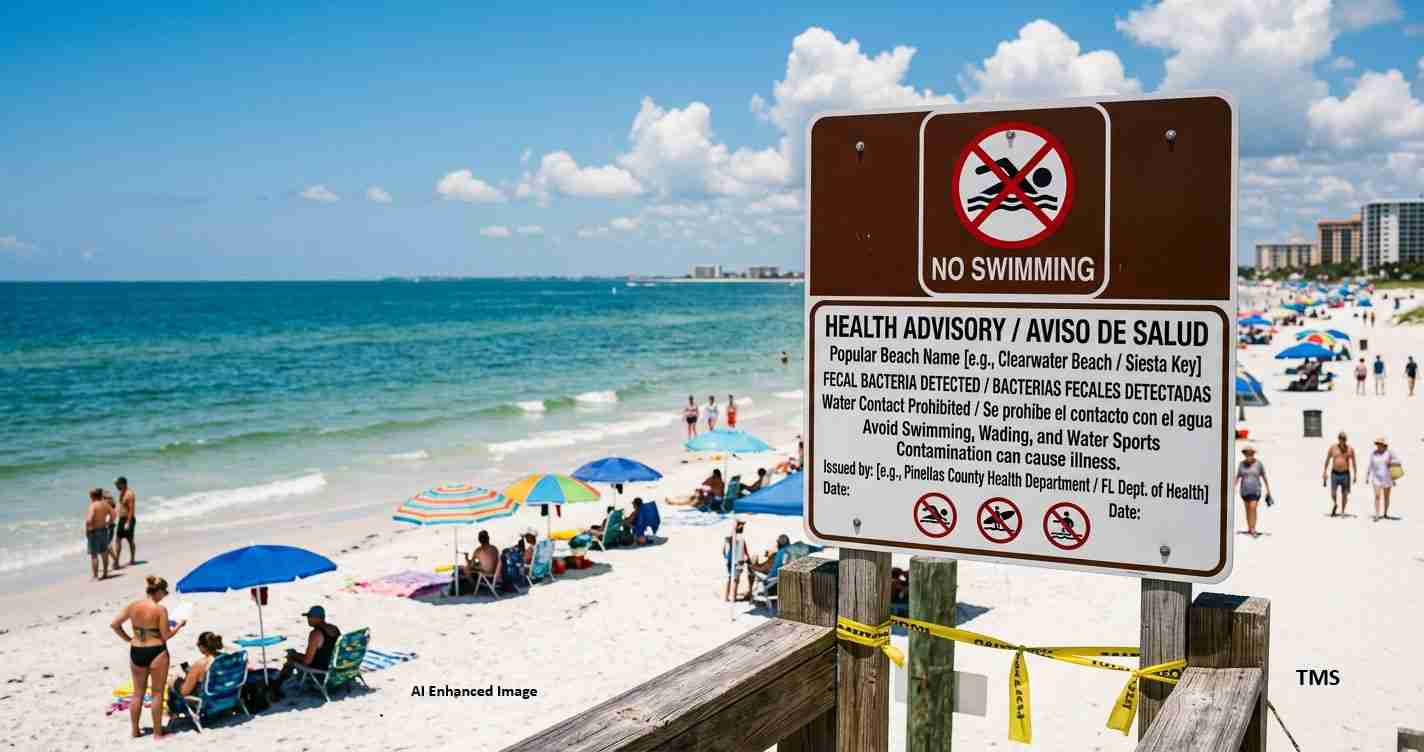
Health advisory issued after bacteria detected at three Panama City Beach sites; officials warn against water contact
Health officials issued an advisory after tests found elevated enterococci levels at three Panama City Beach sites; beaches remain open but the public is urged to avoid swimming and water contact until bacteria counts return to acceptable limits.
Key takeaways
- Advisory sites: Laguna Beach, Beach Drive and Carl Gray Park in the Panama City Beach area are under a health advisory.
- Reason: Tests showed elevated enterococci, an indicator of possible fecal contamination and other pathogens.
- Action urged: Avoid swimming or water contact at the advisory beaches until levels return to normal; beaches remain open for dry-land activities.
- Resources: Updates are posted by the Florida Department of Health in Bay County and guidance on indicators is available from the U.S. Environmental Protection Agency.
Main coverage
What officials found and why they issued the advisory
Tests conducted on Tuesday by the Florida Department of Health in Bay County detected elevated levels of enterococci at three sampling sites near Panama City Beach. When bacterial counts exceed state or federal criteria, the department issues a health advisory to warn that water contact could raise the risk of infectious disease.
“Advisories are posted both when tests exceed set limits and when conditions — such as heavy rainfall — increase contamination risk,” local officials noted.
Enterococci and what it signals
Enterococci are bacteria commonly found in the intestinal tracts of warm-blooded animals and are used as an indicator that fecal contamination may be present. The U.S. Environmental Protection Agency explains these bacteria can signal the possible presence of viruses, bacteria or parasites that pose health risks to swimmers.
Health risks associated with contaminated recreational water include gastroenteritis, ear or throat infections, skin rashes and wound infections. Individuals with open cuts, chronic illnesses, or weakened immune systems are particularly advised to avoid water contact.
Weather, runoff and testing results
Bay County health officials linked the elevated counts to recent heavy rains and flash flooding, which can carry stormwater runoff — including animal waste, soil and sewage overflows — into coastal waters. The health department issues advisories both when sampling exceeds limits and when weather conditions make contamination more likely.
Note: A beach that looks clean can still have elevated bacteria after intense rainfall; local officials typically retest until results fall within safe thresholds before lifting warnings.
Public health guidance for visitors and residents
- Avoid water contact at Laguna Beach, Beach Drive and Carl Gray Park until tests show enterococci levels are back to acceptable limits.
- Check updates: Monitor the Florida Department of Health in Bay County for the latest advisories and testing results.
- Seek care if ill: If you become sick after water exposure, seek medical attention and inform your provider of possible exposure to contaminated recreational water.
Economic and community effects in Panama City Beach
Even short-term advisories can affect tourism-dependent economies like Panama City Beach, causing hesitation among visitors and financial strain on businesses that rely on beach traffic. Local officials must weigh public-health protection with keeping beaches open for commerce.
Investigative look at monitoring and accountability
Counties test designated sites on schedules and after weather events. Frequent advisories may point to systemic issues — aging stormwater systems, sewage infrastructure gaps, or insufficient natural buffers that filter runoff. While federal standards and guidance (see the EPA beach bacteria resources) set baselines, local monitoring and public notice systems are critical for timely protection.
Implications for the United States
This Bay County advisory reflects broader national concerns: as extreme precipitation events increase, more beaches may face temporary contamination from stormwater runoff. The pattern underscores the need for investments in stormwater and sewage systems, expanded monitoring networks, and rapid public-notice systems to protect health and support local economies.
Practical steps for visitors, residents and local leaders
- Check official updates before swimming: the Florida Department of Health in Bay County posts advisories and testing results online.
- Avoid water contact at advisory sites, especially if you have open wounds or a weakened immune system.
- If ill after water contact, seek medical care and report possible exposure.
- Local leaders should prioritize stormwater controls, post-rain testing, and clear public-notice systems; federal guidance from the EPA can help shape programs.
Where to get more information
Bay County health advisories and testing updates are posted by the Florida Department of Health in Bay County. For federal guidance on enterococci and beach monitoring, consult the U.S. Environmental Protection Agency.
Closing: The Florida Department of Health in Bay County will continue sampling and post results; until enterococci levels return to normal, officials advise avoiding swimming and other water contact at Laguna Beach, Beach Drive and Carl Gray Park.