
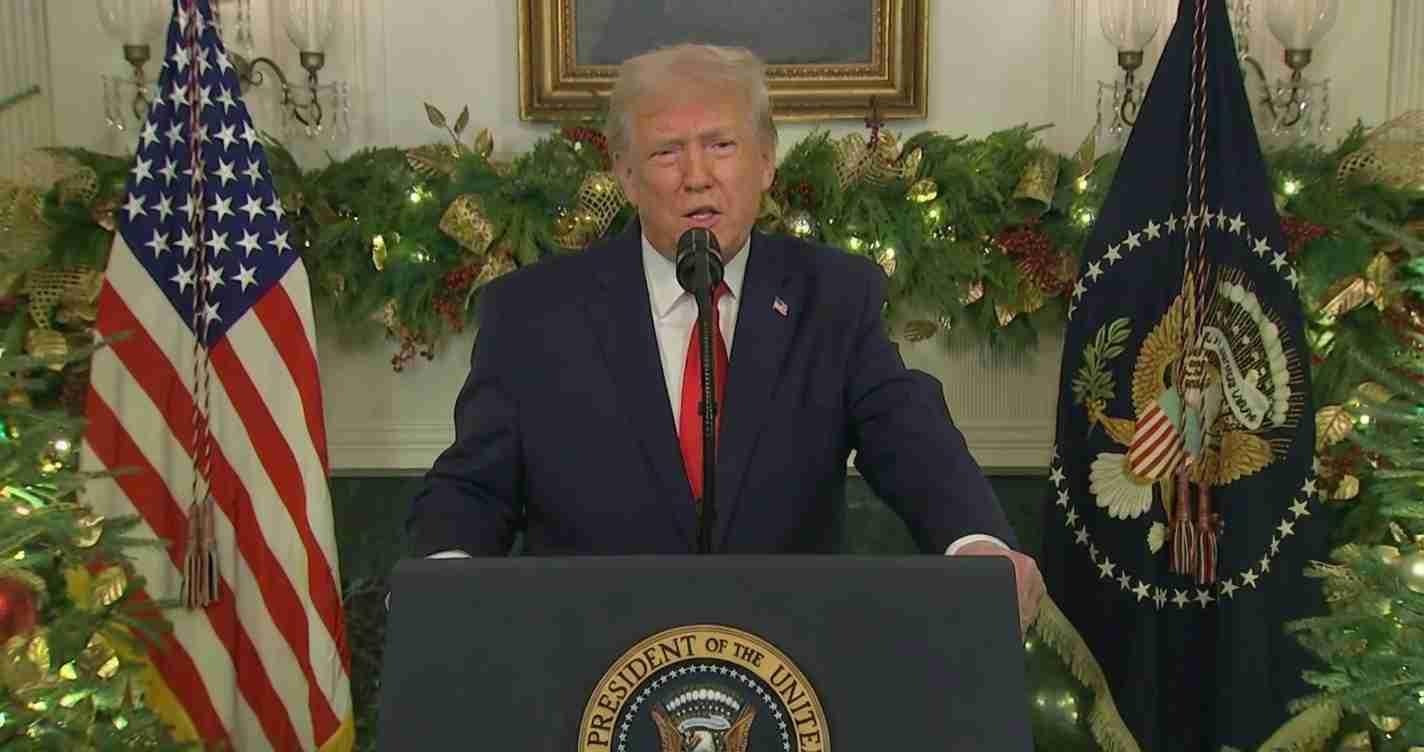
Trump “Warrior Dividends” speech and claims about wages, savings: a fact check
Reports about a prime-time speech by Donald Trump announcing a “Warrior Dividends” program and claims that wages outpaced inflation and boosted household savings are unverified; no official speech transcript or policy record supports these circulating statements.
Key takeaways
- No verified record of a recent prime-time address or a federal program called “Warrior Dividends” appears in official archives or major news outlets.
- Wage vs. inflation claims depend on the wage series, inflation index, and time window — short-term gains can be true but not indicative of a universal trend.
- No official military payout tied to the 250th anniversary appears in public Semiquincentennial planning or Department of Defense materials.
- Household saving assertions require a clear timeline and accurate premise about who is currently in the Oval Office to be verifiable.
Main analysis
What we checked
We searched official White House releases, C-SPAN speech archives, major U.S. news outlets, and government data portals. We reviewed economic series commonly used to compare wages and inflation and searched for any policy release or transcript mentioning “Warrior Dividends.”
No verified prime-time address or policy called “Warrior Dividends”
There is no archived speech, transcript, or White House fact sheet that matches the description. Major outlets and official speech archives — including C-SPAN and the White House site — show no record of a national prime-time address or a federal policy announcement named “Warrior Dividends.”
Planning for the 250th anniversary is public and handled by groups such as America250, but those materials do not include a nationwide dividend for active-duty troops.
Related public items: past campaign or administration speeches in which Mr. Trump praised wage growth exist, but those are distinct from the alleged recent policy rollout; two illustrative videos are publicly available online as separate materials.
Checking the wage-and-inflation claim
When officials say “wages are rising faster than inflation,” the statement can be accurate for certain months, measures, or timeframes but not universally true across all series. Key data sources include:
- Wage measures: Bureau of Labor Statistics real earnings — see BLS real earnings.
- Inflation measures: BLS Consumer Price Index (CPI) and BEA Personal Consumption Expenditures (PCE).
- Data tools: analysts often use FRED for multi-series comparisons alongside BLS releases.
Short-run increases in real wages can occur when nominal wages rise quickly or inflation slows; therefore, a politician pointing to a favorable short-term period may be technically correct for that slice but misleading if implying a long-term achievement or attributing all change to a single policy.
Household savings and the problem with the timeline
Household saving and the personal saving rate are tracked by the BEA personal saving rate. Any claim about savings “since Biden’s Oval Office exit” relies on a specific date for that exit — a premise that must be confirmed before the data comparison is meaningful.
Short-term movements in the saving rate reflect many influences beyond presidential policy, including pandemic effects, tax changes, unemployment, and household behavior.
Why these kinds of messages can be misleading
Politicians often highlight favorable slices of complex economic data; without clear series, dates, and adjustments, such claims can overstate the case.
When leaders present “receipts” — charts, numbers, or slides — readers should ask:
- Which exact data series and dates were used?
- Are figures seasonally adjusted?
- Which inflation measure is applied?
- Is a short-term trend being presented as a long-term achievement?
Fact-check steps for reporters and readers
Reporters and readers should:
- Search the White House news releases and fact sheets for the announcement.
- Check speech archives at C-SPAN for a date and transcript.
- Verify policy announcements with the Department of Defense press releases.
- Compare economic claims with BLS and BEA data for the specific indicators and timeframes cited (BLS; BEA).
- Watch for identical phrasing or graphics shared widely on social media; such patterns can indicate AI-generated or partisan fabrication.
Implications for the United States
Economic impact: A genuine federal program providing broad military payouts would necessitate budgetary planning, funding sources, and clear cost estimates; it could affect discretionary spending and deficit projections.
Political consequences: Unverified claims about high-profile programs can shape public expectations ahead of elections, complicate negotiations in Congress, and create friction among fiscal conservatives who demand transparency about costs and legal authority.
Social effects: Exaggerated economic claims risk eroding public trust if later disproved. Accurate reporting on wages, inflation, and savings helps families make informed budgeting and retirement decisions.
Cultural relevance: Linking benefits to the 2026 Semiquincentennial would be symbolically powerful, but official planning groups like America250 focus on commemoration and civic engagement — not an unvetted nationwide payout.
Practical guidance
Treat viral claims about major policy moves as unverified until they are supported by official documents. Primary sources to consult include the White House, the Defense Department, BLS, BEA, and FRED for data comparisons.
Sources and further reading
- White House official site
- C-SPAN archives
- Bureau of Labor Statistics — Real Earnings
- Bureau of Labor Statistics — CPI
- Bureau of Economic Analysis — Personal Saving Rate
- America250 (Semiquincentennial)
- Example Trump economic speech (video) and another illustrative clip (video)
For a deeper data dive, consult the linked BLS and BEA releases and archived speeches on C-SPAN before accepting or sharing claims that present major new policies or sweeping economic conclusions.



