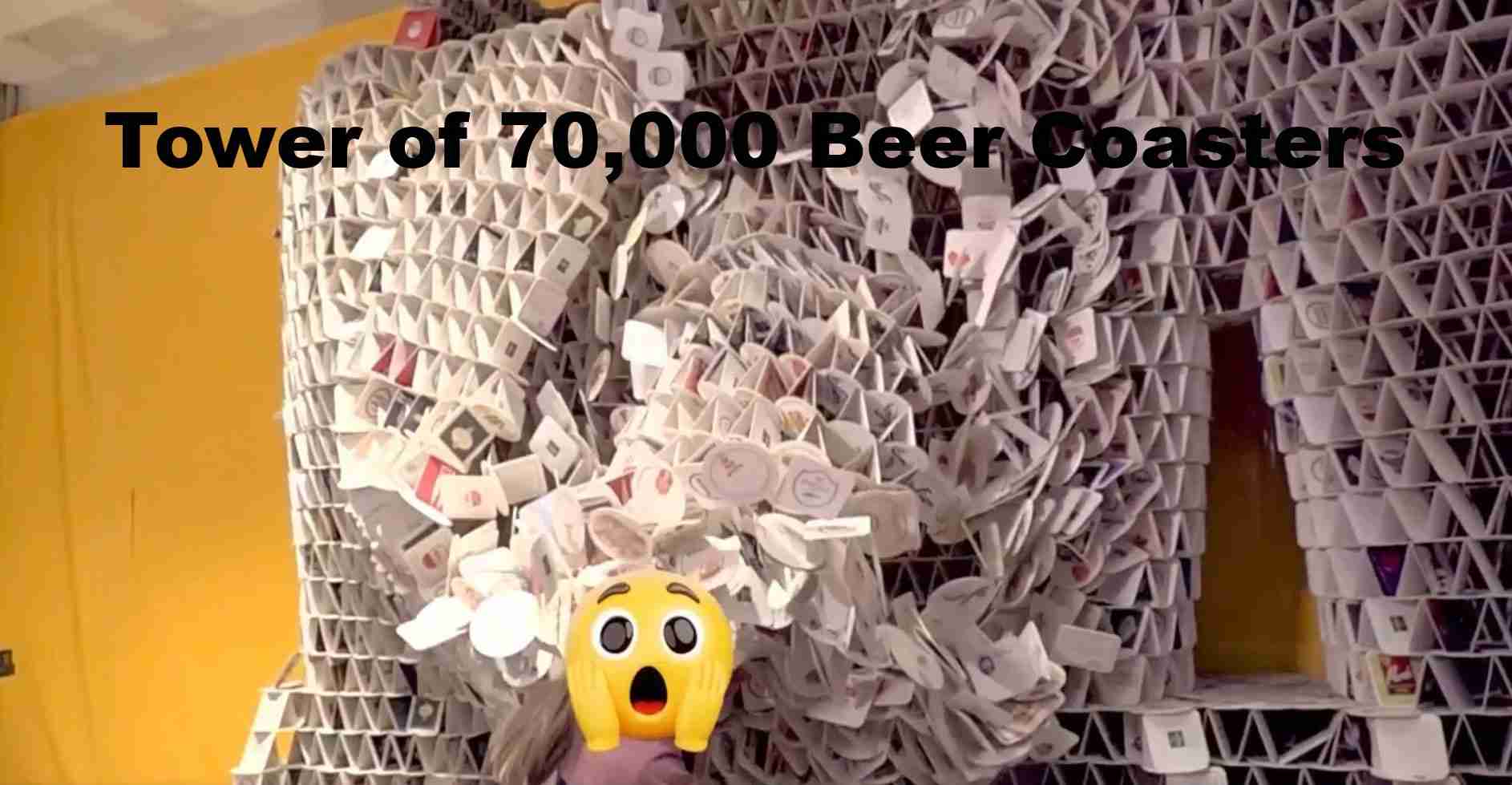
Girl topples beer coaster tower at Cologne shopping mall — viral video spotlights Benjamin Klapper art and failed Guinness bid
A viral January 10, 2026 video shows a young girl at Cologne’s Rhein‑Center shopping mall pulling a single coaster and toppling Benjamin Klapper’s 63,000-piece installation “Inside,” which had been built during a failed Guinness World Record attempt.
- One pull, total collapse: A child removed a horizontally placed coaster and the entire 63,000-piece structure cascaded like a house of cards.
- Build details: Klapper spent about 120 hours over 28 days assembling the piece, which began Oct. 31 and finished Dec. 8, 2025.
- Record attempt voided: The tower partially failed before verification, so a Guinness World Record could not be registered.
- Publicity and lessons: The interactive turn drew crowds and viral attention while raising safety and liability questions for public displays.
The build and the collapse
Benjamin Klapper, a 49‑year‑old artist who runs MuVi 3D GmbH, described Inside as a painstaking project. He told reporters he spent roughly 120 hours assembling the tower over 28 days — a build that began on Oct. 31, 2025 and finished on Dec. 8, 2025. Klapper has constructed coaster displays since childhood and framed the project as a personal milestone despite its failure to gain official certification.
“I spent about 120 hours assembling the tower over 28 days,” Klapper told reporters, noting earlier signs of structural weakness before the public event.
According to reports, the structure showed weakness and partially collapsed under its own weight shortly before completion, preventing Guinness verification. Rather than cancel the display, Klapper invited mall visitors to remove coasters one at a time until the entire installation fell — the interactive element that led to the viral moment when a helper’s daughter pulled a single horizontally placed coaster and the tower cascaded.
Viral spread and public reaction
Footage of the collapse, widely shared on Jan. 10, 2026, racked up millions of views and was described by witnesses and viewers as similar to a house of cards. Reactions online ranged from amazement at the craftsmanship to skepticism about authenticity, with some suggesting the clip might be doctored. Others expressed sympathy for Klapper and admiration for the spectacle.
Different outlets reported the coaster count as either 63,000 or 64,000 pieces; reporters noted this small discrepancy did not change the core facts of the incident. The footage includes audible gasps and laughter from the crowd as the structure collapses.
Guinness context and technical limits
The standing Guinness World Record for the largest drink coaster construction is 70,000, set by Sven Goebel in 2004 with a tower reaching 9 feet 6 inches. Even at the reported 63,000 pieces, Klapper’s tower would have fallen short of that figure. More importantly, Guinness requires a structure to be intact and independently measured during an attempt; the tower’s earlier partial collapse made formal certification impossible.
The episode highlights the technical and safety challenges of building large, fragile installations in public spaces and the need for independent verification when records are pursued.
About the artist
Benjamin Klapper has built coaster constructions since childhood and runs MuVi 3D GmbH. He has staged public displays before and emphasized that showing the process matters as much as the finished piece. In framing the interactive moment as part of the work’s life, Klapper invited the public to participate even though that risked the structure’s collapse.
Implications for United States
Economic impact: Public art in malls can boost foot traffic and short‑term sales; viral moments like this one can bring national or international attention to a shopping center and its tenants.
Safety and legal issues: The collapse underscores liability and insurance concerns for mall operators hosting interactive exhibits. US property owners should consider permits, safety checks, third‑party structural reviews, clear signage and supervised interaction.
Cultural effects: The clip taps into audiences’ appreciation for craft, competition and family moments — a child’s playful success resonated widely while raising questions about how viral content frames art and failure.
Practical takeaways for organizers
- Document build processes and plan for independent verification if pursuing records.
- Be transparent with visitors about risks and restrictions; use signage and supervision.
- Consider staged, controlled interaction to balance publicity value with safety and liability mitigation.
Sources and further reading
- Tribune: “Girl accidentally topples 63,000 beer coaster tower built for world record”
- Fox News: “Girl caught on video pulling single square from 63,000-beer coaster tower; Guinness World Records attempt collapses”
- Newsflare: Video coverage and description
- Nevsedoma: Local reporting describing the structure as a castle/tower
(Reporting compiled from Times Media Service coverage and the cited sources.)