7-ton fireball fragments over Valley City, Ohio, prompting loud Cleveland sonic boom heard across the Midwest
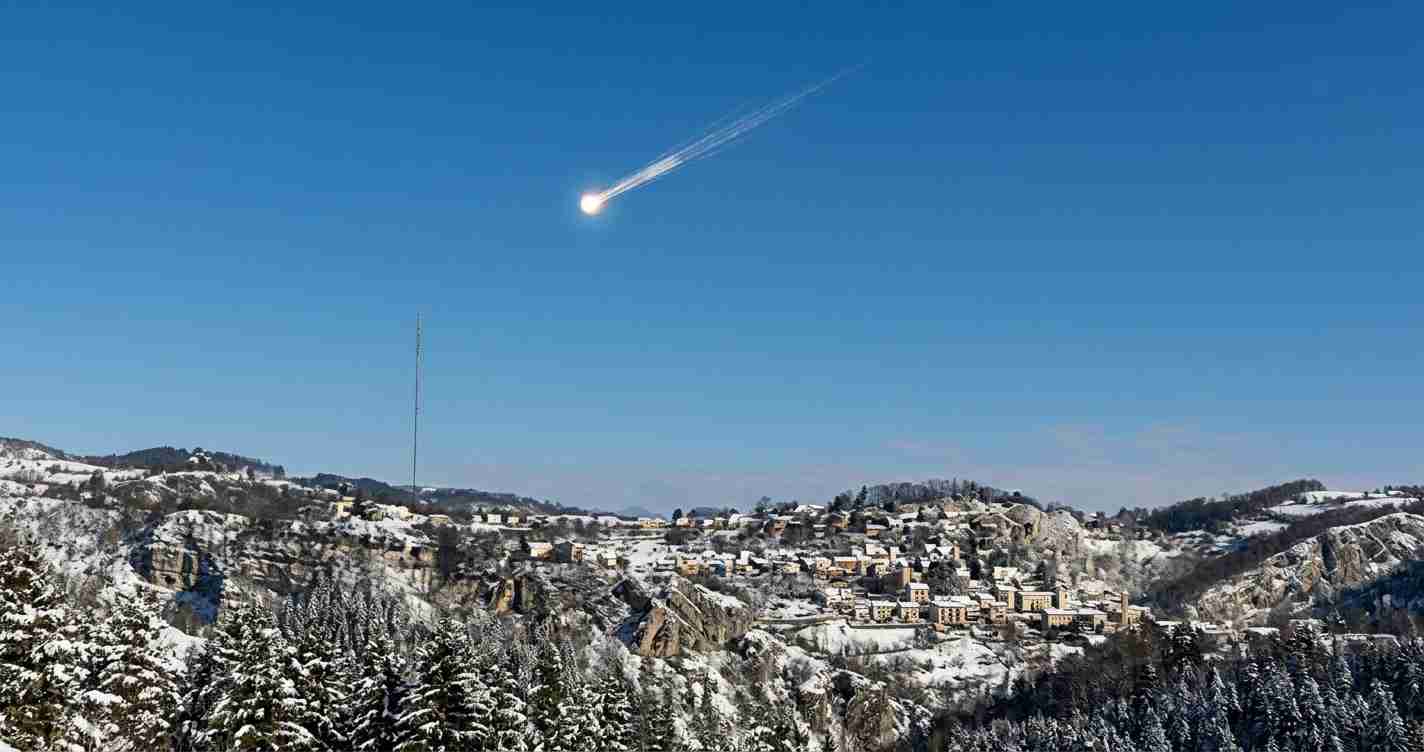
A 7-ton daytime fireball meteor fragmented above Valley City, Ohio, on March 17, 2026, producing a powerful sonic boom heard across Northeast Ohio and neighboring states; fortunately, no injuries or structural damage were reported, officials said.
- When: March 17, 2026, just before 9 a.m. ET (about 8:57–9:00 a.m.). (Sources: WTOP, Signal Cleveland, Los Angeles Times)
- Object: A roughly 6-foot-wide asteroid weighing about 7 tons that produced a bright daytime fireball. (WTOP; Los Angeles Times)
- Effects: Fragmentation released energy roughly equivalent to 250 tons of TNT, producing pressure waves and audible booms across the Ohio Valley; no injuries or damage were reported. (WTOP; Signal Cleveland; Los Angeles Times)
What happened
Shortly before 9 a.m. ET on March 17, a very bright daytime fireball crossed the Great Lakes sky. Observers reported the object was first seen about 50 miles above Lake Erie near Lorain and then raced southeast at an estimated 40,000–45,000 mph, traveling roughly 34 miles through the upper atmosphere before breaking apart near 30 miles above Valley City, Ohio. (WTOP; Signal Cleveland; Los Angeles Times)
Eyewitness accounts and video
The meteor was bright enough to be visible in daylight and generated reports from more than ten states — including Delaware, Indiana, Illinois, Kentucky, Maryland, Michigan, New York, Ohio, Pennsylvania and Washington, D.C. — and sightings in Ontario, Canada. Many residents posted videos to social media and called local authorities describing a blazing object moving across the sky. (WTOP; Los Angeles Times)
Notable footage: A National Weather Service staffer in Pittsburgh captured video of the fireball; the Cleveland NWS office later shared the clip and noted the event likely caused the loud booms. The NWS geostationary lightning mapper in Cleveland also recorded a green flash at the time — an instrument normally used for lightning detection but useful for very bright meteors. (Signal Cleveland; WTOP)
Sonic boom, pressure wave and local response
When the meteor fragmented, scientists estimate it released energy on the order of 250 tons of TNT. That sudden release produced a pressure wave that propagated to the ground and was heard as an explosive boom — described by residents as sometimes louder than a low-flying jet or a thunderclap. Emergency managers received calls and alerts across parts of Northeast Ohio, though officials reported no structural damage or injuries as of Tuesday afternoon. NWS Cleveland staff reported feeling vibrations in their office. (WTOP; Signal Cleveland; Los Angeles Times)
Science and analysis
Experts noted the object was too small to be detected before atmospheric entry. Small asteroids roughly the size of a doorway commonly enter Earth’s atmosphere; most break apart well above the surface. NASA and meteor specialists say objects under football-field scale frequently fragment in the upper air, and typically less than 5% of the original mass reaches the ground. (WTOP; Los Angeles Times)
On possible meteorites: NASA meteor expert Bill Cooke said that “some fragments, some tiny pieces of it, actually made it to the ground,” and that meteorites from this event likely fell in the vicinity of Medina County, though none had been recovered by Tuesday afternoon. (WTOP)
Astronomers with the American Meteor Society and others confirmed the event as a fireball and not a satellite reentry. Experts noted daytime visibility and audible booms made the event particularly notable. (Los Angeles Times)
Why booms were heard
Meteors travel at tens of thousands of miles per hour — vastly exceeding the speed of sound. As they slice through the upper air, they compress and heat air ahead of them. If a meteor is large and low enough when it breaks up, pressure waves can reach the ground as sonic booms. Altitude, size and breakup pattern determine whether and where a boom will be heard; this event’s fragmentation created multiple pressure pulses noticeable across wide areas. (WTOP; Signal Cleveland)
Context and frequency
Specialists say meteors of this scale enter Earth’s atmosphere roughly once a day somewhere over the United States, but the combination of daytime visibility, a large fragmentation event and widespread audible booms is far less common. The region recently recorded other fireballs on home cameras in mid-February and on March 15, increasing public awareness and video documentation. (WTOP; Signal Cleveland)
Recovery and investigation
Local authorities and scientists planned search efforts in Medina County for any meteorites that might have reached the ground. Recovering fragments can help researchers learn about composition and origin. Officials urged the public to avoid handling dark, heavy rocks they find and to report suspected finds to local universities, museums or authorities so experts can examine them safely. (WTOP; Signal Cleveland)
Implications for the United States
- Public safety and preparedness: The event underscores the need for clear guidance about reporting unusual sky events and possible meteorite finds; emergency managers should review communications so residents know how to report damage or discoveries. (WTOP; Signal Cleveland)
- Science and detection: The meteor was too small to spot beforehand, highlighting limits in early-warning systems for small asteroids and the value of expanded surveillance and community reporting. (Los Angeles Times; WTOP)
- Local economies and outreach: If meteorites are recovered, museums and universities could use them for research and education, boosting STEM interest and attracting visitors. (Signal Cleveland; WTOP)
- Policy and coordination: Cross-agency coordination among NASA, NOAA, state agencies and local governments will help ensure timely public information and safe handling or preservation of meteorite sites. Practical steps include clear reporting lines and guidance to avoid public alarm. (WTOP; Los Angeles Times)
Next steps and how to report finds
Authorities and scientists continue to study data from the event. Residents are encouraged to report suspected meteorite finds or unexplained structural damage to local officials so experts can investigate. If you find a dark, heavy rock that might be a meteorite, do not handle it; instead contact local museums, universities or emergency officials for guidance. (WTOP; Signal Cleveland; Los Angeles Times)