Air Canada Express regional jet collides with Port Authority fire truck at LaGuardia; both pilots killed as NTSB opens probe
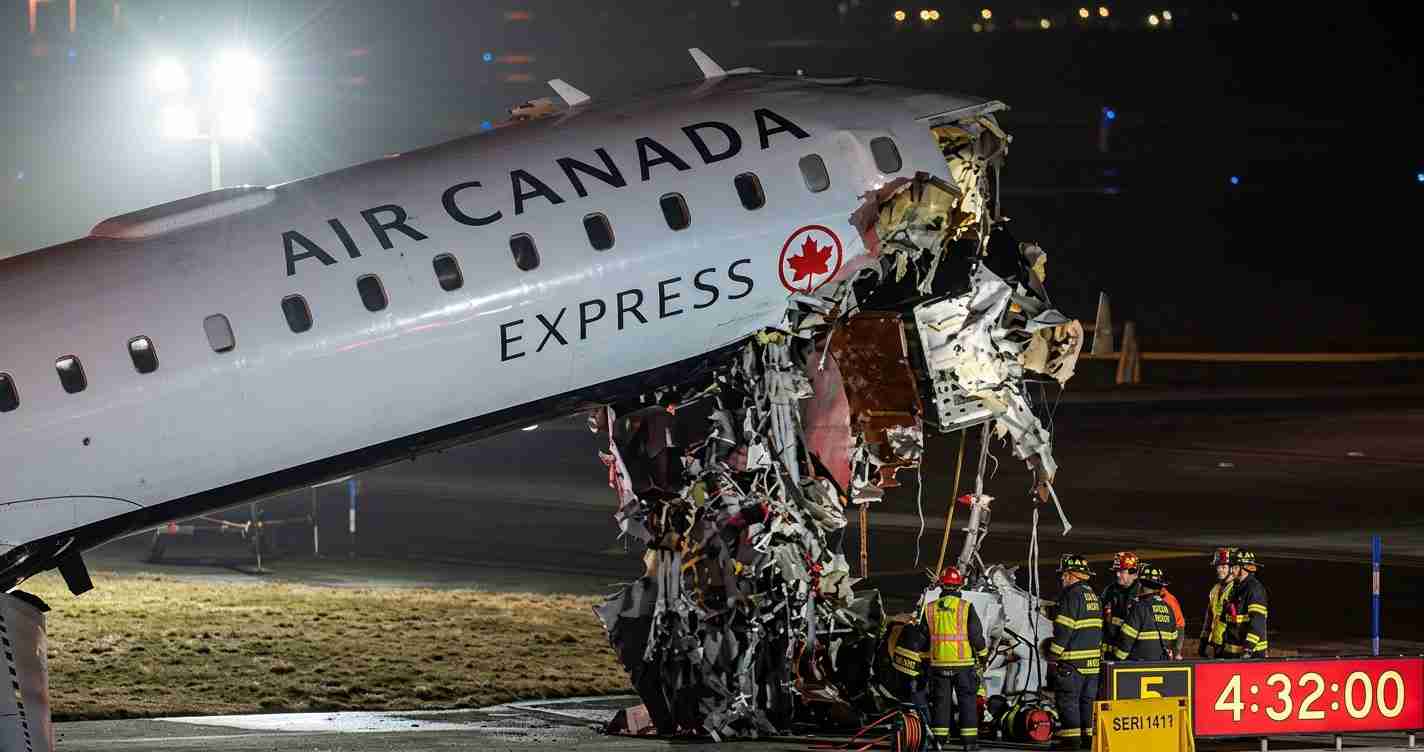
A Bombardier CRJ‑900 operated as Air Canada Express collided with a Port Authority fire truck while landing at LaGuardia late March 22, killing both pilots and injuring dozens; the NTSB has opened a full investigation.
Key takeaways
- Fatal collision: Both the captain and first officer were killed; dozens of passengers, crew and first responders were injured.
- Recorders recovered: The cockpit voice recorder was intact and taken to NTSB labs; the flight data recorder is under analysis.
- Controller audio: Preliminary recordings capture urgent commands to the truck — “Stop truck one. Stop!” — before impact.
- Investigation: The NTSB, with FAA assistance, is examining ATC communications, surface radar, surveillance video and procedures for emergency vehicle runway crossings.
Key information
- Aircraft: Bombardier CRJ‑900, registration C‑GNJZ, operated by Jazz Aviation on behalf of Air Canada, Flight AC8646 (72 passengers, 4 crew). Sources include Fox News, Airlineratings and Jazz Aviation statements.
- Time & location: Late-night landing on Runway 4 at LaGuardia Airport, about 11:45 p.m. local time on Sunday, March 22, 2026. (Source: Fox News; ABC News.)
- Casualties & injuries: Both the pilot and first officer were killed. More than 39 passengers and crew and two Port Authority ARFF officers were hospitalized; 32 people have since been released. The two ARFF officers suffered broken bones but are expected to survive. (Sources: Fox News; ABC News.)
- Investigation status: The NTSB is leading the probe with FAA assistance. The CVR was recovered intact and transported to NTSB labs; work on the FDR began soon after and early analysis is under way. (Source: Fox News.)
Collision overview and timeline
Preliminary accounts indicate the CRJ‑900 was on final landing and rolling on Runway 4 when it struck a Port Authority fire truck that was crossing the runway. The fire truck had been responding to a rejected takeoff on another aircraft and had received clearance from an air traffic controller to cross Runway 4 at taxiway Delta, according to officials. (Sources: ABC News; Fox News.)
Recordings capture a controller yelling at the vehicle to stop — “Stop truck one. Stop!” and “Stop! Stop! Fire #1 Stop!” — but the truck did not respond before impact.
The plane struck the truck head‑on; the collision tore off the nose of the aircraft, and the jet then skidded across the runway and onto a taxiway before coming to a stop. (Source: Airlineratings.)
Speed and impact details
Initial reports offered differing estimates for the aircraft’s ground speed at collision. Some sources placed the jet’s ground speed at roughly 93–105 mph, while one tracking feed suggested a much lower figure (~24 mph). Investigators will resolve those differences using flight data and radar replay during the NTSB inquiry. (Sources: ABC News; Airlineratings.)
Rescue, medical response and airport operations
Emergency response: Crews rushed passengers and injured responders to area hospitals. Port Authority Executive Director Kathryn Garcia said 32 people had been released from hospitals, though some remain seriously injured. Two ARFF officers were hospitalized with broken bones but are expected to survive. (Sources: Fox News; ABC News.)
Airport operations: LaGuardia was closed immediately after the crash. The FAA issued a ground stop and a NOTAM while investigators examined the scene. The Port Authority and FAA estimated the airport would remain closed into the following day; LaGuardia reopened at 2 p.m. Monday, March 23, after debris removal and initial scene work. (Sources: Fox News; Airlineratings; ABC News.)
Recorders recovered; NTSB probe under way
The NTSB led site operations and recovered both the cockpit voice recorder and the flight data recorder. NTSB Chair Jennifer Homendy said the CVR “was not damaged” and had been transported to the agency’s labs in Washington, D.C. for analysis. Investigators and emergency personnel cut a hole in the aircraft’s roof to reach the recorders. (Source: Fox News.)
Investigators are working to determine the exact positions of the aircraft and the fire truck in the moments before impact, information expected from the FDR. The NTSB is reviewing surveillance video, ATC communications and airport surface detection replays. Chair Homendy warned the crash scene is “pretty expansive,” with debris across runways and taxiways; documenting evidence carefully could take days. (Source: Fox News.)
Operational context, questions and potential consequences
Key investigative questions: Officials noted the truck had requested and received permission to cross the runway. Investigators will probe why the truck did not stop after the controller’s urgent commands, whether radio or signal failures occurred, what lights and markings the truck displayed, and whether Port Authority emergency-vehicle protocols were followed. (Sources: ABC News; Fox News.)
Federal oversight: The NTSB leads the safety investigation with cooperation from the FAA and Port Authority. Secretary of Transportation Sean Duffy’s office noted the flight included four crew members — the captain, first officer and two flight attendants. (Source: Fox News.)
Implications for the United States
- Economic impact: The closure disrupted flights and freight on a key East Coast corridor; short-term shutdowns can create ripples in costs, repairs and claims.
- Political consequences: Expect congressional scrutiny and calls for accountability, with lawmakers pressing the FAA and Port Authority for answers on emergency-vehicle runway protocols.
- Safety & regulation: NTSB findings could prompt changes to vehicle movement rules, surveillance systems and training for ARFF crews and controllers.
- Social effects: Passenger confidence may be shaken; affected families will seek answers and compensation as investigations and legal reviews proceed.
Practical applications for airports and legal questions
Airports nationwide may reexamine dispatch coordination with ATC, radio readbacks, cross‑check protocols, vehicle stop systems and signage. Low‑cost fixes and larger investments (surface detection upgrades, automated alerts) are possible outcomes. The collision raises legal issues about fault, procedures and potential negligence; families and injured passengers may pursue civil claims, and Port Authority policies and contractor procedures will be examined closely.
Sources and reporting notes
This article draws on reporting from Fox News, ABC News and Airlineratings, plus statements from Port Authority officials and the NTSB.
Investigative follow-up will track NTSB releases of voice and data recorder analysis, air traffic control transcripts, surveillance footage, and official reports from the Port Authority and FAA as they become public.