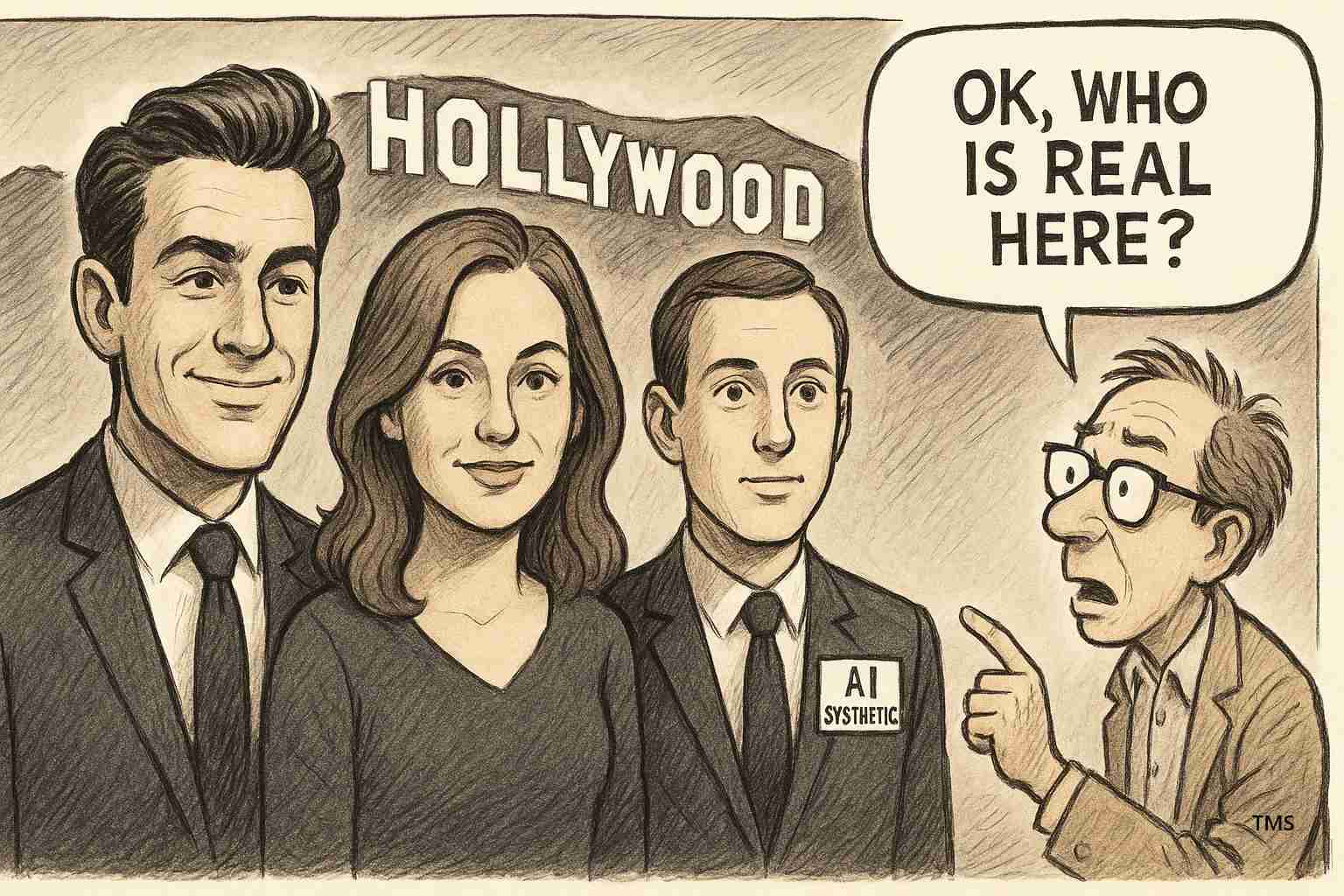
SAG-AFTRA Condemns Viral “Tilly Norwood” AI Actress, Warns Synthetic Performers Threaten Jobs and Creative Integrity
Los Angeles — SAG‑AFTRA has publicly condemned the viral AI actress “Tilly Norwood,” warning that synthetic performers threaten jobs, creative integrity and consent rights, and urging enforcement and expansion of protections negotiated after the 2023–24 strikes.
- Union alarm: SAG‑AFTRA says synthetic performers could displace union work and erode decades of labor protections.
- Industry split: Producers and tech firms tout creative possibilities and cost savings; many performers and unions push for strict rules.
- Regulatory push: The union demands enforcement of 2023–24 contract terms and new safeguards requiring disclosure and consent.
- Broader stakes: Potential impacts span jobs, local economies, cultural authenticity and copyright/consent law.
Background: who is Tilly Norwood and why she matters
Tilly Norwood was introduced online as a fully AI-generated performer produced by Revelations Entertainment. The company promoted Tilly through human-like interviews and a social-media presence that presented her as a rising screen talent, and video clips quickly went viral in late September 2025.
What made Tilly notable was not only the technical quality of the digital creation but the way she was framed — as a marketable performer who could be booked, promoted and managed like any human actor. Reports said some talent agencies even held preliminary talks about representation, which prompted a swift public rebuke from SAG‑AFTRA and turned the episode into an industry flashpoint.
SAG‑AFTRA’s response and demands
SAG‑AFTRA publicly denounced the marketing and potential deployment of synthetic performers, stressing that allowing AI to take roles earmarked for humans would undermine decades of labor protections. The union’s statement highlighted several core concerns:
- Job displacement: Synthetic actors could replace background performers, supporting players and — potentially — lead actors, cutting work for union members.
- Consent and control: The union warned that creating or using digital likenesses without clear consent rules would erode performers’ rights and compensation.
- Creative integrity: SAG‑AFTRA argued storytelling depends on human emotion, nuance and lived experience that AI cannot authentically replicate.
- Transparency and regulation: The union called for standards and legal safeguards requiring disclosure when AI is used and protections to prevent unfair displacement.
SAG‑AFTRA said these demands build on contract terms negotiated during the 2023–24 labor actions, which secured protections around digital replicas and consent, and the union indicated it will press to enforce and expand those protections to cover fully synthetic performers.
Production company and agency reaction
Revelations Entertainment defended Tilly as a creative and technological proof-of-concept, arguing that AI performers can enable stories that are otherwise costly or dangerous to produce and can be managed as intellectual property or brands. Company spokespeople emphasized potential cost savings and new storytelling tools.
Some talent agencies reportedly explored representing Tilly in the same way they represent human performers. After SAG‑AFTRA’s condemnation, however, many firms stepped back from public discussions, and industry leaders urged weighing innovation against worker protections.
Industry debate: supporters and critics
Supporters of AI performers emphasize practical benefits: lower costs, shorter schedules and the ability to create characters for niche or hazardous scenarios. Producers and tech advocates say synthetic characters could assist with background filling, motion-capture enhancement and experimental projects.
Critics warn that substituting AI for people risks shrinking opportunities and homogenizing creative output. Many actors, writers and unions fear that normalizing synthetic talent will weaken bargaining power for living performers. Civil-society groups and some lawmakers have also voiced ethical concerns about treating digital creations as substitutes for human labor.
Where things stand now
As of October 2025, Tilly Norwood remains an online sensation but faces uncertain prospects for mainstream adoption. SAG‑AFTRA officials say they are in talks with production companies, agencies and lawmakers to press for clear rules, and there is growing pressure for legislative action in the U.S. to require disclosure when AI-generated performers are used and to extend labor protections to prevent supplanting union jobs without consent and compensation.
Studios and tech firms continue to test AI for voice work, de-aging and background artists, but many producers remain wary of public backlash and legal risk, which could delay widespread adoption of AI lead performers until the debate is settled.
Expert views
Technology experts are divided: some expect AI to augment human creators, while others caution that economic pressures could incentivize substitution unless robust rules are adopted. Labor economists note that audiences often value human authenticity, which can limit full automation, but they also observe increasing automation of routine production tasks.
For unions, the priority is setting boundaries so that innovation does not come at the expense of livelihoods — a theme echoed by analysts who view the Tilly episode as a marker of a larger shift in entertainment economics and practice.
Implications for United States
Economic impact: Synthetic performers could reduce opportunities for background and supporting actors and ripple into hair, wardrobe, set construction and local service industries. At the same time, AI tools may create technical jobs in animation, machine learning and verification that require distinct skills.
Political consequences: The issue is attracting lawmakers and regulators focused on labor rights, transparency and intellectual-property law. Bipartisan calls for disclosure rules and protections against replacement of human labor without safeguards are growing.
Social and cultural effects: Audiences may react negatively if favored performers are replaced or recreated without consent, potentially eroding trust in entertainment brands. Conversely, some viewers may welcome new storytelling made possible by synthetic talent, particularly in experimental contexts.
Local governments and state film commissions may need policy responses to protect production-related economies, while unions and training programs should prepare members for hybrid roles blending on-set skills with digital literacy.
Sources and further reading
- Times Media Service reporting on Tilly Norwood and industry reaction (reporting provided to the author).
- SAG-AFTRA — official site and press resources
- Writers Guild of America — news and AI policy pages
- Reuters (search: AI actors)
- Deadline — AI coverage
Reporting and attribution note: This article is based on reporting by Times Media Service and statements from SAG‑AFTRA, with supplementary context from industry sources and publicly available union resources.