
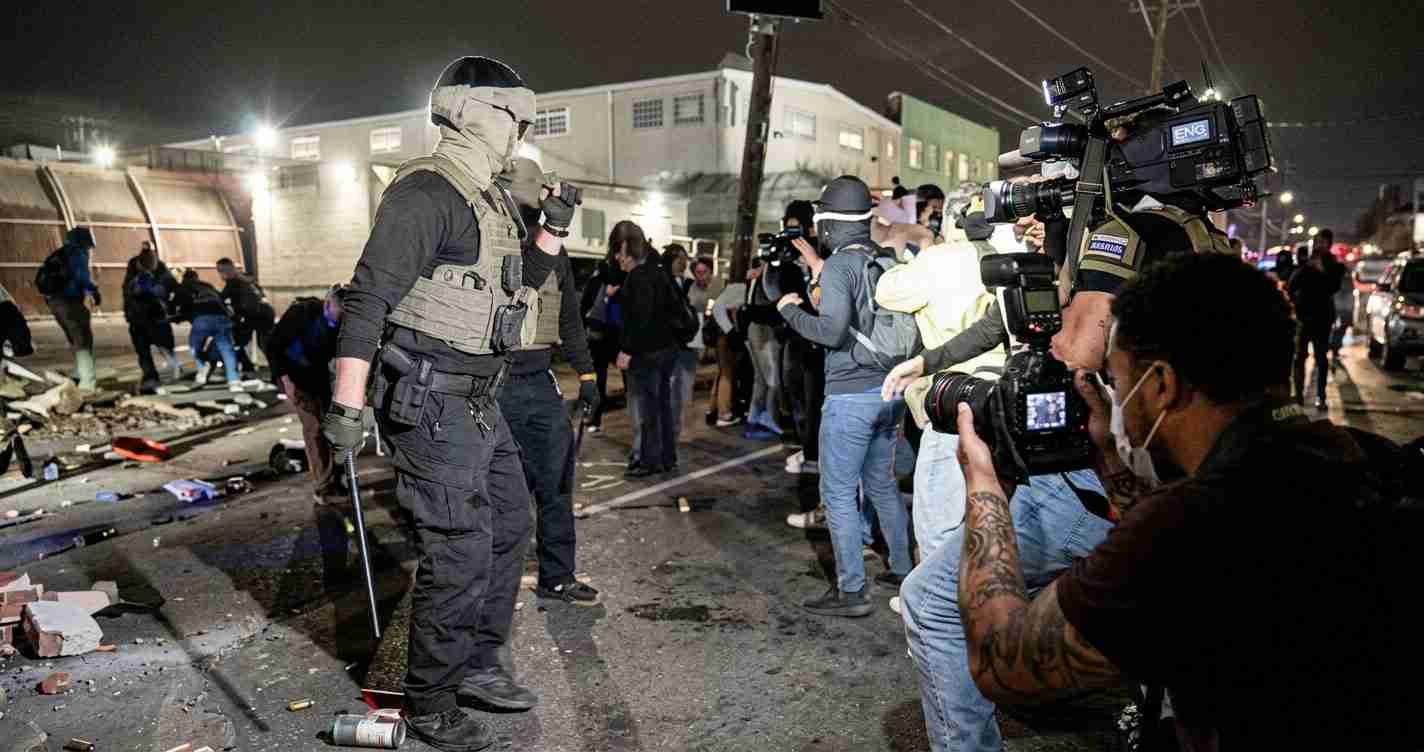
Protesters Take Over Traffic Control as Chaos Erupts Outside Delaney Hall; Newark Police Not Seen
Outside Delaney Hall in Newark, protesters in reflective vests managed traffic and crowd control as federal agents used pepper spray during an attempt to enter the facility, while Newark police were not visibly present, eyewitnesses and on-scene reporting say.
Key takeaways
- Protesters wearing reflective vests directed traffic and blocked lanes on Doremus Avenue for hours.
- Federal agents used pepper spray after a transport vehicle attempted entry and crowds surged toward the sally port.
- Newark police were not visibly active on scene; a lone Essex County sheriff’s deputy briefly asked protesters to move.
- Lawmakers earlier inspected Delaney Hall and raised concerns about conditions; the DHS disputed some allegations — see WHYY.
Main reporting
What happened Wednesday night
Late Wednesday, hundreds of protesters gathered outside the Delaney Hall compound on Doremus Avenue in Newark. Returning news crews and eyewitnesses reported crowds near the vehicle entrance and a second entrance where members of Congress had entered earlier that day.
Protesters in reflective vests set up informal traffic control, directing two-way traffic around large vehicles and at times reducing Doremus Avenue to a single lane. A lone Essex County sheriff’s deputy drove through, asked protesters to move to the sidewalk, but did not remain on scene, according to eyewitness accounts.
As unmarked Delaney Hall transport vehicles approached with blue lights, protesters surged toward the sally port entrance. Demonstrators pushed mattresses, a shredded bollard, branches and a sandbag into the roadway. ICE agents can be heard on video repeatedly asking the crowd to step back. When a New Jersey Transit bus became trapped in the unmanaged lane, agents released pepper spray to disperse portions of the crowd; witnesses reported additional canisters as tensions rose.
Notes on sources and claims
The detailed scene descriptions come primarily from on-scene reporting and eyewitness accounts provided to news crews that returned late Wednesday. Broader facts about Delaney Hall and earlier inspections are documented by WHYY and background summaries on Wikipedia.
Some earlier summaries contained questionable claims; for example, reports that Mayor Ras Baraka “lost the 2025 Democratic gubernatorial primary to Gov. Mikie Sherrill” could not be verified in available records. We relied on primary reporting and public records for factual claims.
Background: Delaney Hall and the broader dispute
Delaney Hall reopened under a federal contract and is operated by a private firm, the GEO Group. The center has become a focal point for immigration advocates, local officials and federal authorities. Critics allege inadequate food and medical care and report hunger strikes; federal officials and the Department of Homeland Security have disputed some of those allegations as politically motivated or unsubstantiated. See reporting by WHYY and analysis at the Jersey Vindicator.
Mayor Baraka and past confronts
Mayor Ras Baraka has been a visible opponent of Delaney Hall. He was arrested during a May 2025 protest on trespassing charges; local authorities later dropped some charges tied to demonstrations. Baraka has repeatedly called on state and federal officials to close the facility, saying it violates the city’s values and harms Newark residents. (Background: Wikipedia.)
Police presence and public order questions
Witnesses said protesters held control of the roadway and crowd direction for hours while Newark Police Department vehicles were not visibly active at the scene. The lone passing sheriff’s deputy briefly requested protesters move to the sidewalk but took no further action. This lack of visible local police intervention contrasts with the direct response by federal agents on site.
For commuters and nearby businesses, the improvised traffic control and blocked lanes on an industrial corridor like Doremus Avenue created safety and flow concerns. A New Jersey Transit bus was briefly trapped amid the impromptu traffic pattern.
Congressional visit and allegations of conditions
Earlier that day, Democratic members of Congress inspected Delaney Hall and reported what they described as troubling conditions, alleging inadequate food, poor medical care and possible hunger strikes among detainees. The Department of Homeland Security disputed some findings and said investigations would continue. For full reporting, consult WHYY.
Implications
Economic impact
Private detention contracts involve federal spending and local employment. Continued protests and legal challenges could affect contracts, local jobs tied to the facility, and the broader cost structure of federal detention operations.
Political consequences
The standoff at Delaney Hall amplifies national debates over immigration enforcement, federalism and local control. The visible absence of local law enforcement at the scene may become a campaign issue in city and state races and a talking point in national enforcement debates.
Social and public safety effects
When crowds take on roles normally filled by police—directing traffic, blocking lanes—public safety risks rise. Emergency response, commercial transport and commuting can be disrupted. The use of crowd-control measures, including pepper spray by federal agents, raises civil liberties questions and could increase the risk of injuries or criminal charges.
Cultural and community relevance
Delaney Hall has become a symbol in national debates over immigration policy and the role of private contractors, crystallizing concerns about detainee treatment and transparency, as well as countervailing calls for enforcement and order.
Practical applications for policymakers
Officials at all levels should clarify responsibilities for safety and oversight at detention sites, coordinate law enforcement presence during protests, ensure safe access for transit and neighbors, and facilitate independent inspections to verify detainee conditions. Greater transparency in contracts and operations could reduce tensions and restore public trust.
Reporting notes and sources
This story draws on on-scene reporting and eyewitness accounts, reporting by WHYY on inspections of Delaney Hall, background on the facility’s history at Wikipedia, and coverage of broader debates at the Jersey Vindicator.
“Additional verification and independent video review may clarify exact sequences of events, the identities of those deploying crowd-control measures, and the full extent of law-enforcement decisions that night.”
Key sources: WHYY; Wikipedia; Jersey Vindicator; on-scene and eyewitness reporting.



