
New Jersey governor urges calm after video shows protester threaten to kill ICE officer and family outside Delaney Hall
New Jersey Governor Mikie Sherrill condemned a death threat against a federal ICE officer during protests outside Delaney Hall in Newark, urging calm, de‑escalation and facility closure amid allegations of inhumane conditions as federal authorities pursue the suspect.
Key takeaways
- A video captured a man making graphic death threats at federal ICE personnel outside Delaney Hall; federal authorities say threats against officers and their families are crimes and are pursuing the suspect (Fox News).
- Governor Mikie Sherrill called for peaceful protest, de‑escalation and closure of Delaney Hall over alleged poor conditions while condemning violent threats (WPVI-6ABC; New Republic).
- Reporting remains cautious about attribution: mainstream coverage does not substantiate social posts that ascribe specific DOJ remarks to a named official called “U.S. Attorney General Todd Blanche” (WPVI-6ABC; Fox News).
- Protests stem from detainee complaints about sanitation, medical care and alleged hunger strikes, while DHS disputes those claims and says detainees receive meals and basic services (New Republic; CBS video).
Protests at Delaney Hall: what we know
Background: Demonstrations at Delaney Hall in Newark began after detainees and advocates reported alleged poor conditions and an internal hunger strike. The demonstrations have involved immigrant-rights groups, family members of detainees and elected officials.
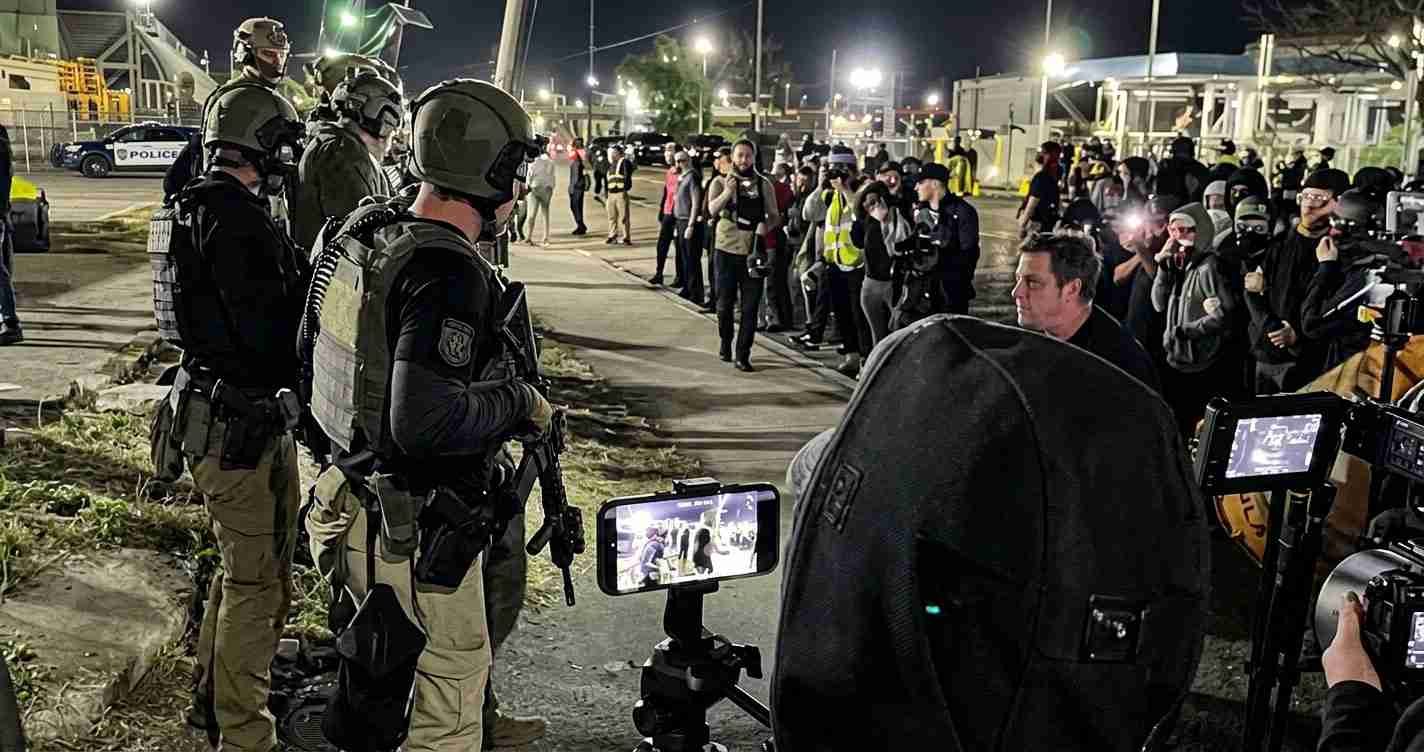
Coverage described a mix of activity — from tense confrontations and arrests to periods when crowds thinned to smaller groups. Local broadcast reporting documented the on-the-ground scenes and interactions between protesters and ICE agents (WPVI-6ABC; CBS video).
Allegations and official responses
Advocates say detainees faced poor sanitation, limited medical care and engaged in a hunger strike. The Department of Homeland Security publicly disputed those claims, stating there was no hunger strike and that detainees receive three meals a day, basic hygiene access and legal contact. That dispute over conditions is central to the sustained protests (New Republic; CBS video).
The video and federal response
Video recorded late Wednesday night shows a man standing outside Delaney Hall yelling at federal officers. Reported wording in the footage included the man saying he would “kill your whole f—— family, your whole f—— is dead. Your children, your wife, all dead,” and repeating that the officer was “dead, dead.” Local outlets posted portions of the footage and reported federal authorities treated the incident seriously (WPVI-6ABC).
Federal stance: Officials at the Department of Justice and other agencies say threats directed at federal officers and their families constitute federal crimes. National reporting indicates DOJ is treating the video as evidence in a potential criminal investigation and that authorities intend to identify and arrest the person shown.
On attribution: Multiple outlets confirm a DOJ response and intent to pursue charges, but reporting does not substantiate the social-media attribution of quoted DOJ remarks to an individual named “U.S. Attorney General Todd Blanche.” Public records and mainstream reports provide no credible link between that name and the office in this matter; coverage instead cites DOJ and U.S. attorneys’ offices generally (WPVI-6ABC; Fox News; New Republic).
Mikie Sherrill’s stance, before and after the threat
Governor Sherrill has sought to balance support for peaceful assembly with concerns about detainee welfare and public safety. She joined protesters at Delaney Hall and publicly called for the facility’s closure over alleged harsh conditions, saying ICE’s presence and conduct “incite a lot of this” and arguing agents “need to stay out of there” (New Republic; WPVI-6ABC).
After the recorded death threats, Sherrill told national reporters that threats of violence are unacceptable. She emphasized her military background and oath to defend the Constitution while urging all government officials to “keep people safe, de‑escalate the situation, and lower the temperature,” reaffirming support for lawful protest and rejection of violent intimidation (Fox News).
Law, politics and community impact
Law and order: Law enforcement leaders emphasize protecting officers and families and pursuing criminal threats. Local officials and advocates demand scrutiny of detention conditions and some press for closure.
Political stakes: The episode highlights partisan and intra‑party tensions. Threats against officers often draw bipartisan calls for prosecution, while leaders advocating closure of facilities may gain support from civil‑liberties constituencies. How state and federal officials manage the episode could affect political reputations and cooperation.
Community and social effects: High‑emotion protests that include threats risk chilling lawful protest and raising safety concerns for officers’ families, while intensifying national debate on immigration policy and detainee treatment.
Implications for the United States
Economic impact
Prolonged protests and calls to close Delaney Hall could force ICE to shift detainee housing nationally, increasing costs for transfers, litigation or new housing. Local economies may face short‑term disruption from heightened security near detention centers (WPVI-6ABC; New Republic).
Political consequences
The incident sharpens tensions: law‑and‑order voters may press for tougher responses to threats, while advocates for detainee rights could rally behind officials seeking facility closure. These dynamics may influence elections and intergovernmental relations (Fox News; WPVI-6ABC).
Social effects
Threats and heated protests may deter lawful demonstration and raise safety concerns, prompting more visible law enforcement at other federal sites and intensifying public debate on immigration enforcement (WPVI-6ABC; Fox News).
Cultural relevance
The episode intersects immigration rights, veterans’ public service and civic protest. Sherrill’s military background and dual emphasis on protest rights and de‑escalation may resonate across ideological lines, shaping discourse about elected officials’ roles when demonstrations grow heated (Fox News; New Republic).
Practical advice for residents and officials
Expect increased coordination and visible law enforcement around Delaney Hall while investigators work to identify the man in the video. Nearby residents may see intermittent disruptions; public officials may face pressure to clarify rules on protests, enforcement priorities and transparency about detention conditions. Advocacy groups will use the incident to press for policy changes or criminal enforcement (WPVI-6ABC; Fox News).
Reporting notes and sources
This article synthesizes local and national reporting and public statements, including coverage by WPVI-6ABC, national reporting on officials’ responses by Fox News, analysis on facility closure calls from New Republic, and broadcast material including CBS video and other footage (video).
Preserved links: WPVI-6ABC; Fox News; New Republic; CBS video; video.



