
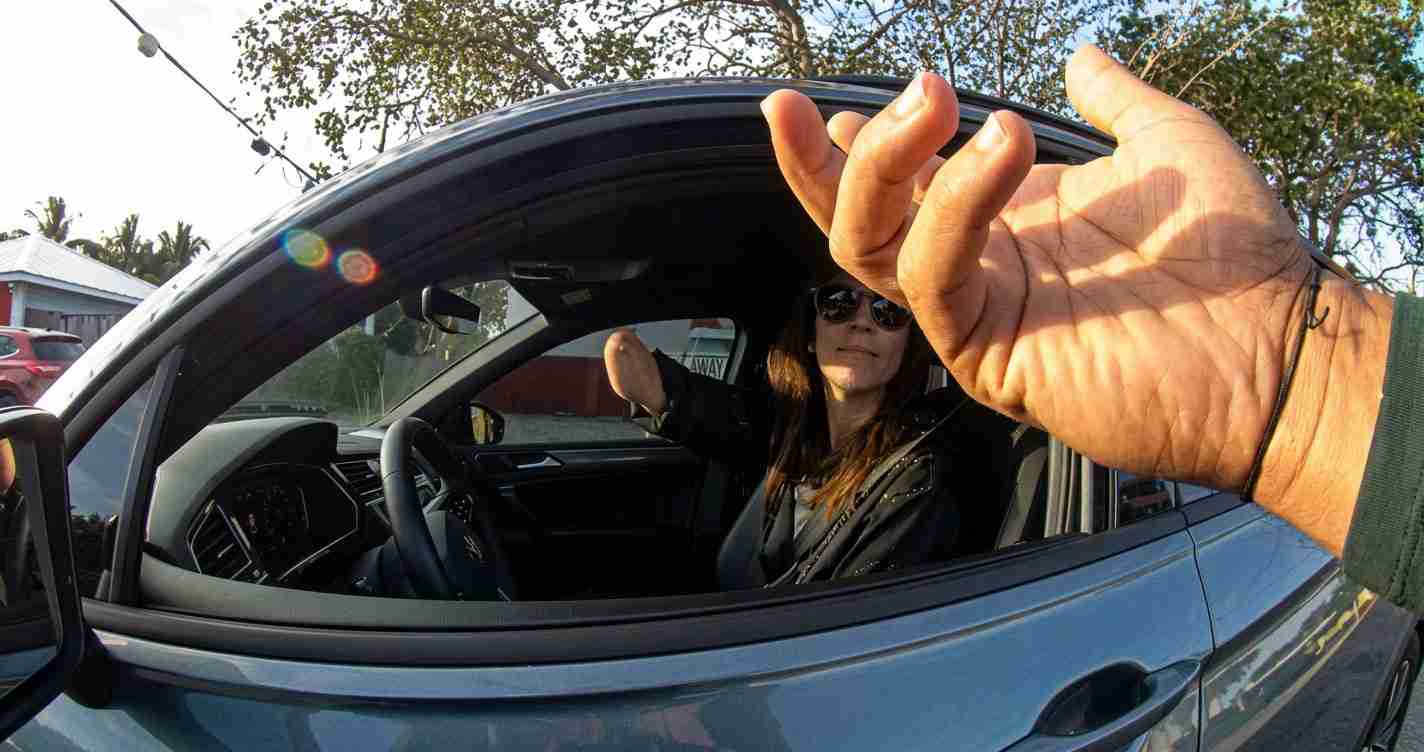
Palm Beach deputy cited driver for “holding phone” after she showed she has no right hand; viral Lake Worth Beach traffic stop draws national scrutiny
Body‑camera footage from a February Lake Worth Beach stop shows Deputy Gazal insisting Kathleen Thomas held a phone in her right hand — despite Thomas, born without a right hand, demonstrating otherwise — prompting dismissal of the citation.
Key takeaways
- Kathleen Thomas, 36, was stopped during a distracted‑driving enforcement detail; the exchange was captured on bodycam. Video
- Deputy Gazal alleged she was “holding the phone with your right hand manipulating that phone” even after Thomas showed her right arm ends at the forearm. Video
- The Palm Beach County Sheriff’s Office reviewed statutes and citation procedures, requested dismissal, and the citation was dismissed. PBSO statement/video
Main content
What the body‑camera shows
The released bodycam footage documents a routine traffic stop that became notable for its plain‑spoken, awkward moments. The deputy approaches and tells Thomas he saw her “holding the phone with your right hand manipulating that phone.” Thomas does not argue; instead she displays the physical reality — her right arm ends at the forearm — and laughs at the exchange. Video
When Thomas asks whether the deputy wants to “call this a day,” he replies, “I don’t want to call a day. You had a hand up manipulating.” He then appears to partially backtrack: “With the right hand, perhaps not,” but continues with the stop and maintains he saw a phone. Later, prompting a rhetorical oath, he asks, “Hand to God, you did not have your phone in your hand?” Thomas lifts her right arm and says “Hand to God.” The deputy answers, “Other hand to God,” and she raises her left arm as well. Despite those gestures, the deputy proceeded with enforcement. Video
“Hand to God, you did not have your phone in your hand?” — question captured on bodycam as part of the stop.
PBSO response and legal technicalities
The Palm Beach County Sheriff’s Office said the deputy initiated the traffic stop based on a visual observation at the time, a standard policing practice during targeted enforcement operations. PBSO spokesperson Teri Barbera noted that after additional review of the relevant Florida statutes and “the totality of the circumstances,” along with a lack of clarity in citation software about how violations are labeled, the office sought dismissal of the citation. The agency cited differences between Fla. Stat. 316.305 (texting and certain device use while driving) and 316.306 (wireless communications device rules in work and school zones) as part of the reasoning. PBSO statement/video
The agency emphasized that deputies must make decisions based on real‑time observations, and that motorists retain the right to contest citations through the judicial process where facts and evidence are reviewed. The footage shows the citation was scheduled for a court hearing but was dismissed at the deputy’s request shortly before that hearing. Video — PBSO statement/video
Officer identity and internal review
In uncut footage, the deputy identifies himself as “Deputy Gazal.” Public reporting has commonly referred to the officer as unnamed or unidentified despite the name visible on camera. There is no public record in the available material of a formal internal affairs finding or disciplinary action beyond the dismissal of the ticket. If any internal investigation or discipline occurred, it has not been prominently reported. Video — PBSO statement/video
Public reaction and broader questions
Once excerpts of the bodycam aired on social and broadcast media, the clip went viral. Online reaction ranged from disbelief to sharp criticism. Many viewers accused the deputy of confirmation bias — seeing what he expected to see during a distracted‑driving sweep — and questioned how an officer could persist after being shown that a cited physical act was impossible. Others defended the deputy’s right to rely on his real‑time observation and pointed to the agency’s responsibility to enforce distracted‑driving laws. PBSO statement/video
Legal observers and civil‑liberties advocates used the episode to note how easily citations can be issued in the field and how much effort a motorist may need to clear a ticket. The PBSO’s explanation about citation software and statutory wording highlights a separate, technical issue: administrative systems do not always align cleanly with the nuances of an officer’s observation, and clerical categorization can affect how charges proceed.
Why this matters: rights, accountability and real‑time policing
For motorists, the episode is a reminder that traffic enforcement often depends on split‑second judgments. From a rule‑of‑law perspective, officers are permitted to act on observations, but those actions should be anchored by accuracy and common sense. For law enforcement agencies, the case raises operational questions: how deputies are trained to verify observations, how body‑worn camera footage is used to check enforcement decisions, and how internal record systems handle nuanced situations that do not fit neatly into software categories.
Highlighted concern: the tension between empowering officers to act in the moment and ensuring those actions withstand scrutiny when recorded and reviewed.
Implications for the United States
- Enforcement standards and training: The incident underscores a national need to ensure traffic‑stop training emphasizes careful observation, implicit‑bias awareness, and de‑escalation. Departments across the country conduct distracted‑driving details; clear protocols about how to confirm alleged violations before issuing citations could reduce similar episodes. Video
- Transparency and accountability: Body‑worn cameras played a central role in public awareness of the stop. The video enabled scrutiny that might otherwise have been limited to internal review. Agencies nationwide balance privacy, transparency, and due‑process considerations when releasing footage; this case reinforces calls for timely, contextual release policies. PBSO statement/video
- Legal process and software systems: The PBSO cited wording differences between Fla. Stat. 316.305 and 316.306 and a lack of clarity in citation software. Across jurisdictions, how systems code offenses can shape outcomes. Lawmakers and administrators should review whether citation categories, software inputs, and statute language align to avoid technical dismissals that erode public confidence. PBSO statement/video
- Public trust and policing legitimacy: For readers who value law and order, the episode presents a dual concern: protecting officers’ ability to enforce traffic laws while ensuring enforcement is perceived as fair and reasonable. Dismissed citations and viral videos that depict questionable judgment can undercut trust; agencies should communicate clearly about why actions were taken and whether policy or training changes follow. Video
- Rights of motorists: The exchange highlights the importance of procedural safeguards — the right to contest citations in court and the value of recorded evidence. Citizens should know how to challenge citations and how bodycam footage can be used to support their case. PBSO statement/video
Reporting and sources
This article is based on released body‑worn camera footage and public statements captured in published video and reporting. Video sources: uncut bodycam footage (YouTube); PBSO statement/coverage (YouTube).


