
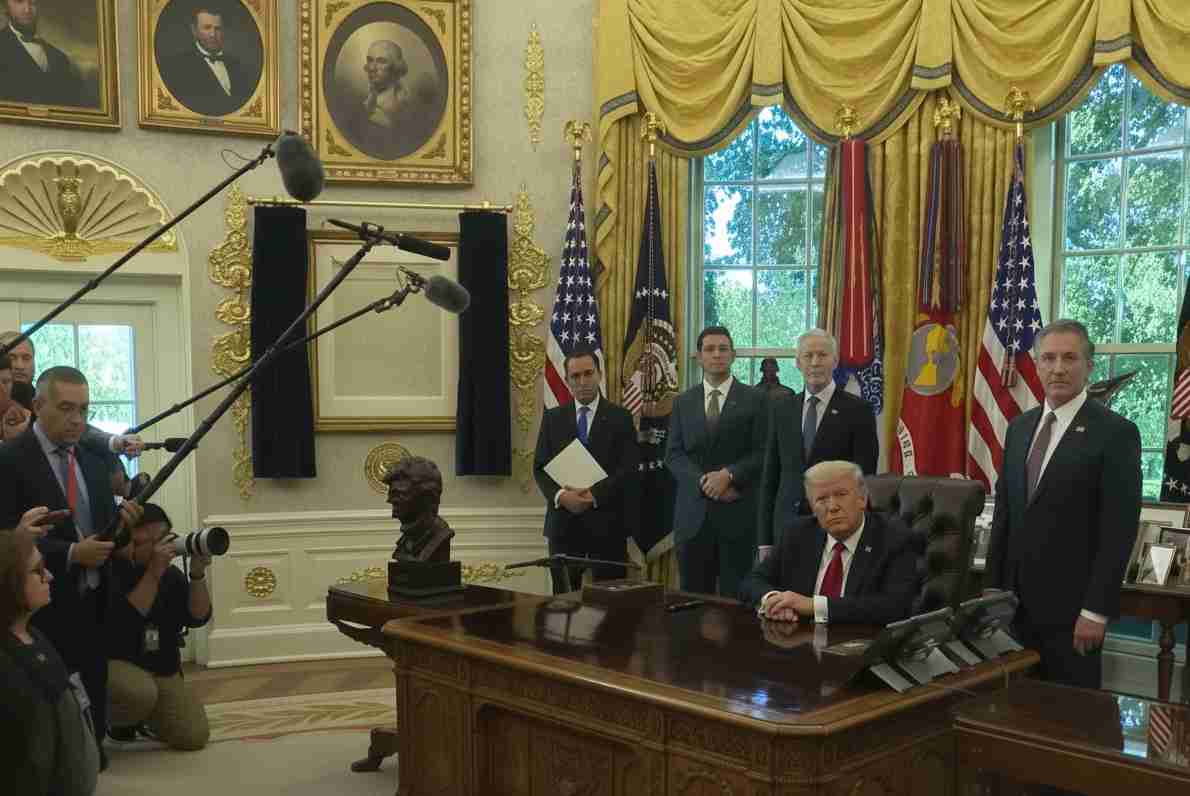
Trump Blames Democrats for Shutdown, Demands Government “Reopen Tonight” as Talks Stall
Former President Donald Trump blamed Democrats for the October 2025 federal government shutdown, demanding the government “reopen tonight” and insisting healthcare talks follow reopening as furloughs and unpaid work disrupt millions of federal employees and services.
- Blame and demand: Trump publicly blamed Democrats and called for immediate reopening; AOL reporting on Trump’s statements.
- Start of shutdown: The lapse began at 12:01 a.m. on October 1, 2025, after Congress failed to pass fiscal 2026 appropriations; see the 2025 U.S. government shutdown (Wikipedia).
- Core dispute: Democrats sought an extension of expiring Obamacare subsidies and blocked short-term bills without that protection; reporting summarized in Wikipedia and AOL.
What Trump said and where he posted it
Donald Trump used public posts and statements to place responsibility on Democrats and press for an immediate reopening. He wrote:
“Democrats have Shut Down the United States Government right in the midst of one of the most successful Economies… This has sadly affected so many programs, services, and other elements of Society that Americans rely on — And it should not have happened.”
Trump urged lawmakers to “open our Government tonight!” and said he was “happy to work with the Democrats on their Failed Healthcare Policies, or anything else, but first they must allow our Government to re-open.” The original coverage and quotes are compiled in AOL reporting on Trump’s statements and follow-up summaries in the Times of India coverage.
Timeline and cause: how the shutdown began
The shutdown took effect at 12:01 a.m. on October 1, 2025, when Congress did not pass the appropriations bills for fiscal 2026. The impasse centered on spending levels, proposed rescissions to foreign aid, and Democrats’ demand for an immediate extension of expiring Obamacare subsidies; see the full summary at 2025 U.S. government shutdown (Wikipedia).
House and Senate maneuvers
Republicans advanced short-term stopgap bills to keep agencies funded, but Senate Democrats blocked those measures while insisting the subsidies issue be resolved first. A handful of Democrats crossed party lines in some votes, but not enough to pass emergency funding and avert the lapse; detailed reporting is available from AOL.
The White House maintained a public tally and framed the standoff as the responsibility of Congressional Democrats via its shutdown messaging tools; see the White House shutdown clock and messaging.
Obamacare subsidies negotiations at the center
At the heart of the dispute were expiring Affordable Care Act subsidies. Democrats said any short-term funding move must protect those subsidies; Republicans argued that reopening the government should be addressed immediately and negotiations on subsidies can follow. Background and context are summarized in the Wikipedia overview and coverage in AOL.
Impact on federal workers and services
The shutdown affected roughly 1.6 million federal employees: about 900,000 furloughed and about 700,000 working without pay, while many essential services continued to operate. Agencies experienced delays in routine processing, inspections, permits, and grant administration; source compendium at Wikipedia.
Medicare, Medicaid and core national security functions continued, though some administrative actions slowed or paused, creating pressure on state and local partners and on families who depend on timely federal services.
Political messaging and claims of manipulation
Media coverage emphasized the sharp partisan blame. Reporting also flagged concerns from nonpartisan staff that some automated out‑of‑office replies and official messages were revised in ways that shifted blame to Democrats, prompting scrutiny over norms of neutrality in federal communications; see reporting summarised at Wikipedia.
Visual and video breakdowns of votes and the standoff are available, including curated footage and analysis such as video coverage of the congressional standoff.
Where negotiations may go next
Trump signaled a willingness to negotiate on healthcare and other priorities, but he framed reopening as the necessary first step; reporting on his stance appears in the Times of India coverage and related summaries. Democrats countered that subsidy protections were urgent and could not be deferred, making short-term funding votes politically difficult in a narrowly divided Senate.
Implications for the United States
Economic: Pay delays, furloughs and contractor pauses can trim consumer spending and slow projects; prolonged standoffs risk denting market confidence and hiring.
Political: The blame narrative may shape voter perceptions ahead of future races. Trump’s messaging seeks to shift responsibility to Democrats and pressure lawmakers in competitive districts.
Social: Delays in benefits, permits and services strain families and local support providers; longer shutdowns increase costs for communities and nonprofits.
Sources and further reading
- AOL reporting on Trump’s statements
- Times of India coverage of Trump’s comments and negotiation signals
- Encyclopedia entry on the 2025 U.S. government shutdown (Wikipedia)
- White House shutdown clock and messaging
- Video coverage of the congressional standoff
Reporting synthesized from the above sources and public statements as federal lawmakers continue negotiations and the shutdown persists.



