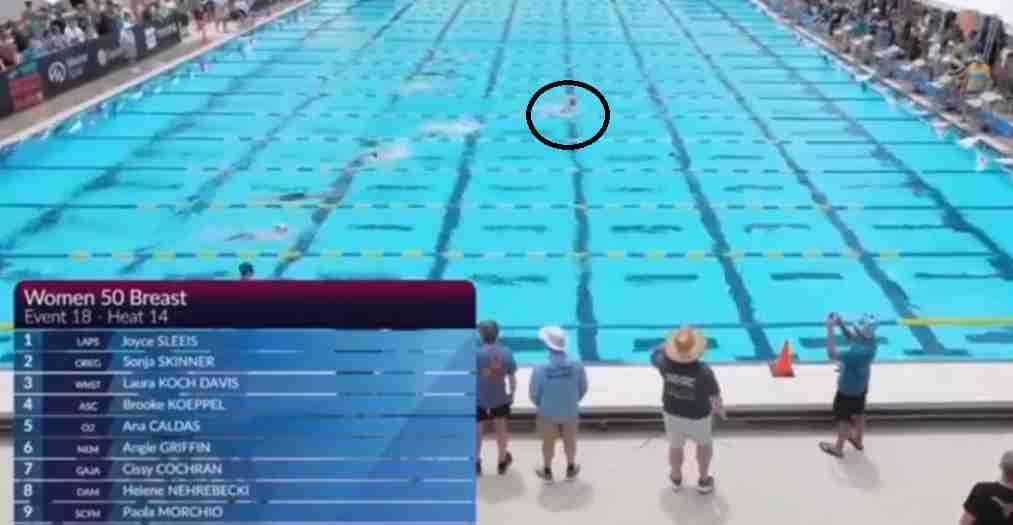
Trans swimmer Ana Caldas banned, stripped of results after refusing sex test — ruling renews transgender athletes debate
World Aquatics has banned transgender swimmer Ana (Hannah) Caldas until October 2030 and annulled her results from June 2022–October 2024 after she refused a requested chromosomal sex verification test, a decision that re‑ignites global debate on eligibility.
- Athlete: Ana (Hannah) Caldas — Portuguese‑born, competes in U.S. Masters Swimming.
- Ruling: Five‑year ban effective to October 2030; results from June 2022–October 2024 annulled (sources: AOL, Fox News).
- Reason: Caldas refused a requested chromosomal sex verification test, calling it invasive and costly (Star Observer).
What World Aquatics decided and why
World Aquatics imposed a five‑year suspension on Caldas and annulled her competitive results from mid‑2022 through October 2024 after she declined to take a chromosomal sex verification test requested during an eligibility probe. The action enforces the federation’s 2022 eligibility policy, which limits women’s‑category eligibility largely to athletes who transitioned before age 12 or before Tanner Stage 2 of puberty or who meet strict medical and hormonal criteria (AOL; Fox News).
Testing and privacy issues
The chromosomal screening request was framed as part of World Aquatics’ process to determine whether Caldas met its rules for women’s competition. Advocates and Caldas herself criticized such testing as invasive, costly and unnecessary for adult recreational competition. Caldas said she chose suspension over surrendering what she called the “most intimate” medical information (Star Observer).
How the case unfolded
Attention focused on the issue after Caldas won five gold medals in the women’s 45–49 age group at a U.S. Masters meet in San Antonio, Texas. Those results prompted complaints to U.S. Masters Swimming and a formal complaint to World Aquatics from the Independent Council on Women’s Sports (ICONS). The Texas attorney general’s office also opened an inquiry related to the event (Star Observer).
Voices on both sides
Competing swimmers and advocacy groups expressed strong views. One competitor, Wendy Enderle, said she felt “betrayed” for not being informed of Caldas’s birth sex before the meet (AOL). Caldas said she accepted the suspension to protect private medical information and to oppose invasive demands on transgender athletes:
“A five‑year suspension is the price I have to pay to protect my most intimate medical information. I’m happy to pay that price — for myself and for all the women who don’t want to undergo invasive testing.” — Ana Caldas
Policy background and broader debate
World Aquatics’ 2022 policy tightened eligibility standards amid high‑profile controversies in swimming and other sports. The debate intensified after cases such as that of Lia Thomas, which raised national questions about balancing fairness for cisgender female athletes and inclusion for transgender competitors (CBS News; ESPN).
Supporters of stricter rules cite physiological differences stemming from male puberty that may confer advantages in speed and strength; opponents counter that chromosomal tests are invasive, may not reliably indicate competitive advantage, and risk violating privacy and dignity (AOL; Star Observer).
Legal and regulatory ripple effects
The case coincides with state and national legal actions in the United States addressing transgender athlete participation. Several states have enacted or considered limits on transgender athletes in school sports, and state attorneys general have participated in investigations tied to eligibility complaints. In this instance, the Texas attorney general’s inquiry into U.S. Masters Swimming increased scrutiny and helped prompt the World Aquatics process (Star Observer).
Implications for United States of America
Economic and sporting impact: The ruling signals enforcement of stricter gender‑eligibility rules across age groups, including masters competition. Organizers may face additional complaints, investigations, and legal costs; event results can be annulled, affecting rankings and prizes.
Political consequences: The decision feeds ongoing debates in the U.S. over transgender policies in athletics — bolstering calls for tougher rules among some policymakers while prompting civil‑liberties concerns and potential litigation from LGBTQ advocates.
Social and cultural effects: Athletes and clubs may experience greater uncertainty about eligibility and medical privacy. Transgender participants could be deterred by invasive testing or fear of investigation; other competitors may feel reassured by stricter enforcement.
Practical actions: Clubs, masters programs and school athletic departments should review eligibility rules, documentation procedures and appeals processes, and clearly inform athletes about potential medical evidence and legal rights.
Sources and reporting
- Star Observer: “Transgender swimmer Ana Caldas has been banned after refusing gender testing”
- AOL: “Trans swimmer banned from World Athletics, stripped of recent results after refusing sex test”
- Fox News: “Trans swimmer banned from World Athletics, stripped of recent results after refusing sex test”
- CBS News: Context on Lia Thomas and policy debate
- ESPN: Context on Lia Thomas controversy