Artemis II Rollout Reaches Launch Pad at Kennedy Space Center, Paving Way for Wet Dress Rehearsal and February Launch Window
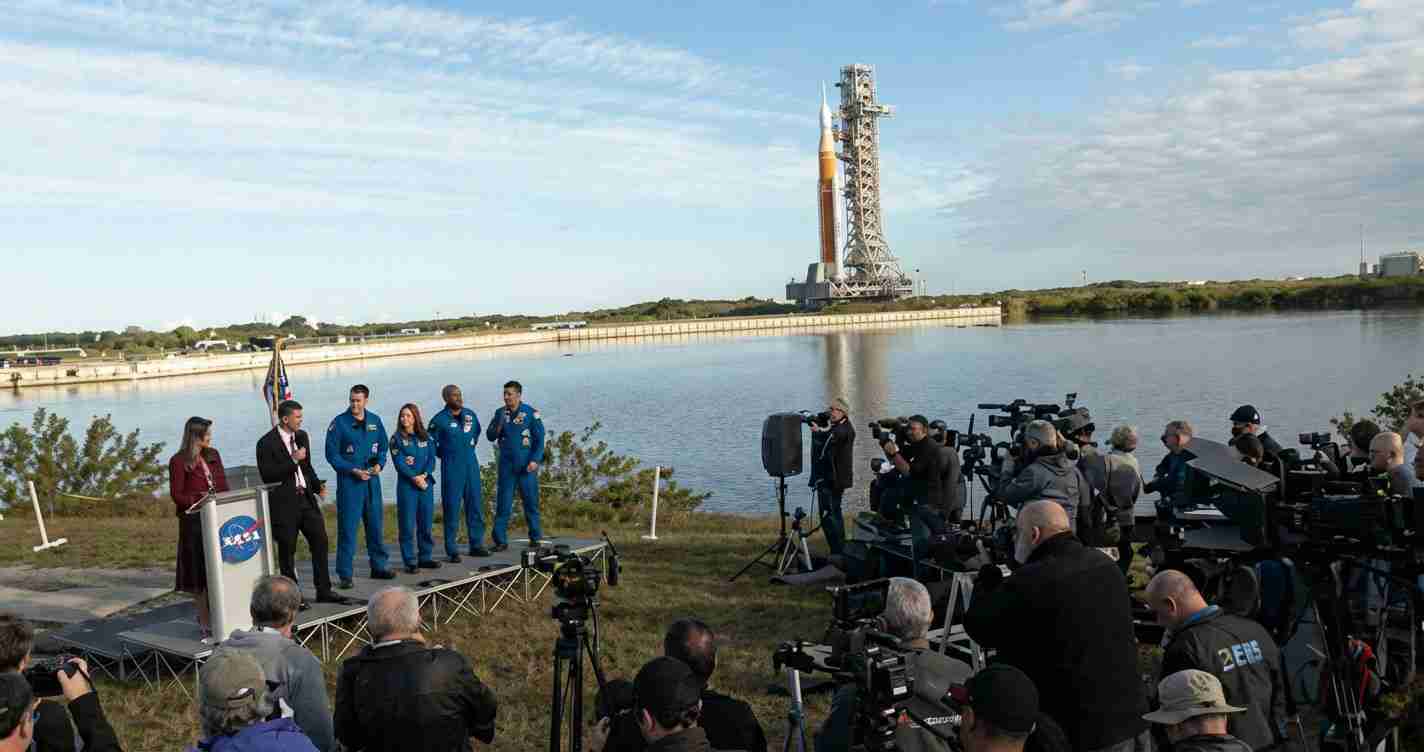
The Artemis II SLS rocket and Orion spacecraft rolled out to LC‑39B at Kennedy Space Center on Jan. 17, 2026, advancing preparations for a Feb. wet dress rehearsal and a targeted crewed launch window later that month.
- Artemis II Rollout completed Saturday, Jan. 17, 2026: rollout began at 7:04 AM EST and arrived at LC‑39B at 6:42 PM EST after about 11.5 hours.
- The stack’s transit: the vehicle traveled nearly seven kilometers on crawler-transporter-2 at a pace under one mile per hour; the crawlerway is surfaced with smooth river rock to protect the path (detailed rollout coverage).
- Next milestones: a wet dress rehearsal is scheduled for Monday, Feb. 2, 2026 (wet dress rehearsal details), with a current launch target of Friday, Feb. 6, 2026, at 9:41 PM EST and a primary window through Feb. 10 (NASA mission overview).
- Crew and mission scope: Artemis II will carry four astronauts — Commander Reid Wiseman, Pilot Victor Glover, Mission Specialist Christina Koch and Canada’s Jeremy Hansen — on a roughly 10‑day mission that will send Orion about 7,500 kilometers beyond the lunar far side before returning to Earth (mission coverage).
Rollout details: how the crawler moved the stack to LC‑39B
NASA’s SLS rocket and Orion spacecraft began their slow, deliberate journey from the Vehicle Assembly Building to Launch Complex 39B on Jan. 17 at 7:04 AM EST. Mounted on the mobile launch platform and carried by crawler-transporter-2, the stack covered nearly seven kilometers on the crawlerway and arrived at the pad at 6:42 PM EST after about 11.5 hours of movement (reporting by NASASpaceflight).
The crawler moves at under one mile per hour. The road it follows is lined with specially graded river rock from quarries to provide a smooth, load-bearing surface for the mobile launch platform. Teams made brief stops during the rollout to address hardware items and to retract the crew access arm as planned. NASA technicians worked steadily to close out final tasks ahead of the pad arrival (detailed timeline).
Mission timeline and launch preparations
With the Artemis II rollout complete, NASA is focused on final integration, testing and rehearsals at Launch Complex 39B. The next major milestone is a wet dress rehearsal planned for Monday, Feb. 2, 2026. During a wet dress rehearsal, teams run a full countdown and load propellant in conditions similar to an actual launch; this validates systems and procedures that were not possible during the uncrewed Artemis I flow (NASASpaceflight).
NASA’s current launch target for Artemis II is Friday, Feb. 6, 2026, at 9:41 PM EST, with a primary window that runs through Feb. 10. Officials note that meeting the Feb. 6 date depends on the wet dress rehearsal outcome and the resolution of any issues found during final pad work. Additional launch opportunities are being held in March and April 2026 should planners need more time (NASA mission overview).
Crew and mission scope
Crew: Artemis II will carry four astronauts — Commander Reid Wiseman, Pilot Victor Glover, Mission Specialist Christina Koch and Canada’s Jeremy Hansen. If the mission proceeds as planned, these four will become the first humans to fly a deep space mission since Apollo 17 in 1972 (coverage).
The Orion capsule will not enter lunar orbit; instead, it will fly a high‑energy lunar flyby and travel to a point roughly 7,500 kilometers beyond the lunar far side, farther from Earth than any crewed spacecraft has flown before. The mission — set to last about 10 days — will test Orion’s systems with humans aboard in deep space, an essential step before Artemis III, which aims to return humans to the lunar surface (NASA briefing).
What investigators are watching: technical readiness and weather risk
Two principal risks could affect the schedule in the final weeks before launch: technical closeouts and weather. Teams worked around the clock during rollout and at the pad to finish integration tasks and checkouts. NASA has stated that schedule targets could shift if extra time is needed for technical work or if weather interferes with operations (timeline and analysis).
“The wet dress rehearsal is a key test that will expose systems to propellant loading and full countdown operations.”
That rehearsal could reveal issues requiring hardware swaps or software updates; any significant anomaly would likely push the flight into the March or April windows (NASASpaceflight).
Artemis II Rollout and national priorities
For policymakers and taxpayers, Artemis II is a visible, expensive step in a long-term program. The mission is designed to prove crewed operations in deep space and to validate systems needed for Artemis III and beyond. Below is a concise look at implications across sectors.
Economic impact
- Jobs and industry: The Artemis II rollout and Artemis program work support thousands of jobs at NASA centers and contractor firms. Kennedy Space Center contractors, launch support staff and suppliers benefit from increased launch-campaign activity (read more).
- Supply chain and technology: Investments in rocket and spacecraft hardware sustain suppliers of precision components, electronics and propulsion systems; R&D funding can produce broader economic returns.
Political consequences
- Bipartisan visibility: High-profile missions attract bipartisan interest; lawmakers often cite national prestige, scientific leadership and economic benefits when discussing NASA budgets.
- Oversight and accountability: Tangible milestones like rollout and rehearsals give Congress points to assess program performance and cost control.
Social effects
- STEM and workforce inspiration: Visible milestones serve as touchpoints to inspire students toward careers in engineering, science and technology.
- Community impact: Areas around Kennedy Space Center and Cape Canaveral see increased economic activity during rollout and launch campaigns.
Cultural relevance
- National prestige and leadership: The rollout underscores U.S. ambitions in deep space exploration and rekindles public interest in human spaceflight.
- International partnership: With a Canadian astronaut aboard, Artemis II highlights collaboration with allies and reinforces scientific and diplomatic ties.
Practical applications for residents
Local planning and travel: Residents near the Space Coast should expect increased traffic, security zones and potential temporary road closures at launch times. Businesses and services in the region typically see higher demand during launch weeks.
Public engagement: NASA and partner organizations usually offer public viewing options, educational events and online coverage. Citizens nationwide can follow the mission closely through NASA’s official channels and media partners.
Sources and further reading
Teams at Kennedy Space Center will continue testing and rehearsing in the pad environment as they prepare for the wet dress rehearsal and the February launch window. The Artemis II rollout marks a visible, measurable step in a program that aims to return humans to the Moon and establish capabilities for sustained exploration.