Chevron warns of California fuel shortages as regulation, taxes and Strait of Hormuz blockade squeeze supplies
Chevron says California could face fuel shortages and refinery closures within a decade unless state environmental rules and taxes change, while global disruptions — including Iran’s Strait of Hormuz blockade — tighten supplies and threaten higher prices and service disruptions.
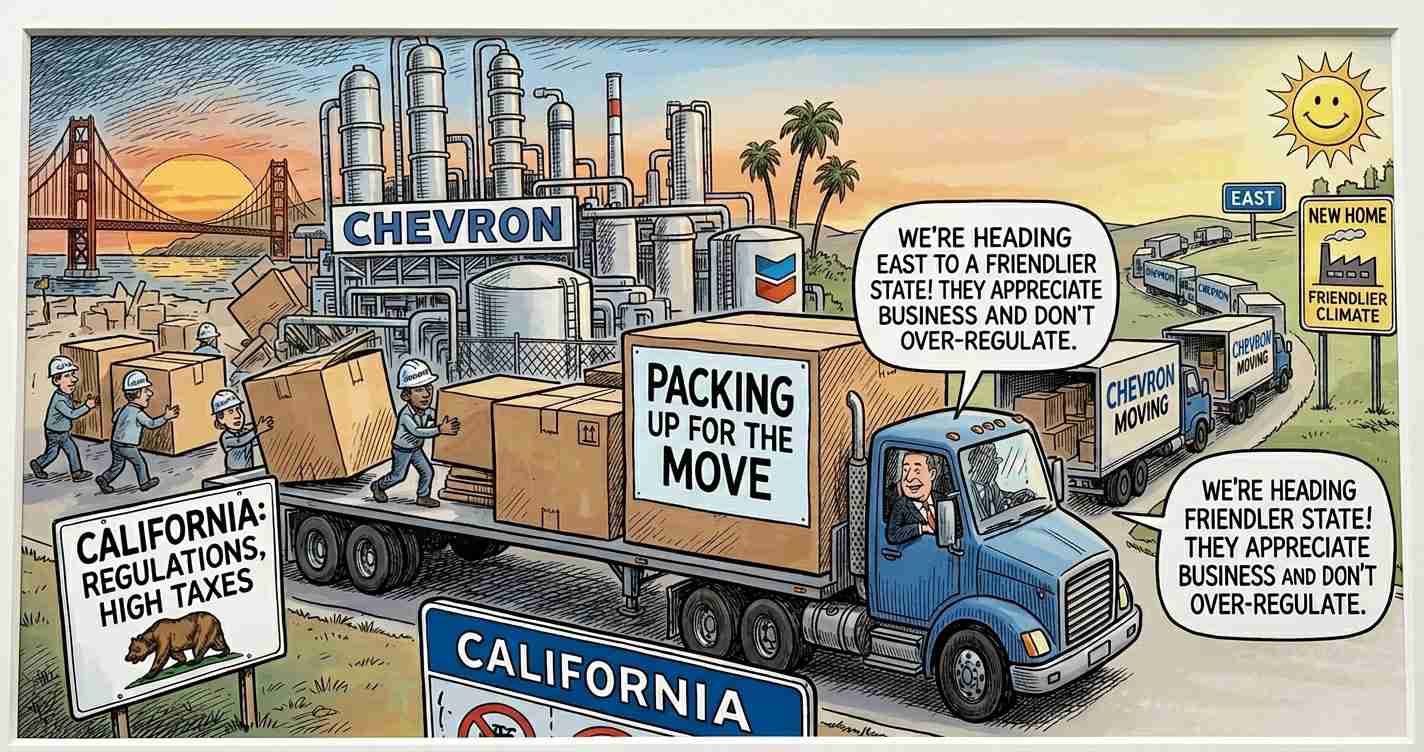
- Chevron’s refining chief warns of exit: Andy Walz says rising costs from California rules and refinery taxes could force Chevron to leave refining in the state within 10 years (BIC Magazine; Energy News Beat).
- Cap-and-Invest concerns: Chevron argues proposed changes to California’s Cap-and-Invest program will raise compliance costs and hurt reliability (BIC Magazine).
- Global supply shocks: Industry reports link Iran’s shutdown of the Strait of Hormuz and other conflicts to reduced refining capacity that tightens supplies to California (Energy News Beat).
- Data gaps and conflicting figures: Estimates of import reliance vary widely and some industry reporting lacks direct links to full state data or Chevron’s full letter (Energy News Beat; MarketScreener).
Chevron’s warning and the letter to Gov. Newsom
Andy Walz, who leads Chevron’s refining operations, told company and industry audiences that California’s regulatory and tax environment is making operations “unsustainable.” He warned that “we won’t be able to make it” and said “Chevron will be gone in 10 years for sure,” according to industry reporting (BIC Magazine; Energy News Beat).
In a letter to Governor Gavin Newsom, Chevron criticized proposed changes to the state’s Cap-and-Invest program, arguing that tighter emissions caps and higher compliance costs will translate into higher fuel prices and weaker energy reliability. Chevron wrote that
“the California energy industry’s economic, industrial, environmental, and national security benefits have been the foundation of a healthy, prosperous state and nation. Adversarial policies at local, regional and state levels have eroded that foundation. These proposed regulatory changes threaten to destroy it.”
Global supply shocks and the Strait of Hormuz blockade
Walz and Chevron executives point to international developments as added stressors. Industry reporting ties the Iran war and a related shutdown of the Strait of Hormuz to stranded crude and lower refined product exports from Asia — reducing supplies from major refining hubs such as China, South Korea and Singapore. Energy News Beat reports that global refining capacity has fallen by roughly 2.8 million barrels per day amid conflicts in Ukraine and Iran, tightening available supplies and raising the risk of local shortages in import-reliant regions (Energy News Beat).
Chevron and some analysts say California imports refined fuels and crude from Asia and that reduced exports from those regions are a “worst fear” for major California cities like San Francisco and Los Angeles. Industry coverage has characterized this as the “Strait of Hormuz blockade” effect on global oil flows (Energy News Beat).
California’s refining vulnerabilities: the “energy island”
California is often described as an energy island because it has limited pipeline connections to the rest of the United States and relies heavily on local refineries. Industry reports say California refines more than 90% of the gasoline used in-state locally, while other reports note large shares of crude feedstock come from foreign suppliers — figures that vary widely by source and timeframe (BIC Magazine; Energy News Beat).
Chevron operates two of California’s largest refineries. Industry reporting estimates that a shutdown of those facilities could reduce statewide refining capacity dramatically — one frequently cited figure is a 34% reduction in capacity tied to referenced California Energy Commission data, which would raise the risk of shortages for gasoline, diesel for farms and freight, and jet fuel for airlines and military operations (Energy News Beat; BIC Magazine).
Regulatory and economic pressures
Chevron and industry advocates say California environmental rules and taxes — including low-carbon fuel standards, cap-and-invest programs, and refinery taxes — raise operating costs and deter investment in long-lived refining assets. The company argues these policies accelerate closures and may shift production offshore, effectively “exporting” emissions and jobs while reducing domestic capacity (BIC Magazine; MarketScreener).
Critics — including environmental advocates and some regulators — counter that tighter rules are necessary for climate goals and that market tools can incentivize cleaner fuels. In the reporting reviewed for this article, direct responses from California regulators and the full text of Chevron’s letter were not always available (Energy News Beat; BIC Magazine).
Conflicting data and gaps in the public record
Several data points cited in industry coverage conflict or lack primary-source links. For example, estimates of California’s foreign crude reliance differ widely: some reports cite roughly 20% of refined fuels coming from imports, while advocacy groups such as Californians for Energy Independence have cited figures near 70% foreign crude dependence. The California Energy Commission numbers referenced in some reports were not always linked in the articles reviewed, and the full Chevron letter to the governor was not publicly available in all reporting (Energy News Beat; BIC Magazine; MarketScreener).
Implications for United States
Economic impact: A significant cut in California refining capacity could tighten gasoline and diesel supplies nationwide. Price spikes in California can ripple across national markets, raising transportation and shipping costs and increasing expenses for consumers and businesses — especially sectors that rely on diesel such as agriculture, freight and construction.
Energy security and national defense: Industry warnings connect refinery closures to national security concerns. Shortfalls in jet fuel and diesel could affect commercial aviation and military readiness. Policymakers viewing domestic refining as strategic may consider federal steps to protect infrastructure or incentivize continued operation.
Political and social consequences: The dispute underscores a clash between state climate policy goals and industry arguments about reliability and cost. Fuel price spikes hit low- and middle-income families hardest and could increase stress for rural and agricultural communities that rely on diesel for equipment and transport.
Practical steps: Federal and state officials might clarify import and capacity data, require transparent disclosure of industry-government correspondence, assess targeted incentives to keep key refineries open, and explore contingency plans to move refined product between regions during emergencies. Negotiations could aim to balance emissions goals with fuel reliability.
Sources and further reading
- BIC Magazine: “Chevron threatening to leave California”
- Energy News Beat: “Chevron warns California risks fuel crisis unless Iran war eases”
- MarketScreener: “Chevron warns of California fuel crisis, threatens refining exit”
Reporting continues as officials and industry provide more data.