
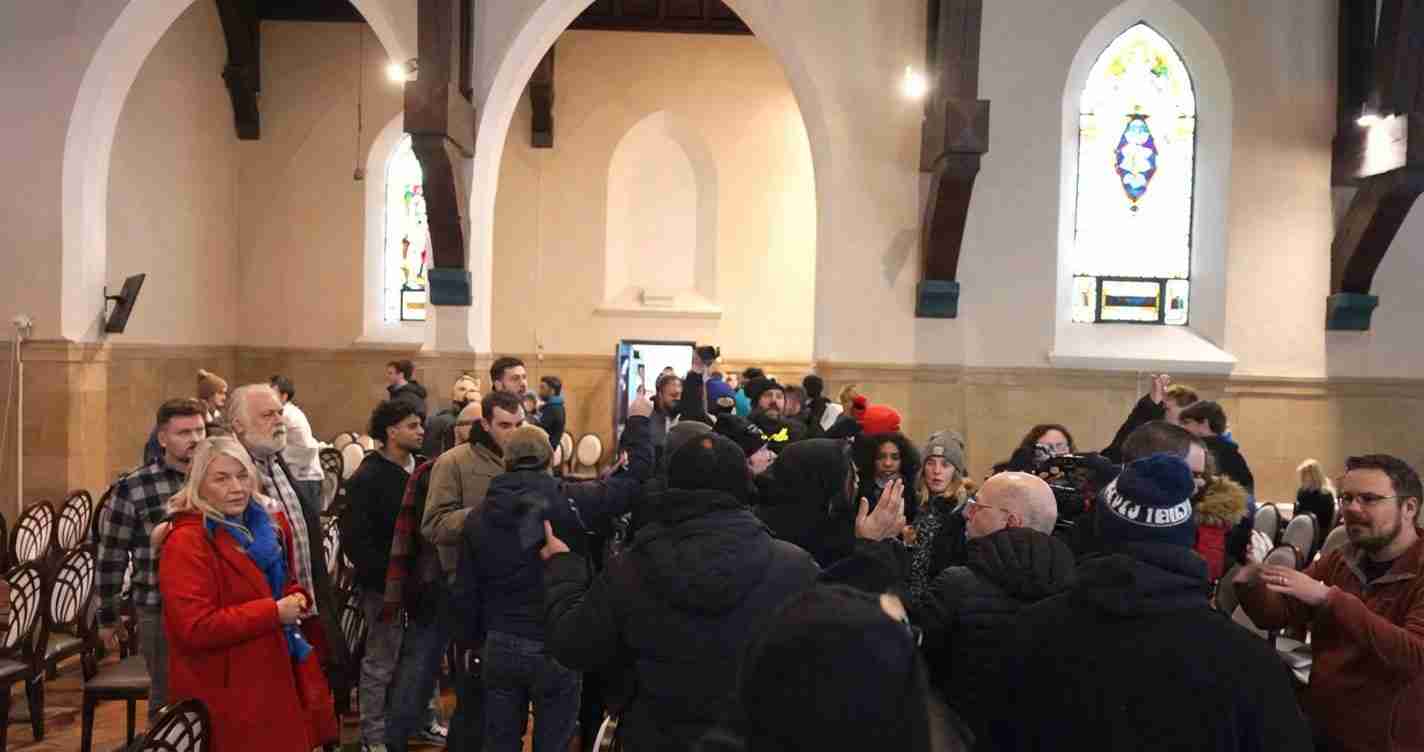
No Verified Reports That Anti‑ICE Agitators Stormed St. Paul Church; Videos Circulate as Tensions Rise After Renee Good Killing
Reports that anti‑ICE protesters stormed Cities Church in St. Paul to interrupt a worship service over a pastor’s alleged ICE ties are unverified; no credible news outlets or law enforcement have confirmed such a disruption.
Key takeaways
- No credible confirmation: There are no verified news reports or official statements confirming that protesters stormed Cities Church to confront a pastor about ICE ties.
- Circulating videos unverified: Video clips show chanting inside a sanctuary but lack independent verification from major outlets or law enforcement; treat them as uncorroborated.
- Context matters: The killing of Renee Good by an ICE agent on Jan. 7, 2026, sparked widespread protests and misinformation, including AI‑generated image circulation.
What we investigated
We searched local and national reporting, law enforcement statements, and public records for confirmation of a church disruption tied to anti‑ICE protesters in St. Paul. Our review returned extensive coverage of the killing of Renee Good and ensuing demonstrations, but no independent, verifiable account matched the specific claim that a mob entered Cities Church to confront a pastor over ICE affiliation.
One social media clip circulating publicly shows people chanting “Justice for Renee Good” inside a sanctuary and describes the action as a “clandestine mission.” That clip is available online but is not corroborated by timestamps, verified witness reporting, or official incident reports; therefore it does not confirm the alleged church storming on its own. See the YouTube video circulating online referenced in searches.
Background: the killing of Renee Good
Renee Nicole Good, 37, was fatally shot by ICE agent Jonathan Ross on Jan. 7, 2026, in Minneapolis during an ICE operation. The shooting — which occurred when Good’s car was reportedly stuck in snow — set off large protests and sustained public scrutiny of ICE operations in the Twin Cities.
For consolidated reporting on the incident and its aftermath, see What we know one day after the killing of Renee Good and the Killing of Renee Good — Wikipedia entry.
Escalation, protests and legal moves
Good’s death prompted widespread demonstrations across Minneapolis and the wider Twin Cities. Organizers staged numerous events using slogans like “ICE Out For Good”. Reporting documented many events, arrests, and at least one injured officer; Minnesota state officials filed a lawsuit against the Department of Homeland Security seeking limits on ICE activity in the state.
Ongoing ICE operations in neighboring cities, including actions in Richfield, sustained community concerns and planning among local officials and organizers. See analysis and reporting compiled by outlets such as Labor Notes and the Wikipedia summary.
Misinformation and social media
The rapid spread of video clips and images after the shooting has complicated the public record. Reporters flagged AI‑generated images purporting to show the ICE agent involved; fact‑checking outlets moved to correct many such posts. Social platforms also amplified unverified claims about protests and targeted actions, emphasizing the need for caution before treating clips as evidence.
For reporting on AI image confusion and corrections, see AI‑generated image circulation and confusion.
Why the church claims matter
Claims that protesters targeted a house of worship raise immediate public concerns:
- Safety and sanctity: Houses of worship are traditionally protected spaces; allegations of intrusion can raise fear and demand law‑enforcement response.
- Political amplification: Unverified stories about churches can inflame partisan debate about protest tactics and civic norms.
- Misinformation risk: When uncorroborated clips circulate, they can escalate tensions even if later debunked.
What we could verify and what we could not
Verified:
- The killing of Renee Good by an ICE agent on Jan. 7, 2026, is widely reported (WUFT summary; Killing of Renee Good — Wikipedia).
- Subsequent protests and legal action followed the shooting (Labor Notes).
- Misinformation circulated widely, including AI‑altered images (OPB report).
Not verified: Any credible, independent report or official confirmation that a mob of anti‑ICE agitators stormed Cities Church in St. Paul and interrupted a worship service because a pastor was allegedly affiliated with ICE.
Voices and reactions
Community leaders, elected officials, and organizers have offered divergent perspectives: many praised Good and demanded accountability, while others emphasized officer safety and lawful protest. Reporting shows a divided public response and heightened emotions as investigations and legal efforts continue.
“Officials and reporters urge treating unverified clips as incomplete until corroborated by reliable reporting or records.”
Implications for the United States
- Public safety and faith institutions: Unverified claims of church incursions can inflame fears and put pressure on leaders to act.
- Protest dynamics: The energy around the Renee Good case may drive similar demonstrations nationwide unless clear boundaries and dialogue are established.
- Political consequences: The incident deepens debates over immigration enforcement, civil liberties, and law‑and‑order politics.
- Misinformation risk: AI‑generated images and unverified video clips highlight the need for rapid verification by newsrooms and officials.
- Trust in institutions: Transparent investigations and careful policing will be essential to maintaining community trust.
Sources and further reading
- YouTube video circulating online
- What we know one day after the killing of Renee Good — WUFT
- Killing of Renee Good — Wikipedia
- Renee Good analysis — Labor Notes
- AI images of Minneapolis ICE agent spread confusion — OPB
- Boston Review commentary on Renee Good killing
Note: This article preserves original facts, information, and URLs cited in public reporting and seeks to distinguish verified facts from unconfirmed social‑media claims.



