
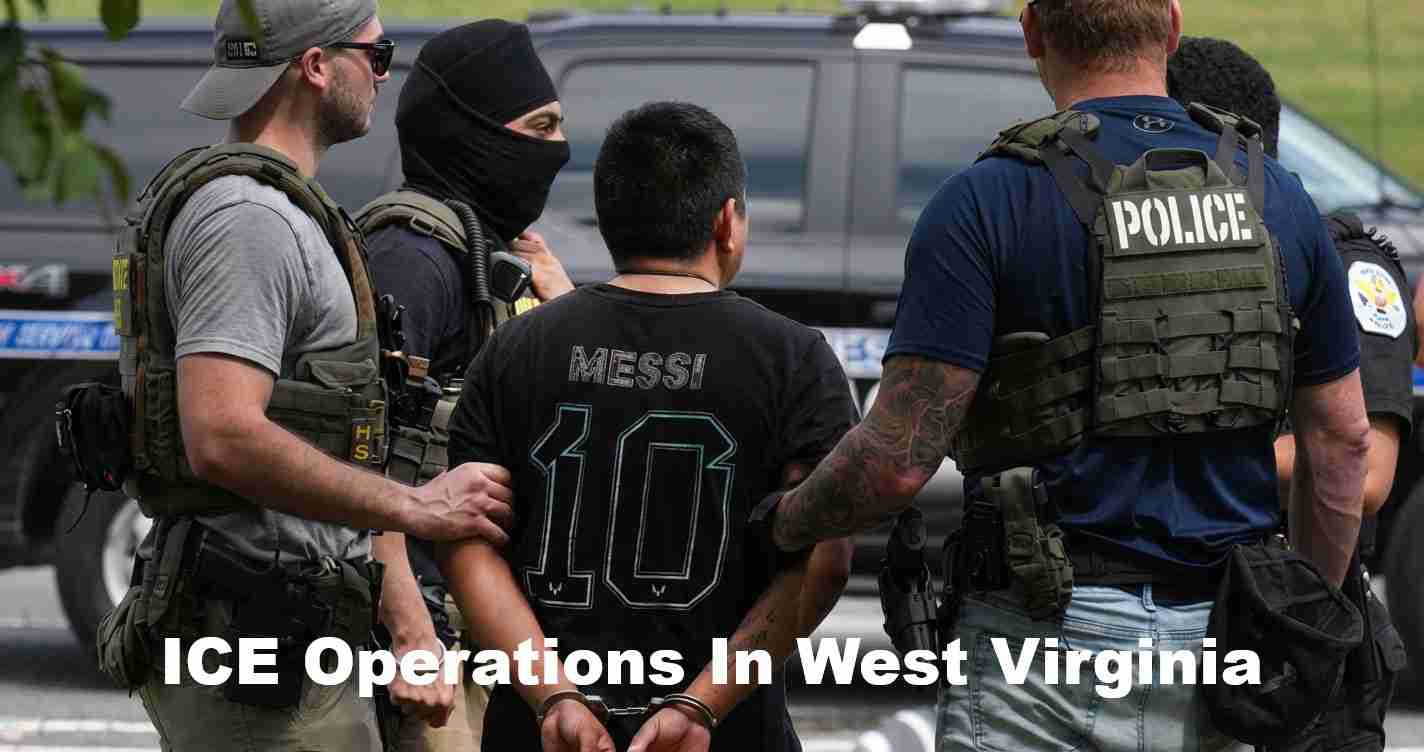
ICE arrests more than 650 in West Virginia two-week sweep; officials say Operation Country Roads targeted public-safety risks
U.S. Immigration and Customs Enforcement arrested more than 650 people in West Virginia during “Operation Country Roads,” a two-week statewide sweep from Jan. 5–19, 2026, aimed at removing individuals officials described as threats to public safety.
- ICE says it arrested more than 650 people across multiple West Virginia communities during the Jan. 5–19 operation.
- Operation Country Roads involved 14 federal, state and local partners and deployed teams statewide, including Charleston, Martinsburg, Beckley, Moorefield, Morgantown and Huntington.
- More than 550 arrests were reported to involve West Virginia officers operating under the state’s 287(g) program, producing several federal criminal charges tied to search warrants executed during the sweep.
Operation Country Roads: overview and partners
ICE described Operation Country Roads as a focused, short-term surge of enforcement activity conducted across the state from Jan. 5–19, 2026. The agency said the effort was conducted with 14 federal, state and local partners and made arrests in towns and cities including Charleston, Martinsburg, Beckley, Moorefield, Morgantown and Huntington. For background reporting, see WJLA and the U.S. Attorney’s Office.
“By training and supporting our 287(g) partners across the state, we’ve expanded local capacity to identify, arrest, and process illegal aliens while ensuring these authorities are exercised professionally and consistent with the law,” said ICE Enforcement and Removal Operations Philadelphia acting Field Office Director Michael Rose.
Role of the West Virginia 287(g) program
State officials emphasized that more than 550 arrests during the operation involved officers trained under West Virginia’s 287(g) program, which authorizes trained local officers, under ICE supervision, to perform certain immigration functions. Authorities credited the program with expanding local capacity to identify and process immigration violators during the two-week surge. Supporters say 287(g) helps remove criminal actors; critics warn of civil-rights risks and the possible chilling effect on immigrant-community cooperation with police. See the Justice Department summary of participating agencies: U.S. Attorney’s Office.
Arrests, charges and examples
ICE and the U.S. Attorney’s Office reported that the sweep produced numerous arrests, including individuals with serious criminal histories such as convictions related to child sex abuse, drug offenses, and endangering children. Several arrests resulted in federal criminal charges; the Justice Department noted eight immigration-related actions tied to search warrants executed in Nitro on Jan. 16. Local reports named specific arrests, including Sagar Singh, an Indian citizen arrested for operating an unsafe tractor-trailer, and Ling Yan (also called Yang Ning), a Chinese national with prior Ohio convictions and a final removal order. (See WV MetroNews.)
Several arrests produced federal criminal charges, officials said.
Legal concerns and watchdog reporting
While officials highlighted removal of people they described as dangerous, watchdog outlets and civil-rights advocates raised constitutional concerns about some enforcement actions. Mountain State Spotlight flagged a traffic stop near an I-77 toll plaza that led to the arrest of Venezuelan national Antony Segundo Larrazabal-Gonzalez, noting questions about whether the stop and subsequent detention would withstand judicial scrutiny. Critics warn that aggressive enforcement and expanded 287(g) use may risk civil-rights protections and erode trust between immigrant communities and local police. See analysis on potential court challenges at Mountain State Spotlight.
Official statements and public reaction
Governor Patrick Morrisey, who signed a 287(g) Memorandum of Agreement with ICE in August 2025, praised the operation and said it removed individuals he characterized as dangerous criminals. U.S. Attorney Moore Capito commended partner agencies for their work. ICE framed the operation as an example of federal–state–local cooperation in enforcing immigration laws. At the same time, civil-rights advocates urged oversight and transparency.
Nationwide context and implications
Operation Country Roads is part of a broader pattern of ICE enforcement surges that use local partnerships and 287(g)-trained officers. Observers say the West Virginia effort will be watched by other states considering similar agreements, while civil-rights groups and legal experts will likely follow any court challenges. Key implications include:
- Public-safety and enforcement capacity: Demonstrates how federal and local partners can scale enforcement rapidly across rural and urban areas.
- Legal and constitutional scrutiny: Cases flagged by watchdogs could prompt litigation that shapes the limits of 287(g) authority and joint operations.
- Community trust: Expanded local immigration enforcement may undermine police trust in immigrant communities and hinder community policing goals.
Planned protests and local response
ICE and local officials said no protests occurred during the two-week operation itself. Media and community groups had planned demonstrations for Jan. 31 in Huntington and Putnam County—events named with slogans such as “Take Down The Tyrants” and “ICE Out of Everywhere”—but those demonstrations were scheduled after the operation period and did not interrupt the sweep. Local outlets noted the operation proceeded without public demonstrations at arrest sites. (See WV MetroNews.)
Operational lessons and what to watch next
Other jurisdictions will likely study West Virginia’s logistics: team deployment, use of 287(g) training, and processes for arrest and removal. Lawmakers and agencies may cite the results when debating federal funding, policy choices, and whether to expand or constrain local immigration enforcement roles. Courts may also shape the future scope of similar operations through litigation prompted by cases raised by watchdog outlets.
Reporting and sources
This article draws on official statements and local and national reporting, including:
- WJLA
- WV MetroNews
- U.S. Attorney’s Office, Southern District of West Virginia (Justice.gov)
- Mountain State Spotlight
- KATU (wire) and KATV (wire)
Reporting continues as federal and state authorities and community groups respond to legal developments.



