
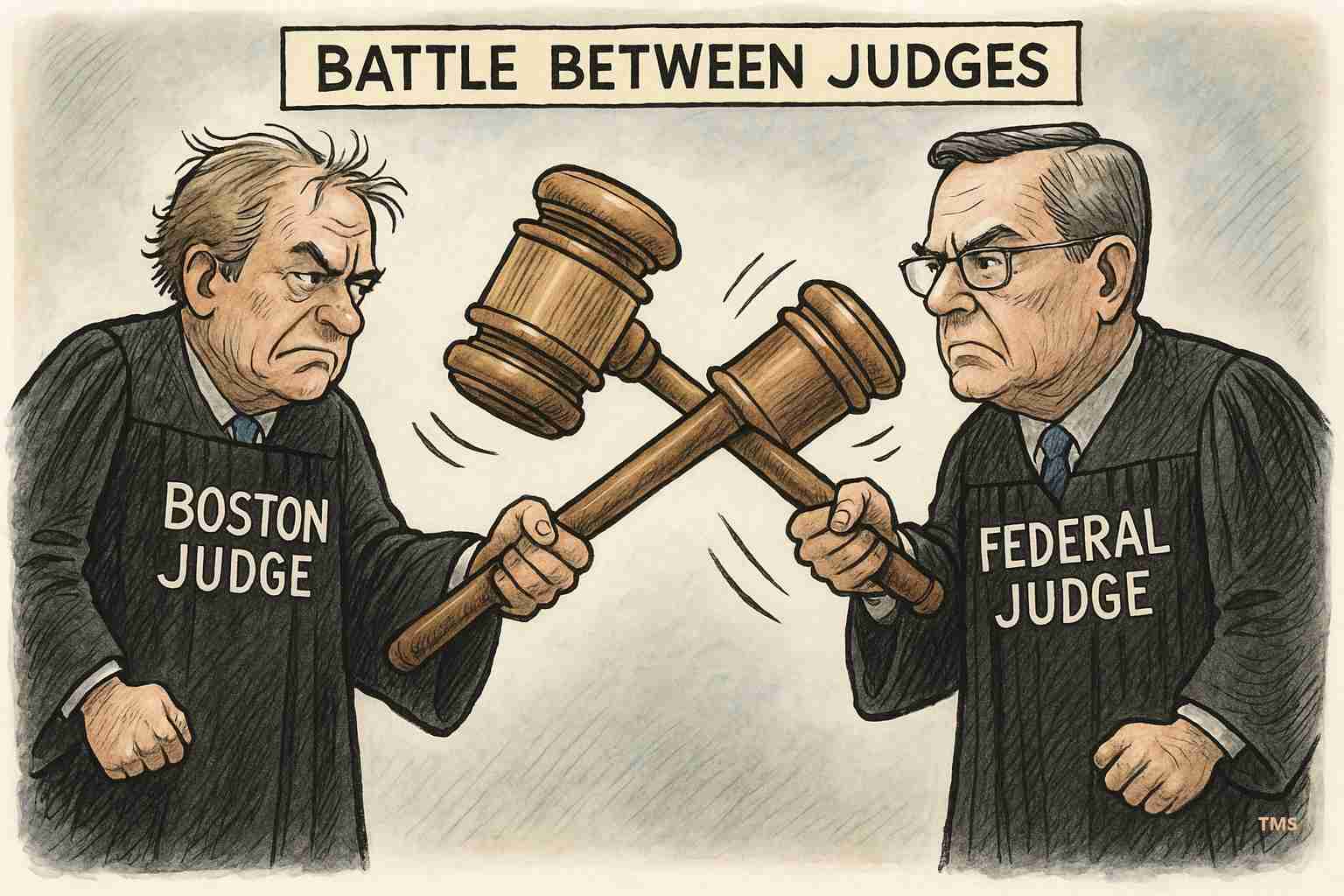
Federal court rulings clash as Supreme Court hotly debates third-country deportations
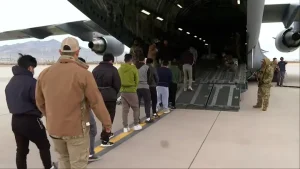 Judge Backs Trump Deportation Push for Eight Migrants (Courtesy Fox News)
Washington, DC (Times Media Service) – A federal judge on July 4 backed the Trump administration’s deportation push, clearing the way for eight migrants to be sent from Djibouti to South Sudan despite concerns they could face danger in the conflict-scarred nation.
Supreme Court Clarifies Stay on Third-Country Deportations
The U.S. Supreme Court on July 3 issued a brief, unsigned order that clarified its June 23 decision, confirming that a stay of a lower court’s injunction also blocks any follow-up orders designed to protect migrants from removal to countries not listed in their original deportation papers. The move allows eight men held at Camp Lemonnier in Djibouti to be flown to South Sudan, even though only one has ties to that country.
Liberal Justices Sonia Sotomayor and Ketanji Brown Jackson dissented, warning that the men risk torture or death if sent to South Sudan’s volatile environment. They argued that the administration’s reliance on diplomatic assurances under the UN Convention Against Torture offers no real safeguard in a nation plagued by armed conflict and crime.
Conflicting District Court Decisions
The legal saga began in April when U.S. District Judge Brian Murphy in Boston issued a preliminary injunction barring the removal of any migrant to a third country without a chance to seek relief under the Convention Against Torture. He later tailored that order on May 21 to ensure due process procedures.
After the Supreme Court intervened, Judge Murphy’s order was nullified. On July 4, however, U.S. District Judge Randolph Moss in Washington briefly paused the deportation again when the migrants filed new claims in his court. That pause was short-lived: Judge Murphy in Boston soon denied the migrants’ request to halt the flight, setting the stage for the administration to proceed.
Details of the Migrants and Their Detention
The eight men come from Cuba, Laos, Mexico, Burma (Myanmar), Sudan and Vietnam. Four have murder convictions; the others face various criminal charges. They were first detained on a military base in Djibouti after a May deportation attempt ran afoul of Judge Murphy’s injunction.
Held for six weeks at Camp Lemonnier, the migrants were scheduled to board a plane bound for South Sudan on July 4 at 7 p.m. Eastern Time. Department of Homeland Security lawyers told the court that foreign nations are less willing to accept transfers if U.S. courts continually block such flights, complicating diplomatic relations and undermining the third-country deportations policy.
Homeland Security and Administration Response
Homeland Security Secretary Kristi Noem praised the rulings as bolstering executive authority over immigration. “These decisions reaffirm the administration’s ability to enforce the nation’s laws,” she said, noting that South Sudan provided assurances to treat the migrants humanely under the UN Convention.
The Trump administration has argued that third-country removals are essential to deter illegal crossings and protect public safety. Officials contend that deporting migrants to nations aside from their origin countries is lawful when those nations agree to accept them and guarantee their safety.
Human Rights and Advocacy Concerns
Migrant advocacy groups decried the court’s decisions, saying South Sudan’s track record of violence and human rights abuses makes it unsafe for the men. Human Rights Watch and other groups warned that diplomatic assurances often fail to translate into real protections on the ground.
“These men face a genuine risk of torture or worse if sent to South Sudan,” said one attorney representing the migrants. Critics also warned that the administration’s push could set a dangerous precedent, enabling expedited removals without meaningful review.
Impact on Immigration Policy and Executive Power
The rulings mark another win in the Trump administration’s aggressive immigration agenda. By upholding the deportation push, the courts have strengthened the president’s hand in enforcing stricter border controls and novel removal tactics that bypass traditional asylum channels.
Legal experts say the decisions underscore growing tensions between federal judges and the Supreme Court over the balance of powers. They note that lower-court injunctions can be swiftly overridden by brief Supreme Court stays, leaving migrants with little chance to present fear-based claims.
Reaction Across the Nation
In conservative circles, the rulings were hailed as necessary for maintaining order at the border and respecting the limits of judicial interference. Fox News commentators described the outcome as a “victory for law and order.”
Moderate voices, however, called for congressional action to clarify the administration’s authority and ensure humane treatment. Some lawmakers urged reforms to the Convention Against Torture review process to guarantee that migrants subject to third-country deportations receive fair hearings.
What’s Next for the Migrants and the Courts
With the flights set to depart, the immediate question is whether any new legal challenge can block the transfers at the last minute. Meanwhile, human rights observers will monitor conditions in South Sudan.
Long term, the case could reach the full Supreme Court again if impacted migrants file direct appeals. Legal scholars say that outcome would offer a clearer interpretation of executive power over immigration and the judiciary’s role in protecting vulnerable individuals.
Aaron Yates / Law and Crime Writer (Times Media Service)
Law & Crime contributor, offers extensive US legal insight and unique experience spanning both sides of law enforcement.
ayates@timesmediaservice.com



