
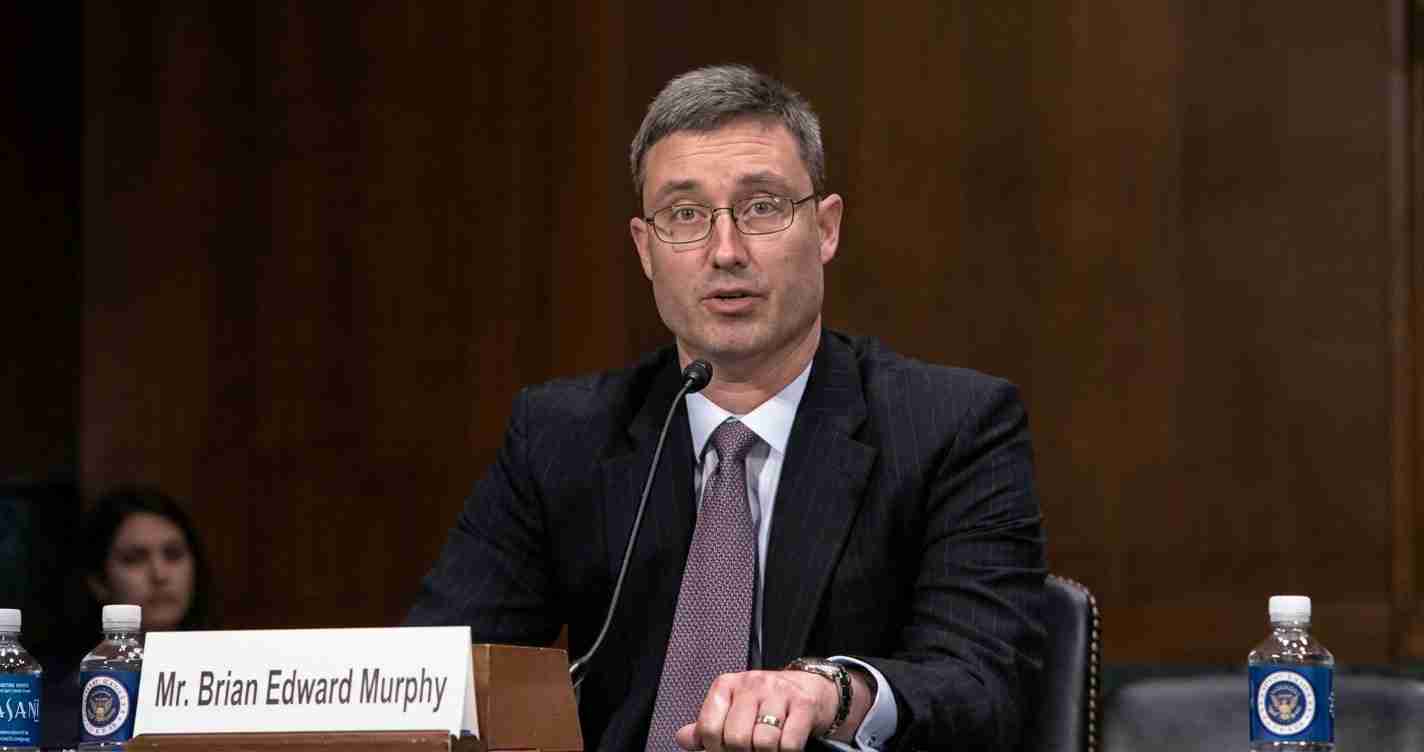
Biden Judicial Appointee Judge Brian Edward Murphy Faces Fresh Conservative Backlash After Repeated High-Profile Reversals
U.S. District Judge Brian Edward Murphy, a Biden appointee in Massachusetts, faces criticism after several high-profile rulings that blocked Trump-era immigration policies and a new CDC vaccine schedule were repeatedly stayed or overturned by higher courts.
Key takeaways
- Repeated reversals: Murphy’s injunctions on the third-country deportation policy and a new CDC immunization schedule were stayed or overturned by appellate courts and the Supreme Court.
- High-profile scrutiny: The Department of Justice and conservative lawmakers have publicly criticized Murphy’s rulings as judicial overreach and inconsistent with higher-court orders.
- Legal stakes: Appellate review of Murphy’s orders will test limits on district-court authority over national immigration and public-health policies.
Background and confirmation
Brian Edward Murphy, born in 1979, graduated from the College of the Holy Cross and Columbia Law School. Before joining the federal bench, he worked as a public defender in Massachusetts, practiced privately in Boston and Worcester, and served as a bar advocate supervisor. Senators Edward Markey and Elizabeth Warren praised his public defender experience when he was nominated March 21, 2024, to replace Judge Patti B. Saris. Murphy was confirmed on Dec. 2, 2024. (See Biographical details and nomination praise.)
The deportation rulings and the Supreme Court response
Murphy first drew national attention with rulings that halted the Trump administration’s third-country deportation policy — which allows DHS to remove migrants to countries other than their origin if they might face harm in the immediate host country. That policy was central to the administration’s broader immigration strategy.
- April 18, 2025: Murphy issued a preliminary injunction blocking DHS deportations under the third-country policy nationwide. The Supreme Court stayed that injunction in June 2025 in a 6-3 order, pausing Murphy’s decision while the government appealed. (Reporting)
- May 21, 2025: After the stay, Murphy issued a remedial order claiming a limited part of his injunction remained enforceable for six migrants bound for South Sudan. The Supreme Court issued a rare follow-up a week later, ruling the remedial step unenforceable and admonishing the judge to follow the high court’s stay, warning that further defiance could invite extraordinary remedies, including a writ of mandamus. (Reporting)
- March 2026: Murphy issued another lengthy opinion — an 81-page decision — blocking the deportation policy as unlawful. The U.S. Court of Appeals for the 1st Circuit promptly stayed that order pending appeal, pausing the injunction for 15 days while the government sought review. (Reporting)
Taken together, these interventions represent at least three major court actions involving Murphy’s orders on the same policy within about a year: two high-court interventions in 2025 and an appellate stay in 2026. Conservative critics say the sequence shows an alarming pattern of district-court interference in national immigration enforcement.
Vaccine policy injunction
On Monday, March 16, 2026, Murphy granted a preliminary injunction in a suit brought by medical organizations challenging HHS Secretary Robert F. Kennedy Jr.’s change to the CDC immunization schedule. Murphy’s order temporarily:
- Stayed a January 2026 immunization schedule that reduced the number of vaccine requirements for children,
- Invalidated the newly appointed vaccine advisory committee and its decisions while the lawsuit proceeds.
Murphy framed parts of his opinion with a reference to Carl Sagan, saying science is “the best we have,” and highlighted vaccine efficacy while explaining why the plaintiffs were likely to succeed on the merits. The order directly halted parts of a top administration agenda item to reshape vaccine rules for children. As of this writing, the government has signaled it will appeal the decision. (Reporting: research findings)
Reaction from the Justice Department and conservatives
Deputy Attorney General Todd Blanche posted on X about Murphy’s new vaccine injunction, criticizing the judge’s record of rulings that were stayed or reversed:
“How many times can Judge Murphy get reversed in one year? The same day he is stayed for repeatedly refusing to follow the law, he issues another activist decision. We will keep appealing these lawless decisions, and we will keep winning.”
That post was part of broader Justice Department pushback that characterized some of Murphy’s earlier actions as defiance of the Supreme Court’s stays. (Quoted from research materials.)
Conservative lawmakers and commentators have been outspoken. Rep. Brandon Gill (R-TX) called Murphy’s conduct “impeachable” in a June 2025 interview, arguing that a district judge should not flout Supreme Court orders. Other critics say the rulings amount to activist judging that interferes with the executive branch’s ability to carry out immigration and public-health policies. (See Reaction reporting and Fox News.)
Supporters point to Murphy’s background as a public defender and say district judges must sometimes stop government actions that risk individuals’ rights or public safety. His nominees’ backers in Massachusetts highlighted his courtroom experience and commitment to constitutional protections at the time of his nomination. (See nomination coverage and biography.)
Implications for the United States
Economic and administrative effects
Murphy’s rulings have immediate practical effects on federal operations. The stays and reversals affect thousands of deportation cases and complicated DHS operations that rely on consistent rules for removals. Similarly, enjoining a new CDC schedule can delay changes the administration argues will streamline vaccine rules and advisory bodies. That regulatory uncertainty can affect state public-health planning, school vaccination programs, and enforcement logistics at the Department of Homeland Security. (Reporting)
Political consequences
For Republicans and moderate conservatives, Murphy’s string of high-profile orders has become a rallying point to argue for stronger oversight of federal judges who, critics say, exceed their role. Deputy Attorney General Blanche’s social post and statements from GOP lawmakers frame the issue as a fight over separation of powers and respect for higher-court authority. For Democrats and legal defenders, the cases represent judicial review functioning as a check on executive action. The debates are likely to influence messaging in Congress and could shape confirmation fights and calls for procedural reforms. (Reaction reporting)
Social and community impact
Murphy’s deportation injunctions directly affected migrants facing removal and communities where they might be resettled or returned. Delays in deportations can mean migrants remain in the U.S. longer, with consequences for local services and law enforcement. On the vaccine side, blocking a new immunization schedule raises immediate questions for parents, schools, and pediatricians about which vaccines are required and which advisory body will set standards while the courts decide. This uncertainty can strain public-health communication and school compliance systems.
Judicial and legal system implications
Repeated stays and reversals of district-court rulings can prompt discussions about judicial discipline, appeals timing, and whether higher courts should intervene more forcefully when lower-court orders conflict with pending high-court decisions. The Supreme Court’s rare second order in 2025 — admonishing Murphy to comply — highlighted those tensions and underscored the high court’s willingness to assert control in emergency situations. How appellate courts handle Murphy’s recent orders will shape the balance between trial-court fact-finding and appellate oversight. (See FJC biography and Reporting.)
Legal landscape moving forward
As the government appeals Murphy’s vaccine injunction and the 1st Circuit reviews his latest deportation order, the legal battles will continue through appellate courts and possibly return to the Supreme Court. Each step will test limits on district judges’ powers to halt national policies and on higher courts’ willingness to intervene quickly. The outcome will affect national immigration enforcement, public-health policy, and the broader question of how much discretion trial judges have when national policies are at stake. (Sources: FJC; Reporting; nomination coverage.)



