
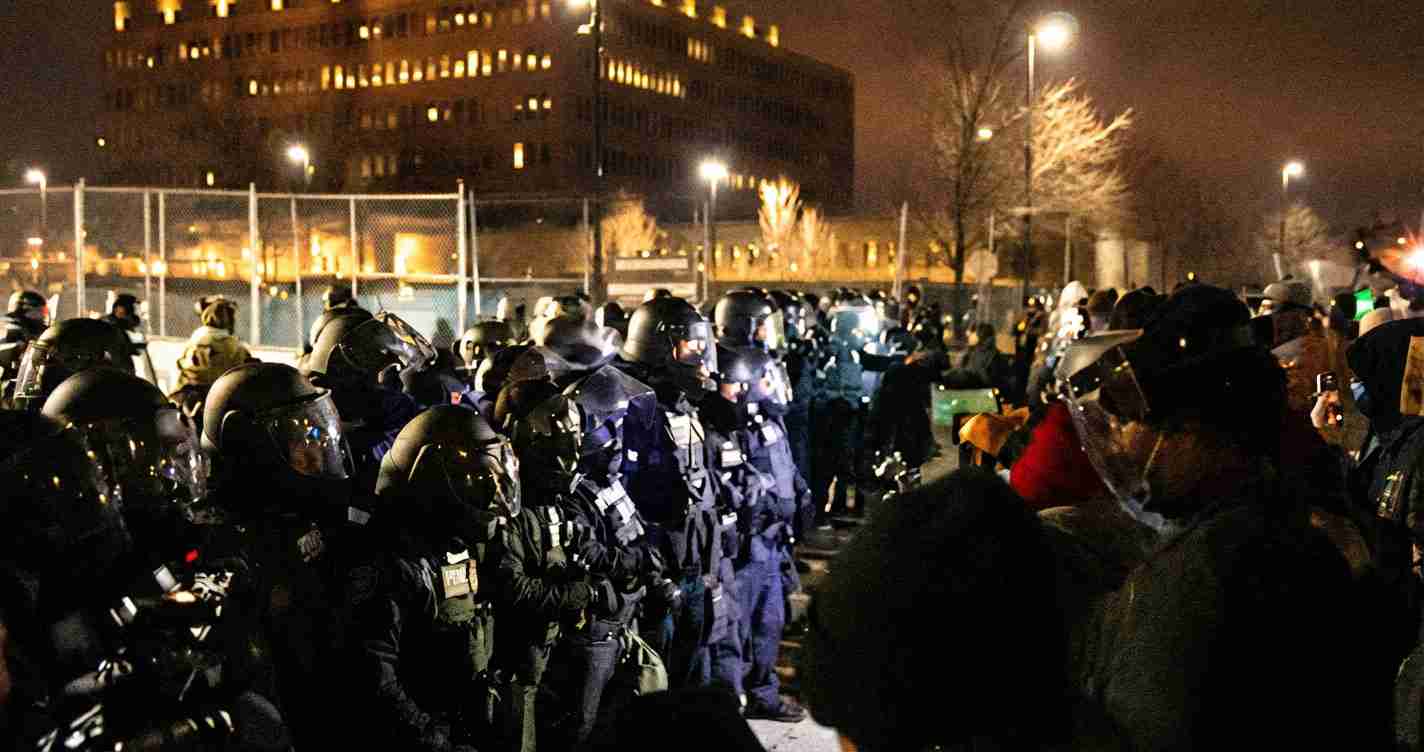
Federal judge bars ICE and other agents from detaining or teargassing peaceful protesters in Minneapolis during Operation Metro Surge
A U.S. District Judge in Minneapolis issued an injunction limiting federal agents — including ICE — from arresting or using crowd-control munitions on peaceful protesters during Operation Metro Surge, requiring reasonable suspicion or probable cause for detentions.
- Court order: Judge Kate Menendez issued an 83-page injunction on January 16, 2026, restricting arrests and use of pepper spray, tear gas and other nonlethal munitions on peaceful demonstrators (RNZ, CBS).
- Standard for stops: Federal officers must have reasonable suspicion or probable cause that someone is committing a crime or interfering with operations before detaining or stopping them (RNZ, CBS).
- Geographic and temporal limits: The injunction applies only to federal agents operating in Minneapolis–St. Paul for the duration of Operation Metro Surge and does not impose statewide bans (RNZ, CBS).
What the ruling says and why it matters
In an 83-page order, U.S. District Judge Kate Menendez concluded federal agents may not detain peaceful protesters, observers recording agents, or bystanders who are not interfering with law enforcement operations unless officers can articulate reasonable suspicion or probable cause that a crime is being committed or that the person is obstructing operations (RNZ, CBS).
Menendez also prohibited the use of pepper spray, tear gas, and other crowd-control munitions against nonviolent people who are not obstructing officers. The judge described several tactics as disturbing
, including threats to break car windows, following protesters home, and pointing firearms at lawful demonstrators, finding the government did not adequately justify such force against peaceful observers (RNZ, CBS).
The order retains a safety valve: federal officers may act when they have an articulable reason to believe someone is committing a crime or creating danger. The opinion acknowledged the protests’ mobile nature, tracking ICE enforcement actions across the Twin Cities (CBS).
Background: Operation Metro Surge and rising tensions
Operation Metro Surge is a Department of Homeland Security deployment of nearly 3,000 ICE and Border Patrol agents to Minneapolis announced in early January 2026. DHS said the operation targets arrests of undocumented immigrants and fraud investigations, citing concerns in the Somali community (RNZ, Politico).
Protests began soon after the deployment and intensified after an ICE agent fatally shot 37-year-old Renee Good on January 7, 2026. Good, a mother of three, had participated in a neighborhood patrol monitoring ICE activities. DHS Secretary Kristi Noem described Good’s actions as stalking and impeding and called them “domestic terrorism”, while local officials and activists said video shows Good driving away and questioned the shooting (RNZ).
The lawsuit that produced the injunction was filed December 17, 2025, by six protesters and observers who alleged a campaign of constitutional violations by DHS and other federal agencies for using force and detaining observers (RNZ, CBS).
Government responses and possible appeal
DHS said federal agents use the minimum force necessary to respond to assaults, vandalism and threats. DHS Assistant Secretary Tricia McLaughlin warned that rioting is dangerous and that obstructing law enforcement is a federal crime; assaulting officers remains a felony (CBS, Politico).
The administration signaled it may appeal the ruling; the White House and Justice Department did not immediately respond to requests for comment (Politico, RNZ).
Federal prosecutors also issued grand jury subpoenas to Minnesota Governor Tim Walz and Minneapolis Mayor Jacob Frey related to whether they obstructed federal officers; both officials criticized the subpoenas as political intimidation (CBS, Politico).
Voices on the ground
Local leaders and activists hailed the injunction as a safeguard for free speech and for people monitoring federal activity. Mayor Jacob Frey and Governor Tim Walz had urged federal agents to leave, arguing the deployment endangered residents (RNZ, CBS).
Federal officials reiterated their obligation to stop violence and criminal conduct, warning that unchecked protests that escalate can endanger public safety and the rule of law (CBS, Politico).
Judge Menendez’s background and legal framing
Nominated by President Joe Biden and confirmed in 2021, Judge Menendez framed the decision around the “somewhat unique” nature of Twin Cities protests, which have moved with ICE enforcement actions. She balanced that operational reality with constitutional protections, noting peaceful observers and bystanders are entitled to First and Fourth Amendment rights unless officers can point to criminal behavior (CBS).
Scope and limits of the order
The injunction is narrowly tailored: it applies only to federal agents in Minneapolis–St. Paul and lasts for the life of Operation Metro Surge. Menendez denied broader requests, including a statewide ban on certain federal actions, and preserved agents’ ability to respond to clear and articulable suspicion of criminal conduct (RNZ, CBS).
Implications for the United States
Economic and public-safety impact
Agencies may revise crowd-control training and rules to avoid similar injunctions, potentially reducing aggressive arrests and reliance on nonlethal munitions in urban enforcement. That could lower immediate risks of clashes that disrupt businesses and transit in protest areas (RNZ, CBS, Politico).
Political consequences
For moderate conservatives, the injunction raises questions about federal authority and accountability. The subpoenas to state and local leaders and the prospect of appeal could deepen national disputes over responsibility for public order and may move the issue to higher courts (Politico, CBS).
Social effects and civil liberties
The decision underscores the judiciary’s role in protecting speech and privacy rights against overreach. It may embolden citizen oversight of federal actions while prompting law enforcement to warn that constrained tactics could complicate responses if protests turn violent (RNZ, CBS).
Practical effects for citizens and local officials
Observers and protesters nationwide may feel reassured that courts can limit perceived heavy-handed federal tactics. Local officials should review coordination agreements, clarify rules of engagement for joint operations, and ensure communication so peaceful demonstrations are protected while public safety risks are addressed (RNZ, CBS, Politico).
“Disturbing” tactics and the need for articulable suspicion — Menendez’s order emphasized constitutional protections and required clear, documented reasons for stops and detentions to withstand judicial review (CBS).
What comes next
The coming days will test whether the administration appeals, how federal agencies adapt training and engagement rules, and how state and local leaders coordinate responses. The ruling’s narrow scope means disputes over federal policing and protest rights could continue in courts and in the streets (Politico, CBS, RNZ).


