Athletics break ground on $1.75B “armadillo-shaped” ballpark on the Las Vegas Strip as construction races ahead
Construction is moving fast on the Athletics’ $1.75 billion, “armadillo-shaped” ballpark on the Las Vegas Strip after a June 23, 2025 groundbreaking; the stadium aims to open for the 2028 MLB season and reshape the Strip.
- Groundbreaking and site: Ceremony held June 23, 2025, at the former Tropicana site on the Las Vegas Strip.
- Cost and capacity: Budgeted at $1.75 billion with about 33,000 seats; cost projections rose toward $2 billion by December 2025.
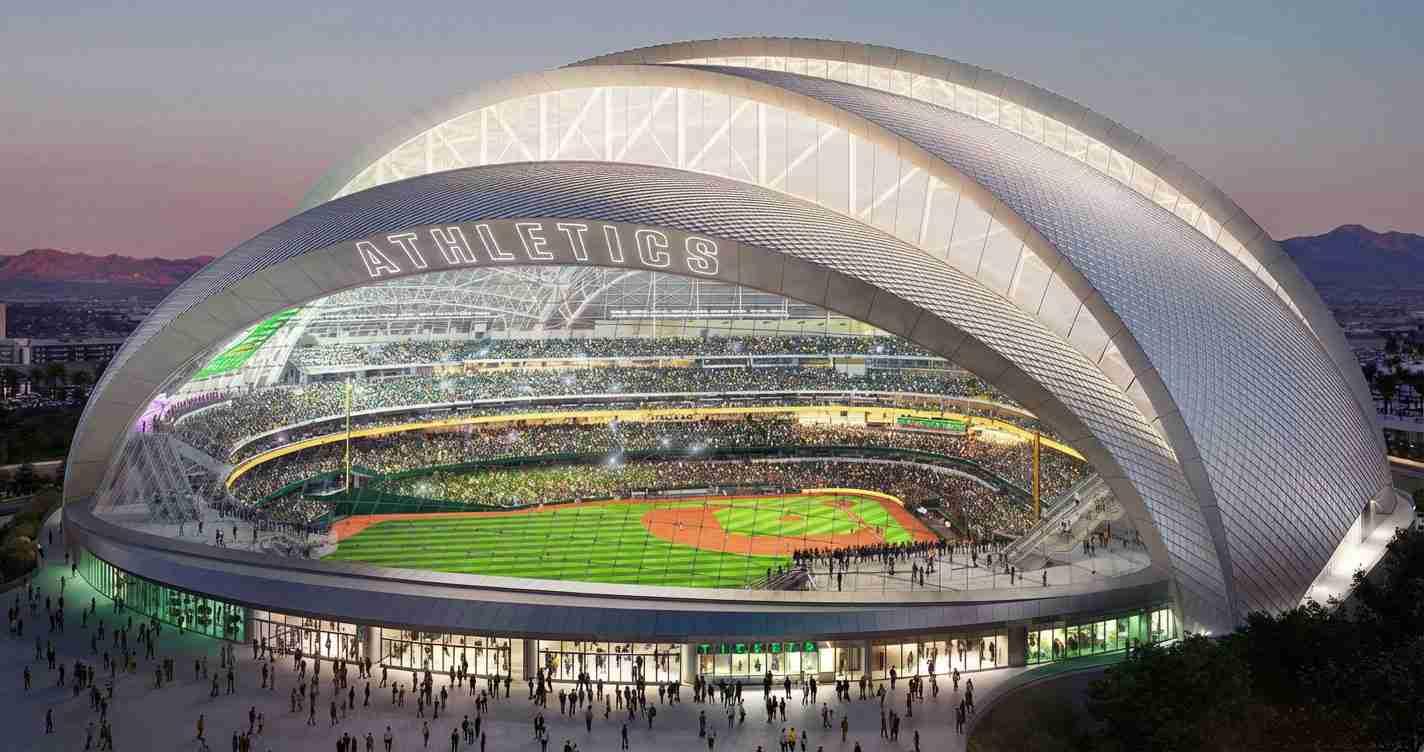
- Design: An “armadillo-shaped” form made of five overlapping arched volumes by Bjarke Ingels Group (BIG) with HNTB, featuring a large cable-net glass entrance.
- Schedule and risks: Rapid early concrete work has advanced, with steel and roof work slated through 2026 to meet a 2028 opening target.
Construction progress and timeline
Rapid vertical progress: Following the June 23, 2025 groundbreaking, crews moved quickly from ceremonial dirt-turning to substantial concrete work across decks and cores. Project leads reported concrete pours for decks and elevator cores advanced ahead of early expectations.
Foundation and cores: Concrete for the foundation and elevator cores had been poured by late September 2025, creating the first durable elements of the structure.
Deck pours: The first outfield deck concrete and multiple concourse pours were completed; by late 2025 roughly half of the ballpark’s decks had been poured, and about 84% of seating will sit between the foul poles to concentrate sight-lines.
Steel and roof schedule: Steel erection inside the bowl was slated to begin in March 2026. The design calls for six buttresses to support the roof (the fifth was expected by end of March 2026 and the sixth in spring 2026). Roof steel work was planned to begin in June 2026, with the main frame becoming clearly visible by summer and early fall 2026.
Equipment and vertical work: Escalators were due to arrive within weeks of late 2025, with installation soon after; steel roof segments were expected to appear by June 2026.
Design and features
Armadillo-shaped profile: BIG’s scheme stacks five overlapping arched volumes. From some angles the shapes read like an armadillo; from others they resemble pennants or flags. The profile is intended as a bold, recognizable addition to the Strip skyline.
Dramatic entrance: The stadium entrance will be framed by a cable-net glass wall — described by the architects as the largest of its type — designed to draw views into the bowl and the ballpark plaza.
Seating layout: Designers concentrated most seats between the foul poles (about 84% of capacity) to bring fans closer to the action and maintain modern sight-lines typical of contemporary ballparks.
Financing, ownership and surrounding development
Public and private mix: Nevada provided roughly $380 million in public funding through state tax incentives and a Clark County special tax district; the remainder is private financing tied to the team and its partners.
Adjacent development: The 49-acre site is owned by Red Rock Resorts. Planned projects around the stadium include a 1,500-room hotel and casino tied to Red Rock and a separate Bally’s conversion totaling about 3,005 rooms around the ballpark footprint.
Cost outlook: Although initial project figures focused on $1.75 billion, planning documents and reporting by late 2025 showed upward pressure on total costs, with projections toward $2 billion by December 2025.
Public officials, baseball leaders and community at the groundbreaking
The June 23, 2025 ceremony drew MLB Commissioner Rob Manfred, state and local officials, former Athletics greats including Rollie Fingers and Dave Stewart, Little League players and community members. Team owner John Fisher told the crowd, “We are Vegas’ team.”
Construction accountability and timeline risks
Tight schedule: Early progress — from dirt work to poured decks within months — was fast, but major milestones remain and the schedule is ambitious. Steel erection, roof completion and interior fit-out must follow to meet the 2028 opening window.
Cost pressure and oversight: Movement from $1.75 billion toward $2 billion highlights typical risks: material costs, labor availability and permit delays. Oversight of tax credits and special-district revenue will be important for taxpayers and officials.
Economic assumptions: The success of the larger development depends on hotel and casino activity around the ballpark; if visitor patterns change or construction slips, revenue forecasts tied to bonds or special tax districts could be stressed.
What’s next on the schedule
- March 2026: Start of steel work in the bowl; completion of the fifth buttress supporting the roof.
- Spring 2026: Anticipated completion of the sixth buttress.
- June 2026: Beginning of roof steel installation and more visible framing; significant vertical progress expected through summer and early fall 2026.
- 2028 season: Target opening for the new Athletics ballpark, contingent on schedule and budget adherence.
Implications for the United States
Economic and fiscal: The project should generate thousands of construction jobs short-term and permanent jobs when the stadium and surrounding hotels open. However, the use of roughly $380 million in public tax credits and special-district funding raises questions about public return on investment and accountability.
Political and civic: The Athletics’ relocation from Oakland to Las Vegas is part of a broader trend of franchise moves tied to publicly subsidized venues. Policymakers nationwide may view this project as a test case for negotiating future deals with sports teams.
Social and cultural: A 33,000-seat modern ballpark on the Las Vegas Strip could reshape MLB’s national marketing and attract non-local visitors; the stadium’s distinctive design may become an architectural icon that changes how fans experience road trips.
Design and development trends: The armadillo-shaped stadium and massive cable-net glass entrance represent high-design ambition; other markets will watch how design choices affect budgets and timelines.
Reporting notes and sources
This article draws on reporting from Dezeen’s coverage of the June 2025 groundbreaking and publicly compiled construction data, as well as background and timeline information compiled on Wikipedia’s New Las Vegas Stadium entry.
Key sources:
- Dezeen: Big Las Vegas “armadillo” stadium — Athletics groundbreaking coverage
- Wikipedia: New Las Vegas Stadium — project timeline, financing and construction updates
Note: All dates, figures and direct quotes are preserved from public reporting and the project’s compiled timeline and financing materials cited above.