
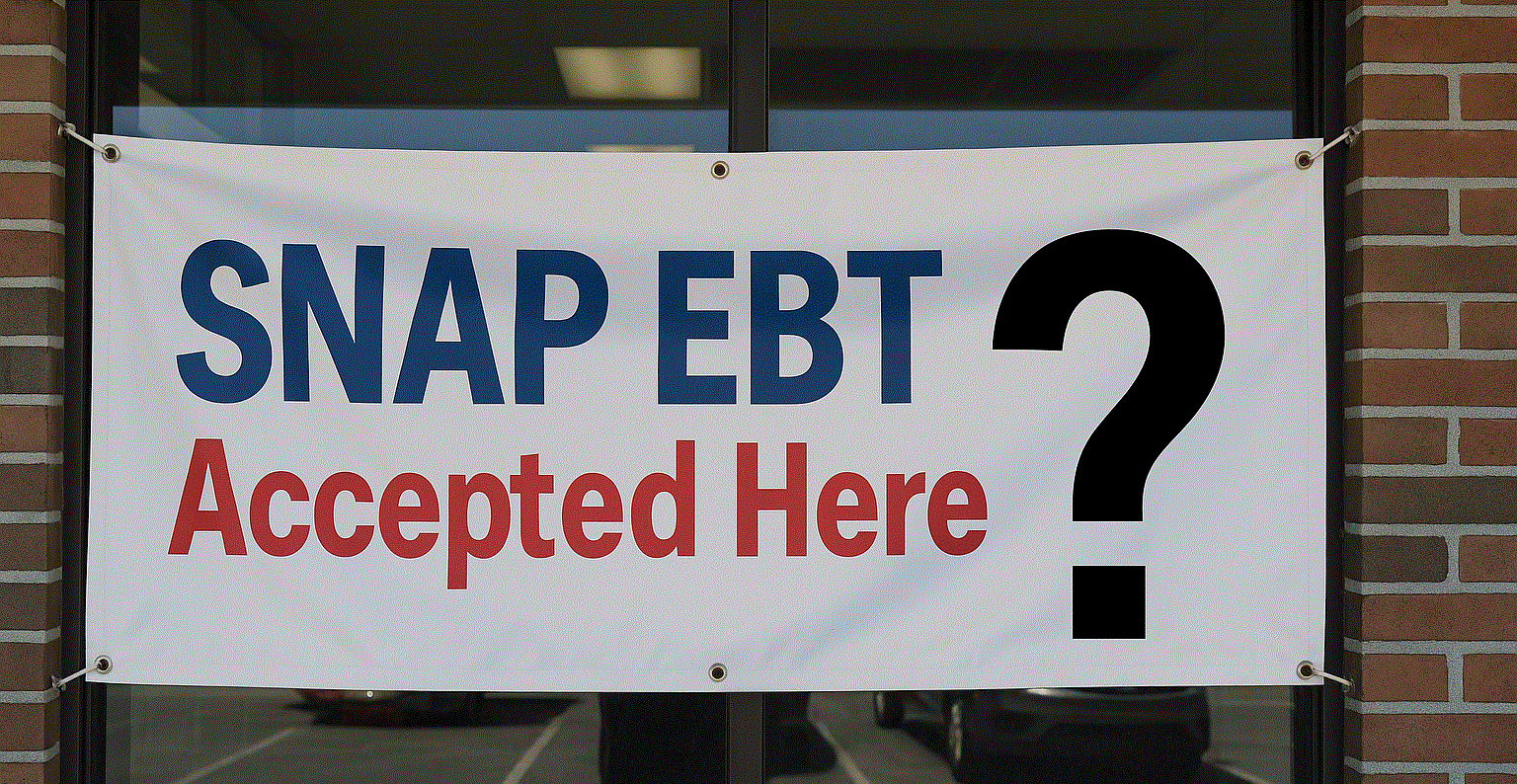
Federal judges order Trump administration to keep SNAP benefits flowing as shutdown continues
Federal judges ordered the Trump administration to continue SNAP payments during the government shutdown, preventing interruptions to food assistance for millions, citing statutory duty and the immediate harm that would threaten households and state-agency operations.
- Courts enjoined the administration to maintain SNAP operations and benefit disbursements during the shutdown to avoid irreparable harm to vulnerable families.
- Judge Indira Talwani heard an emergency petition from 25 Democratic state leaders and signaled concern about the human cost of suspending benefits.
- Rulings relied on the Food and Nutrition Act and public-health considerations to preserve benefit continuity.
- OBBB Act 2025 changes are being implemented; see USDA’s Food and Nutrition Service for implementation details.
What Judge Indira Talwani and the states argued
At an emergency hearing in Massachusetts, 25 Democratic state attorneys general and other leaders argued that an abrupt suspension of SNAP would inflict immediate, irreversible harm on children, seniors and people with disabilities. They maintained SNAP is not discretionary and that the Food and Nutrition Act requires continued allotments to eligible recipients.
Judge Talwani signaled sympathy for the states’ position, noting the severe human cost of cutting food aid in the middle of a shutdown and issuing a temporary order to preserve operations while litigation continues.
Key point: the states urged the court to prevent families from being forced to choose between rent, medicine and food — a risk the injunctions aim to avoid.
Legal basis cited by courts
Judges blocking suspension of SNAP pointed to statutory obligations and public-health implications. Courts emphasized three central ideas:
- Statutory duty: The Food and Nutrition Act and implementing rules govern SNAP and protect recipients’ access to benefits.
- Irreparable harm: Abrupt interruptions would cause immediate harm to those who rely on benefits for daily meals.
- Preservation of status quo: Courts may issue injunctions during funding disputes to prevent immediate injuries while longer-term legal questions are resolved.
Another federal judge’s order
A separate federal judge issued a similar injunction requiring continued SNAP disbursements during the shutdown. Together, the orders make it more difficult for the administration to halt benefits while litigation proceeds, effectively establishing an interim rule: unless courts decide otherwise, benefit payments must continue.
The role of the OBBB Act 2025
The judicial fight over short-term continuity is occurring alongside implementation of the One Big Beautiful Bill Act of 2025 (OBBB Act 2025), which made substantive changes to SNAP rules. According to USDA guidance, changes include:
- Raising certain age exceptions to 65 for program rules that had younger cutoffs.
- Modifying time-limited work requirements for ABAWDs, with stricter controls broadly and geographic exemptions for places like Alaska and Hawaii.
- Capping extraordinary mid-decade increases to the Thrifty Food Plan by linking future adjustments to the CPI and limiting sudden boosts.
USDA implementation materials are available at USDA’s Food and Nutrition Service.
How this affects states and recipients now
Immediate implications:
- Recipients should continue to receive benefits on their usual schedules while the shutdown and litigation continue.
- State administering agencies will maintain monthly allotments, hotlines and processing centers as in funded periods.
- Food banks and social services may still face higher demand, but federal payments — the backbone of many household food budgets — remain intact for now.
Why the courts acted — public health and legal duty
Judges emphasized two core rationales:
- Public health: Food insecurity increases hospital visits and worsens long-term health outcomes; sudden cuts would produce immediate harm.
- Legal duty: Agencies have statutory obligations under federal law that do not disappear during political negotiation or funding lapses.
Reporting on numbers and scope
SNAP serves more than 40 million Americans, including many children and seniors. Courts warned that even brief interruptions could tip families into deeper hardship — a central reason they preserved benefits while legal challenges progress.
Administration response and next steps
The administration may appeal the rulings or adopt administrative measures that comply with the injunctions while pursuing policy goals. The pending litigation will determine whether courts ultimately permit changes to SNAP administration during funding gaps or require continuous operations.
Implications for the United States of America
Economic impact
- Immediate stability: Continuing SNAP payments preserves purchasing power for tens of millions and supports local grocers and small businesses.
- State budgets: Continued federal payments avoid emergency costs states would face if forced to supplement or replace federal aid.
Political consequences
- Rule-of-law message: The rulings highlight the courts’ role in enforcing statutory duties despite budget disputes — a point likely to resonate with moderate and conservative audiences.
- Policy debates: OBBB Act 2025 changes will remain a focal point for ongoing legislative and legal fights.
Social effects
- Reduced immediate hardship: Injunctions lower the risk of sudden food shortages and their long-term harms.
- Continued pressure: Charities and food banks may still face increased demand during the shutdown and as OBBB rules phase in.
Cultural relevance
For many communities, SNAP supports dignity and independence. Courts preserving access reflect a societal interest in preventing sudden deprivation and maintaining local expectations for stable basic services.
Practical applications for residents
- Recipients: Expect regular benefit schedules to continue; contact state SNAP offices or local caseworkers for confirmation.
- State agencies: Continue routine operations, prepare for extended litigation, and coordinate with local partners for surges in demand.
- Policymakers: Use this breathing room to clarify statutory duties and negotiate durable policy changes under OBBB Act 2025.
- Businesses/retailers: Anticipate continued SNAP spending and plan inventories and staffing accordingly.
Sources
– USDA Food and Nutrition Service, SNAP implementation for OBBB Act 2025
– Court filings, emergency hearing transcripts and state legal filings reviewed by Times Media Service.
– Reporting and facts preserved from Times Media Service coverage.



