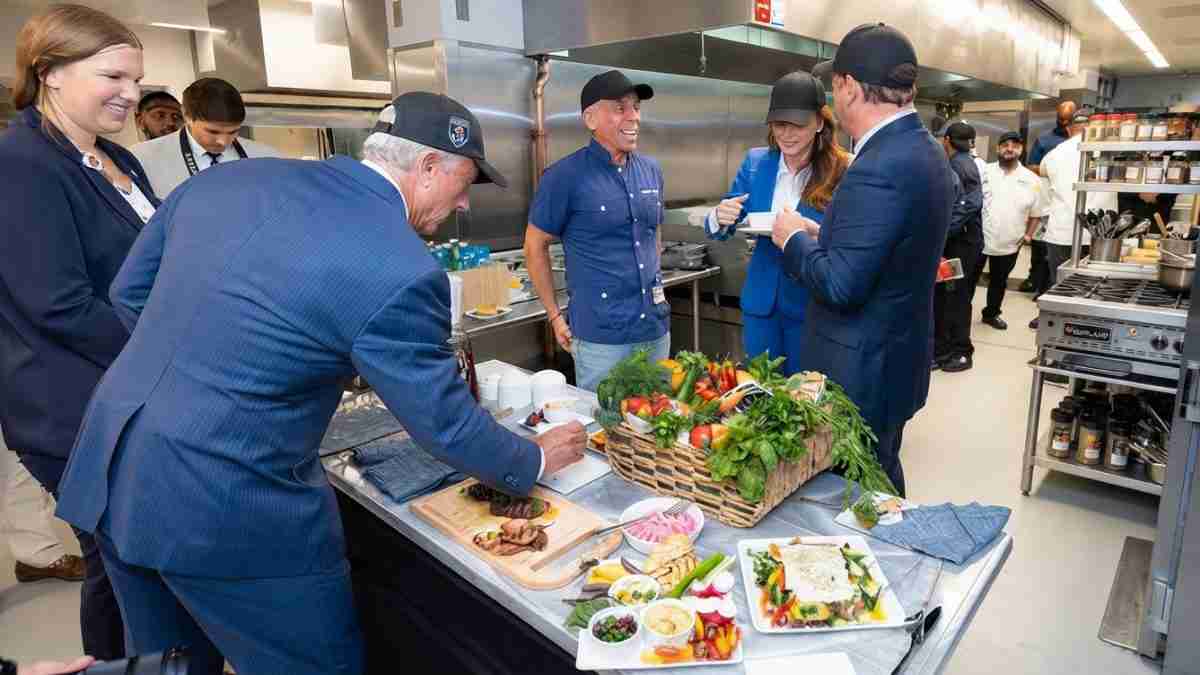
TAMPA, Fla., July 18 (Our Florida Times) — For patients and families, the main change is practical: hospital food may start to look less like an afterthought and more like part of care.
At Tampa General Hospital in Tampa, Florida, hospital leaders signed a federal healthy-food pledge during a visit with Health and Human Services Secretary Robert F. Kennedy Jr. and Agriculture Secretary Brooke Rollins. HHS described the step in its press-release title as Tampa General signing the Trump administration’s “Make Hospital Food Healthier” pledge.
The hospital says the effort is meant to change what gets bought, cooked and served — not just to add a few better items to the menu.
What Tampa General says changed
Tampa General had already teamed up with celebrity chef Geoffrey Zakarian last year to overhaul its menu using a “food is medicine” approach, according to the hospital and Fox News reporting on the hospital’s 2025 news release.
In that release, the hospital said the new menu includes items designed to be high in nutrition and able to “help prevent, manage and treat illness.”
Kennedy said at the event that Tampa General gets about 25% of its food from local farmers and held the hospital up as a model for others. He said, “We have a template here at Tampa General” and added, “We can say if they did it, you can do it.”
Tampa Bay 28 reported that hospital officials said the updated program emphasizes whole foods, Mediterranean-style meals, organic produce and locally sourced products, while avoiding artificial sweeteners and processed ingredients.
Why this matters to patients
The biggest day-to-day effect is on what shows up on the tray.
If a hospital buys more fresh produce, whole foods and local ingredients, patients may see meals that are more filling and more appealing. That can matter because hospitals are not just feeding visitors or staff; they are feeding people who are recovering, sometimes after surgery or during long stays.
Tampa General leaders said the menu changes have already changed how patients respond. Fox News, citing Fox 13 Tampa Bay and hospital officials, reported a 53% increase in perceived food quality and that more patients finished their meals. The reporting did not include the survey method or sample size.
John Couris, Tampa General’s chief executive, said the hospital “doubled down on the quality of the food” and said food purchasing costs rose about 5% to 7%, a cost he said the hospital could absorb.
What the federal government is trying to do
The Tampa event is part of a broader federal push.
HHS and USDA launched the hospital-food pledge earlier this month, according to HHS materials and Fox News reporting. Politico reported that CMS sent hospitals a notice on March 30 telling them to align food procurement with dietary guidelines to maintain eligibility for Medicare and Medicaid reimbursements.
That makes the issue more than a menu choice. It also becomes a purchasing question for hospitals that rely on federal payments.
In other words, the policy pressure is not just about whether fries or fruit are served. It is about how hospitals buy food in the first place.
What readers should take from this
The Tampa General example suggests that a hospital can try to make its food healthier without turning meals into a costly experiment.
Kennedy called the hospital a template. Tampa General says it already works with local farmers and has invested in better food. Federal officials are now presenting that as a model other hospitals could follow.
For patients, the immediate payoff could be simpler, healthier meals during a stay. For hospitals, the question is whether they can improve nutrition, keep patients eating, and do it without sharply raising costs.