Trump unveils “Golden Fleet” of battleships at Mar-a-Lago, calls them most powerful ever as Navy moves to procure first vessels
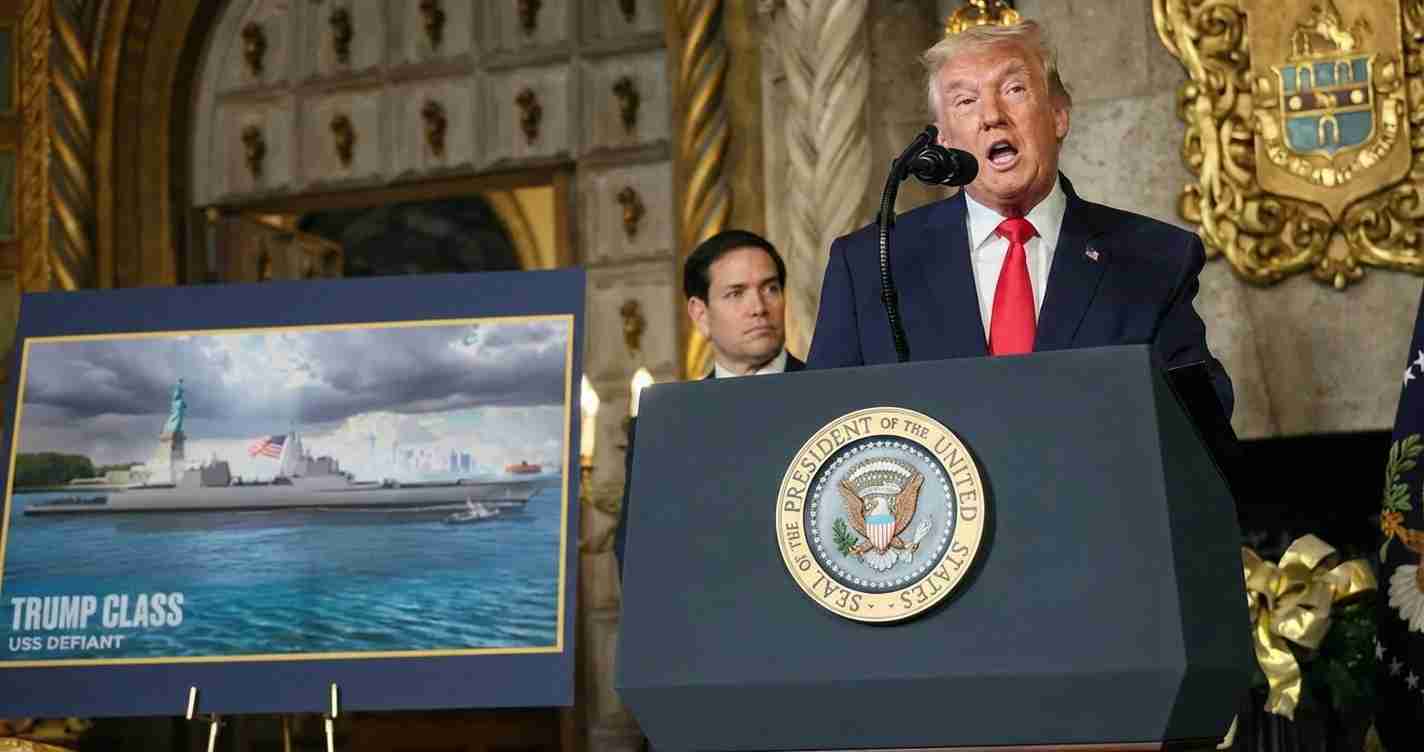
WASHINGTON (Times Media Service) — President Donald Trump unveiled plans for a “Golden Fleet” of battleships at Mar-a-Lago on Dec. 22, 2025, touting them as the most powerful ever and outlining a rapid procurement timeline including potential nuclear capability and jobs.
- Announcement: Dec. 22, 2025, at Mar-a-Lago with President Trump, Secretary of War Pete Hegseth and Secretary of the Navy John Phelan; see video of the event and coverage.
- Name & claim: Branded the “Golden Fleet”, described as the largest and most powerful battleships; early reports also used the shorthand “Trump class” (CBS News; Naval News).
- Procurement goals: Immediate contracts for two ships, scaling to 10 then 20–25 total; first two targeted within 2.5 years and first launch aimed for 2028 (White House presentation).
Details of the plan
At Mar-a-Lago, the administration framed the program as a major step to bolster U.S. sea power and accelerate defense production. Trump described the vessels as some of the most lethal surface-war assets outside the submarine force, intended to address fleet shortfalls.
Officials emphasized speed and American manufacturing: Secretary of the Navy John Phelan stressed a focus on “smart, quick, affordable” solutions, saying the administration is “done admiring the problem” and intends to prioritize producing ships and fixing supply-chain gaps. The announcement included a video of the event and media coverage.
Procurement goals and timeline
The White House presented an ambitious schedule: contract two ships immediately, ramp to 10 in the near term, and pursue a fleet of 20–25 ships overall. Officials set a target of obtaining the first two within 2.5 years and launching the first ship by 2028.
This timeline represents a significant shift from recent shipbuilding patterns; the U.S. has not built a battleship since 1994, when Iowa-class work ended. The administration says the program will rely on U.S. shipyards and domestic supply chains (CBS News).
Questions on feasibility and cost
Key unknowns remain: the White House has not released design drawings, cost estimates, or detailed program plans. That raises urgent questions about:
- Which shipyards will build the ships and whether capacity can meet the pace.
- How Congress will fund sustained production through appropriations and authorization.
- Lead times, specialized labor needs, and reconstituting long-dormant supply chains for large surface combatants.
Experts warn of long construction schedules and technical risk; proponents highlight potential jobs and industrial benefits from a sustained shipbuilding surge (reporting).
Nuclear-armed battleships: legal and strategic questions
Some reporting indicated the ships could be nuclear-armed, a point that immediately prompted debate. The White House has not clarified whether the term refers to nuclear propulsion, strategic weapons, or tactical nuclear warheads.
“Deploying nuclear weapons on surface combatants would require policy decisions, safety protocols, arms-control consultations and likely congressional and international scrutiny.”
Naval News flagged the nuclear-capable language in its coverage and noted the announcement’s broad wording; legal, doctrinal, and arms-control implications would be substantial if tactical or strategic nuclear weapons were intended (Naval News).
Strategic context and regional signaling
Administration officials tied the Golden Fleet to broader maritime posture aims — including increased activity in the Western Hemisphere and responses to regional issues such as Venezuelan-flagged oil shipments and vessel seizures. The ships were presented as instruments for power projection, deterrence and maritime security.
Observers note the announcement functions as both a capability pledge and a signal to rivals and partners that the United States intends to expand surface combatant reach.
Ship names, class and conflicting terms
Reporting used mixed terminology — “battleships,” new American-designed frigates, and at times a so-called “Trump class” — generating confusion about size, role and capabilities relative to destroyers, cruisers and frigates. The administration has not released formal class definitions or design specs.
Oversight, Congress and funding
Any program of this scale will require congressional authorization and sustained appropriations. Lawmakers typically demand rigorous cost estimates, schedule realism, and oversight to manage cost growth and technical risk. The administration’s pledge of “smart, quick, affordable” production will be tested in budget hearings and program reviews.
Implications for United States of America
Economic impact: Building the Golden Fleet in U.S. shipyards could create jobs and boost demand for steel, electronics, and naval equipment. Reviving large-ship lines would benefit some coastal shipyards and suppliers.
Political consequences: The plan is poised to become a major congressional issue. Supporters who emphasize readiness and domestic industry may welcome it; fiscal hawks and appropriators will press for accountability and clarity on the nuclear question.
Social effects & culture: Communities with shipyards may see job growth and investment, while rapid ramp-up could strain specialized labor markets. The return of battleships carries symbolic resonance for many Americans, linking industrial revival to national strength.
Operational questions: The Navy would need to define mission sets for large surface combatants in a force structure currently centered on carriers, submarines and missile-armed destroyers. Integration, deployment patterns, and rules for any nuclear capability remain unresolved (Naval News; CBS News).