Trump scores legal win as Eighth Circuit orders Des Moines Register lawsuit moved to Iowa state court
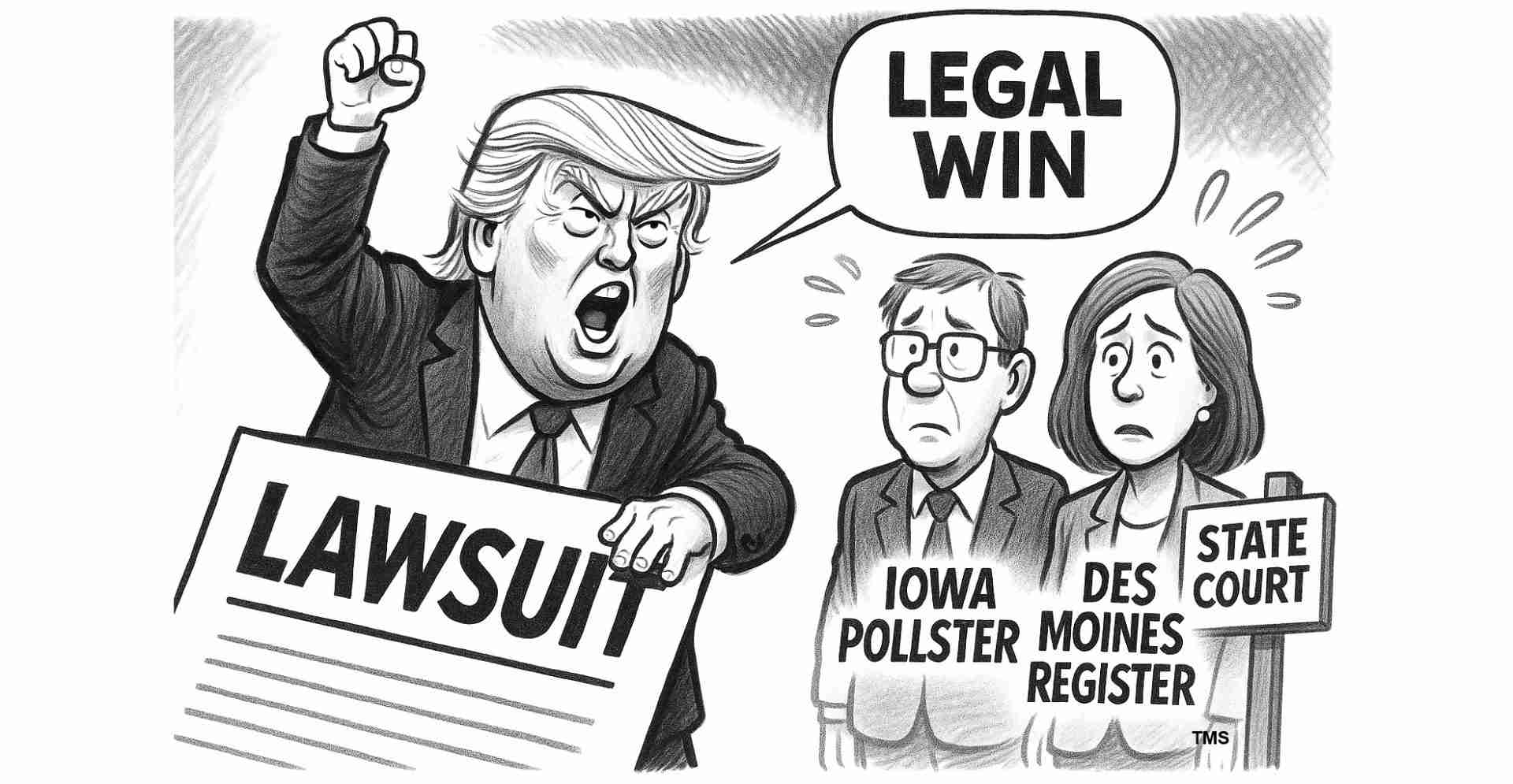
Donald Trump won a procedural victory when the Eighth Circuit ordered his lawsuit against Iowa pollster J. Ann Selzer and The Des Moines Register to be dismissed in federal court so it can be refiled in Iowa state court under the state’s Consumer Fraud Act.
Key takeaways
- Mandamus granted: The Eighth Circuit ordered the federal district court to dismiss the case without prejudice so it can be refiled in state court — see Fox News.
- Claims: The suit alleges a late, allegedly deceptive poll showed Kamala Harris leading in Iowa and seeks damages and an injunction under Iowa’s Consumer Fraud Act — see Des Moines Register.
- Free-speech fight: Defendants, supported by FIRE, argue polling and reporting are protected political speech.
- Broader stakes: State courts will now weigh consumer protection claims against First Amendment protections, with implications for pollsters, newsrooms and late-election coverage.
Background: what the lawsuit says
Trump’s complaint centers on the final Des Moines Register/Mediacom Iowa Poll published days before the 2024 election, which the suit alleges showed a sudden swing toward then-Democratic candidate Kamala Harris. The complaint, filed under Iowa’s Consumer Fraud Act, seeks monetary damages and asks the court to bar publication of what it calls “deceptive polls.” The suit characterizes the poll not as a simple error but as a deliberate act intended to influence voters.
“Brazen election interference” — language used in the complaint to describe the poll’s alleged intent and impact.
Court fight and the Eighth Circuit ruling
After defendants removed the case to federal court, the district judge declined to remand. Trump sought a rare writ of mandamus from the Eighth Circuit, which granted the writ and ordered the district court to dismiss the federal case without prejudice so the plaintiff may refile in Polk County, Iowa. The appeals court’s decision is procedural — it does not address the merits but determines the appropriate forum for litigation (state court).
Defendants’ responses and free-speech arguments
Selzer’s legal team is backed pro bono by the Foundation for Individual Rights and Expression (FIRE), which calls the complaint “frivolous” and stresses that the appellate decision did not address the merits. FIRE and Selzer’s lawyers assert that polling and reporting constitute political speech protected by the First Amendment.
Gannett, parent company of the Des Moines Register, contends federal court would have been proper given the national stakes and defends the poll’s transparent methodology.
First Amendment and SLAPP concerns
Legal experts frame the dispute as a clash between accountability and free speech. Defendants argue consumer fraud statutes are ill-suited to regulate political forecasts and reporting. FIRE has described the lawsuit as a potential SLAPP (strategic lawsuit against public participation) intended to chill speech by raising costs for pollsters and publishers.
Supporters of the suit counter that if a poll was deliberately deceptive and intended to mislead voters, there should be consequences. State courts will need to balance consumer-protection aims against constitutional protections for political expression.
Poll context and aftermath
The disputed poll showed Harris leading Trump by three points — a roughly seven-point swing from a September poll that favored Trump. Media attention to the late poll made it a focal point in the campaign’s closing days, though the final vote did not reflect that snapshot; Trump won Iowa by more than 13 percentage points. Following the dispute, J. Ann Selzer announced her retirement from election polling (Fox News).
State law changes and timing
Iowa enacted anti-SLAPP legislation around the same time, and how state judges apply that law to a case blending consumer-fraud claims and political-speech issues will be closely watched. The timing and procedural posture — now in state court — could shape whether anti-SLAPP protections affect litigation progress or dismissal.
Case status and next steps
Per the Eighth Circuit order, the federal case is to be dismissed without prejudice so Trump may refile in Polk County, Iowa. The state court will consider whether Iowa’s Consumer Fraud Act can be applied to pollsters and news organizations and will adjudicate claims and defenses, including First Amendment arguments raised by Selzer, FIRE and Gannett (Fox News; FIRE).
Implications for the United States
Legal and judicial
State courts will interpret consumer-protection statutes alongside constitutional speech protections. A broad state ruling could permit consumer-law claims against pollsters and publishers; a narrow ruling could reinforce First Amendment safeguards.
Political and electoral
If states permit fraud claims targeting polls, pollsters may alter practices or avoid releasing late surveys, reducing publicly available data in final campaign days and changing how campaigns and media shape closing narratives.
Media and free speech
Newsrooms and pollsters nationwide will monitor whether consumer-fraud statutes can be used against routine reporting. Either outcome — chilling coverage or protecting speech — carries consequences for journalism and public trust.
Practical for voters and campaigns
The dispute underscores limits of polling accuracy and the need for media literacy. Voters should treat polls as snapshots, not predictions; campaigns may adjust strategies in light of legal and reputational risks.
Cultural and trust effects
The case feeds debates over election integrity and media trust. Courts balancing accountability and free speech will shape confidence in polls, news outlets, and electoral institutions.
Relevant sources
- Fox News: “Trump scores legal win — he gets lawsuit against Iowa pollster, Des Moines Register moved to state court”
- The Foundation for Individual Rights and Expression (FIRE) press release: “FIRE defend veteran pollster J. Ann Selzer”
- Des Moines Register coverage: “Trump files new suit over Iowa poll”
- Des Moines Register: “Trump — Des Moines Register lawsuit federal court judge rules Iowa poll”