
A landmark tax and domestic policy package cements Trump’s 2017 tax cuts, tightens Medicaid and SNAP work rules, and raises the national debt limit
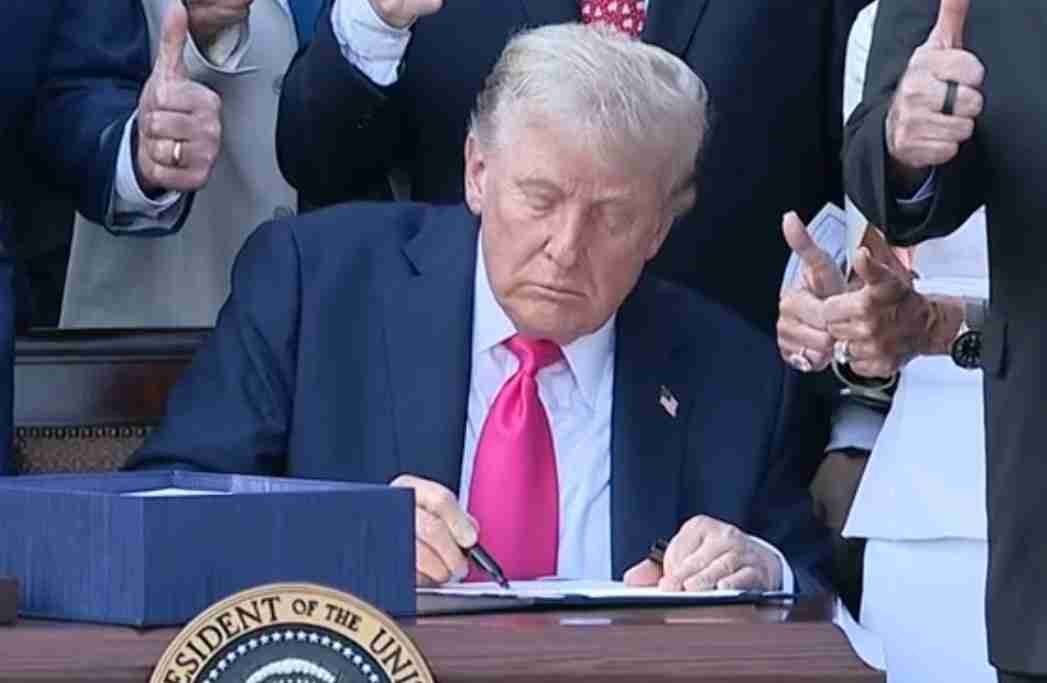
 Trump signing big beautiful bill (Courtesy C-Span)
Washington, DC (Times Media Service) – President Donald Trump signed the $3.3 trillion big beautiful bill into law on July 4, 2025, achieving a cornerstone victory for his second-term agenda by cementing permanent tax cuts, expanding work requirements for social programs, and boosting border security funding.
Big Beautiful Bill: What’s Inside?
The big beautiful bill enshrines the individual and business tax cuts from the 2017 Tax Cuts and Jobs Act as permanent fixtures of the U.S. tax code. These include a full repeal of taxes on tips and overtime pay, and the removal of Social Security taxation for seniors. The legislation also makes the child tax credit permanent for roughly 40 million families, a move Trump heralded as the largest tax cut in American history.
On the domestic front, the bill institutes stricter work requirements for Medicaid recipients—mandating 80 hours of monthly work or volunteer hours—and extends similar rules to SNAP beneficiaries. Supporters argue these reforms will encourage self-sufficiency, while critics warn they could strip millions of essential benefits from vulnerable Americans.
To fund expanded defense and deportation efforts, the bill rescinds several Biden-era green energy tax credits, drawing sharp criticism from environmental groups and renewable energy firms. It also raises the federal debt limit by $5 trillion, a provision that alarmed fiscal hawks who warned of unsustainable spending.
Overcoming Opposition in Congress
Despite unified Democratic opposition, the bill’s passage in the House (218-214) and the razor-thin Senate vote (51-50) underscored Trump’s command over his party. Three GOP senators—Susan Collins (Maine), Thom Tillis (North Carolina), and Rand Paul (Kentucky)—voted against the package, arguing that some provisions violated Senate rules and would harm their constituents.
Following a parliamentarian’s ruling requiring removal of certain Medicaid reforms, Senate Republicans rushed to retool the package, ultimately relying on Vice President JD Vance’s tie-breaking vote to secure passage just days before Trump’s self-imposed July 4 deadline. In a post on X, Vance celebrated the victory as delivering “big tax cuts and the resources necessary to secure the border,” calling promises made “promises kept.”
House passage came after brief floor debates, with Minority Leader Hakeem Jeffries branding the measure “cruel” for its potential to remove millions from Medicaid and SNAP. Trump, however, framed the bill signing as a “One, Big, Beautiful Event,” emphasizing border security provisions as “the single-most important piece of border legislation ever to cross the floor of Congress.”
Impact on Tax Cuts and Economy
Advocates tout the permanency of tax cuts as a boon for economic growth. Trump insisted the bill will “fuel massive economic growth” and turn the nation’s economy into a “rocket ship.” The Congressional Budget Office estimates the tax provisions will reduce federal revenue by roughly $4 trillion over the next decade.
Critics counter that the tax breaks primarily benefit corporations and high-income earners, exacerbating income inequality and swelling the deficit. Some nonpartisan analysts predict higher interest rates and slower wage growth for middle-class families as borrowing costs rise to finance the expanded debt limit.
Border Security and Immigration Provisions
A key element in rallying GOP support was the allocation of about $350 billion for border security and deportation efforts. Trump repeatedly decried the “Biden border invasion,” arguing that enhanced funding and stricter asylum fees will stem illegal crossings.
The bill imposes new restrictions on asylum seekers and expands resources for U.S. Immigration and Customs Enforcement to “weed out illegal immigrants.” Supporters claim these measures will deter unlawful entry and bolster national sovereignty, while opponents decry the steps as inhumane and costly.
Reaction Nationwide
Across the United States, reactions split largely along partisan lines. GOP leaders and conservative commentators hailed the bill as a transformative achievement that promises to deliver on Trump’s campaign pledges. In red states, rallies celebrated the signing, highlighting the promised permanent tax savings and new work requirements as steps toward revitalizing American values.
Conversely, Democratic governors and advocacy groups have vowed legal challenges, alleging the legislation violates constitutional protections and displaces millions from critical healthcare and nutrition programs. Protests erupted in several major cities over the weekend, with demonstrators decrying cuts to Medicaid and green energy rollbacks.
What Comes Next for the Agenda?
With the big beautiful bill now law, the Trump administration aims to tout tangible results before the 2026 midterms. Agencies must issue new regulations to implement work requirements within months, and Treasury will begin processing expanded tax changes in the coming tax year.
Republicans are also eyeing further reforms to social programs and additional tax breaks, while Democrats prepare to frame the midterm elections as a referendum on the bill’s impact on working-class Americans. All eyes will turn to key swing states to measure public response to the sweeping package.
Robert Stine / Editor Writer (Times Media Service)
Founder of Times Media Service & Stine Strategies. Over two decades in marketing, media & advertising strategy. MBA in Marketing.
rstine@timesmediaservice.com



