
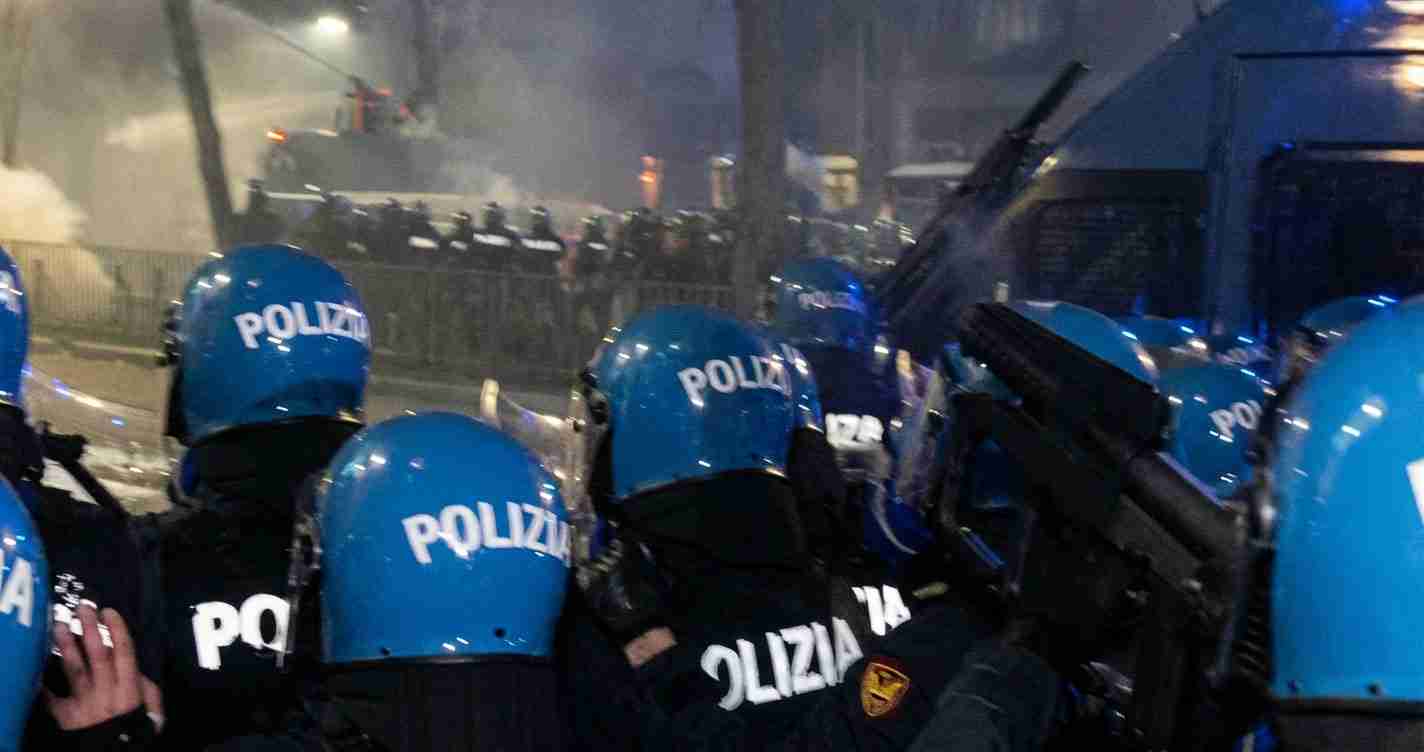
Turin protest violence leaves 108 officers hurt after eviction of Askatasuna social center; Meloni vows new security measures
Violent clashes broke out in Turin Saturday night after the eviction of the Askatasuna social center, leaving 108 security personnel injured. Prime Minister Giorgia Meloni announced emergency measures and vowed tougher action as arrests were made and investigations opened.
Key takeaways
- 108 security personnel injured: 96 police officers, seven Guardia di Finanza and five carabinieri — source: Anadolu Agency.
- Large turnout: Organizers claimed up to 50,000 participants while some on-the-ground estimates put attendance near 15,000 — reporting linked to Anadolu Agency.
- Violence followed eviction of the long-occupied Askatasuna social center; authorities conducted arrests and opened probes.
- Political response: Prime Minister Meloni called the attacks “attempted murder” and promised new security measures; analysis of the unrest cited reporting by Fox News.
From peaceful march to street battles
The demonstration began largely peaceful in central Turin as supporters rallied against the eviction of Askatasuna, a long-standing occupied social center and hub for far-left activists. Organizers and unions drew people from across Italy in a daytime march of significant size.
As evening fell, masked groups splintered from the main march in the Vanchiglia neighborhood and moved against police lines. Video footage and images show groups dressed in black confronting officers, objects being thrown, and police lines pushed back amid clouds of colored smoke. See related footage and commentary.
Weapons and tactics used in the clashes
Authorities reported a range of violent tactics: bottles, stones, homemade incendiary devices, rubbish bins set alight, attempts to torch an armored police vehicle, and even uprooted street furniture and lampposts used as makeshift weapons. Media accounts also described the use of smoke bombs and firework-style devices that intensified the chaos.
One report described an officer being surrounded and repeatedly struck with punches, kicks and blows from a hammer.
Security forces used standard crowd-control responses — tear gas, water cannons and targeted charges — to disperse the most violent groups. Confrontations persisted in parts of the city for over an hour.
Scale of injuries and arrests
Italian authorities confirmed 108 members of security forces were injured: 96 police officers, seven from the Guardia di Finanza and five carabinieri. Several officers required hospital treatment. At least three individuals were arrested overnight and prosecutors have opened investigations to identify and charge those responsible for the worst violence (Anadolu Agency).
Government reaction — a firm stance from Rome
Prime Minister Giorgia Meloni visited injured officers in Turin and used forceful language to condemn the violence, calling attacks with hammers and similar weapons “attempted murder.” She shared images from her hospital visit on X to underscore her message that such actions will not be tolerated.
Meloni’s government convened a meeting to assess threats to public order and consider a security decree. Interior Minister Matteo Piantedoli indicated cabinet discussion could include reintroducing preventive police detention for individuals judged to pose a danger at demonstrations — a measure that would expand pre-emptive policing powers in the context of violent protests (Anadolu Agency).
Political fallout and commentary
Deputy Prime Minister Matteo Salvini labeled the rioters “terrorists,” calling for swift arrests and action against occupied social centers. The clashes have intensified national debate over balancing the right to protest with public safety: the right demands order, while the left stresses the need to distinguish peaceful demonstrators from violent minorities.
Experts on extremism cautioned that the Turin violence appears linked to an organized coalition of anarchist, communist and some pro-Palestinian groups rather than isolated agitators. Dr. Lorenzo Vidino described the network as a “fairly well-established coalition” with a history of violent confrontations (Fox News).
Background: Askatasuna social center and the eviction
Askatasuna had functioned as an occupied social center in Turin for decades. Supporters argue such spaces provide community and culture; critics say long-term occupation undermines rule of law and can shelter illicit activity. The eviction of Askatasuna precipitated Saturday’s demonstration, which organizers framed as solidarity for those displaced by police action. Video and photo documentation show the daytime solidarity march followed by nighttime breakaways that turned violent (Video of march and clashes).
Implications for United States
Economic impact
Direct economic effects on the United States are limited, but the clashes add to a pattern of disruptive demonstrations in parts of Europe that can affect U.S. firms with operations in Italy. Companies with supply chains or investments in Turin may face short-term disruptions if security concerns escalate.
Political consequences
For U.S. policymakers, the Turin clashes highlight political pressure European governments face over public order and extremist groups. The swift response from Rome may be cited by law-and-order proponents in the United States as an example of necessary state action to protect officers and property.
Social effects
The violence shows how local disputes can draw broader coalitions and transnational networks. U.S. law-enforcement and intelligence communities will monitor whether similar alliances appear in domestic protests or show cross-border coordination.
Cultural relevance & practical advice
Practical guidance: Travelers to Italy should monitor travel advisories and local reporting for demonstrations. Businesses should review contingency plans. U.S. officials studying policy responses may examine measures like preventive detention for proportionality and legal safeguards.
Sources and further reading
- Anadolu Agency: Italian government to meet after clashes in Turin injure over 100 officers
- Fox News: Italy rocked by anarchist-led riots; over 100 police injured, Meloni condemns violence
- Video of march and clashes (organizers and on-the-ground footage)
Reporting from Turin; analysis by Times Media Service.



