
Trump and Japan’s First Female PM Ink Rare-Earth, Critical Minerals Pact; Takaichi Calls for ‘New Golden Age’ in US-Japan Alliance
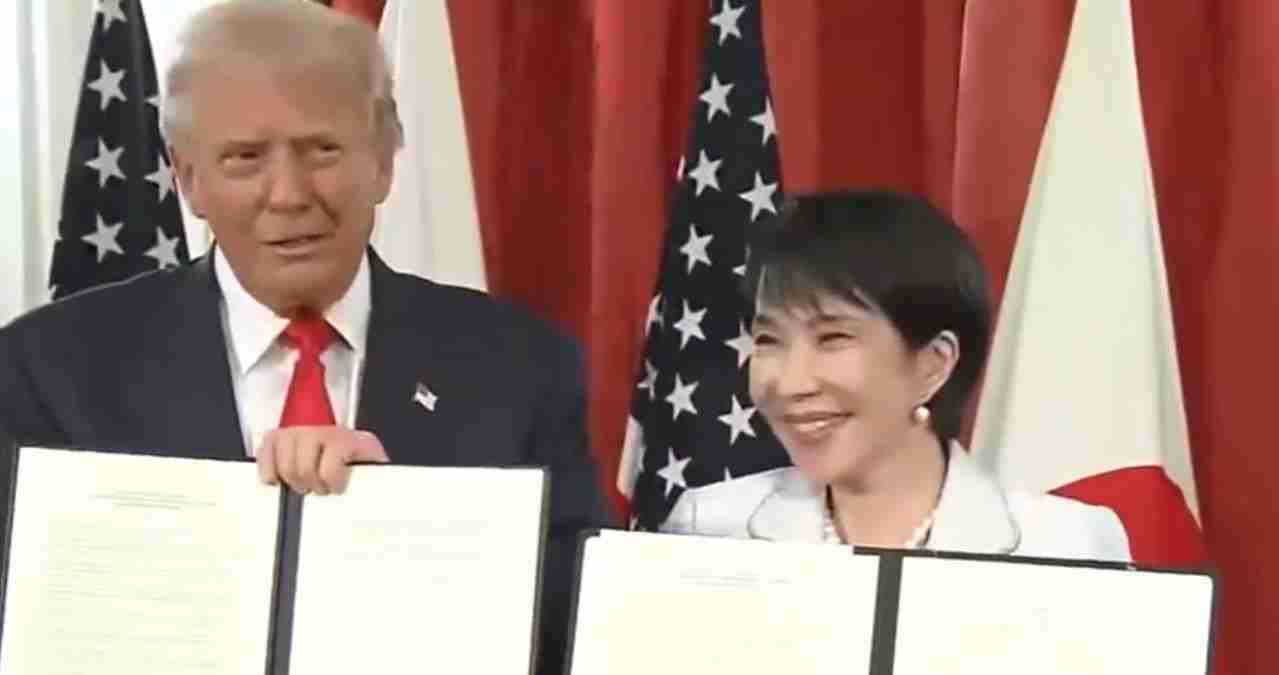
In Tokyo, President Donald Trump and Japan’s first female prime minister, Sanae Takaichi, signed landmark pacts on rare earths and critical minerals to secure supply chains, deepen economic ties, and declare a “new golden age” in US–Japan relations.
Key takeaways
- Two agreements signed: a detailed critical minerals and rare-earths pact plus a shorter declaration calling for a “new golden age” in the US–Japan alliance.
- Supply-chain actions: mobilize government and private capital, speed permitting, create a Rapid Response Group, and explore stockpiling and multilateral cooperation.
- Economic package: leaders referenced a tariff-investment framework pairing a 15% tariff on some Japanese exports with $550 billion in Japanese investment into U.S. industries.
- Strategic aim: explicitly framed to reduce dependence on China for rare earth production and processing.
Main coverage
Historic meeting and political context
The visit marked the first White House meeting for Prime Minister Sanae Takaichi and the first time Japan has been led by a woman at the national level — a point emphasized repeatedly in public remarks. The pair took part in a formal welcome at Akasaka Palace and an official signing ceremony; the White House video and other footage document those events.
Takaichi used the platform to call for a “new golden age” of cooperation with the United States, language echoed by President Trump during the signing ceremony and highlighted in multiple media reports and videos, including coverage by Fox Business and a recorded video of remarks and signing.
What the critical minerals agreement says
According to joint announcements, the US–Japan critical minerals deal lays out coordinated actions to secure supplies of rare earth elements and other critical materials used in electronics, electric vehicles, renewable energy systems and defense technology. Key elements include:
- Mobilizing capital: efforts to mobilize government and private investment in mining and processing outside China, as discussed in Fox Business and associated event videos.
- Rapid Response Group: creation of a team to identify vulnerabilities and organize emergency deliveries when needed.
- Permitting reforms: streamlining permitting to bring projects online faster and reduce bureaucratic delays.
- Six-month timetable: a deadline to identify and fund priority mining and processing projects for magnets, batteries and other key components.
Levers for reducing China dependence
Both leaders framed the deal as a direct response to global supply-chain risks and China’s dominant role in rare earth production and processing. The agreements emphasize diversification of supply, increased transparency, and coordination with third countries to build alternatives to Chinese routes (see Fox Business and public videos (signing/remarks), (details)).
The Rapid Response Group is presented as a tangible tool to react quickly when a supplier or processing link is cut off. The deal also opens talks about joint stockpiling of critical materials and coordinated export controls or trade measures to protect sensitive supply chains.
Trade and investment tie-ins
Alongside the mineral pact, Trump and Takaichi signed a shorter declaration aimed at expanding economic ties. The leaders referenced a trade framework reported to pair a 15% tariff on some Japanese exports to the United States with $550 billion in Japanese investment into U.S. industries, a package publicized in ceremony videos and reported coverage such as the Economic Times report and event footage.
Observers note the unusual mix of tariffs and investment pledges: tying market pressure to promises of capital flow and job creation. Officials described commitments to ease rules and reduce red tape for investment projects, and to coordinate on industrial policy where needed.
Ceremony, optics and diplomacy
The visit was staged as a high-profile day of diplomacy, with public praise and personal support exchanged. President Trump said,
“Anything I can do to help, we will be there.”
The White House released footage of formal events at Akasaka Palace to show unity and momentum (White House video).
Strategic signaling toward China
Beyond economic aims, the agreements serve a strategic purpose. President Trump repeatedly signaled a tougher stance toward Beijing — even stating he would not meet President Xi during the trip — and framed the critical minerals pact as a way to remove strategic dependencies that could be exploited in a geopolitical crisis (coverage: Fox Business).
Questions and next steps
Policy-makers, industry groups and lawmakers will watch several open questions closely:
- Which projects: Which mining and processing projects will be funded? The agreement sets a six-month deadline to identify them, but details remain pending.
- Permitting vs. safeguards: How will permitting be reformed without undercutting environmental or community safeguards? Public statements call for speed but do not detail protections.
- Private capital participation: Will private industry match government pledges and how will funding be structured? Officials promise mobilization but few binding commitments are published.
Implications for United States of America
Economic impact
The deal aims to boost U.S. access to materials used in magnets, batteries and electronics. If followed by concrete investments, it could enable more domestic component production, reduce import bills, and create jobs in mining, manufacturing and logistics. Mentioned incentives and streamlined permitting are intended to accelerate new mines and processing plants.
Trade and investment
The cited tariff-investment package (15% tariff paired with $550 billion in Japanese investment) would reshape trade flows and capital movement if implemented as described. For moderate conservatives, the deal combines protectionist levers with targeted investment to bolster U.S. manufacturing and jobs.
National security and supply resilience
Reducing reliance on China for rare earths is a strategic priority. The Rapid Response Group and stockpiling talks are practical steps to prevent shortages that could affect defense systems and critical infrastructure; diversification would lower the risk that geopolitical disputes translate into supply cutoffs.
Regulatory and environmental questions
While faster permitting can speed economic benefits, it raises concerns about environmental review and local community impact. The public pact does not publish detailed safeguards; lawmakers and regulators will face pressure to balance speed with oversight, reclamation and community consultation.
Political consequences
Domestically, the visit reinforces a narrative of reorienting U.S. economic ties away from adversaries and toward allied manufacturing. For political constituencies favoring market-friendly policy, the pact offers an example of using trade levers and diplomacy to secure U.S. interests; it may set precedent for deals that combine tariffs with investment commitments.
Practical effects for businesses and consumers
If projects move forward, U.S. manufacturers could see lower input risk for permanent magnets and battery metals, potentially lowering costs for electric vehicles, wind turbines and consumer electronics over time. Near-term effects depend on permitting speed and production timelines.
Cultural and political messaging
The meeting highlighted the historic first: the U.S. welcome for Japan’s first female prime minister, which leaders used to underscore personal ties and shared democratic values. Takaichi’s call for a “new golden age” provides a rhetorical focal point both governments will use to show momentum.
Observers will watch
Watch for concrete project lists, funding commitments and regulatory changes over the next six months. Those details will determine whether this pact remains a symbolic declaration or becomes a working model for resilient supply chains and deeper US–Japan industrial cooperation.
Source links
- Fox Business: Trump meets Japan’s first female leader, signs rare earth, critical minerals supply
- YouTube — Trump and Takaichi signing/remarks
- YouTube — Critical minerals details
- Economic Times — coverage of the deals and “new golden age”
- Economic Times — Trump praise and comments
- White House video of welcome ceremony
- Newstimes summary of the meeting



