Steve Kerr apologizes for inaccurate ICE enforcement remarks, retracts claim about 5‑year‑old
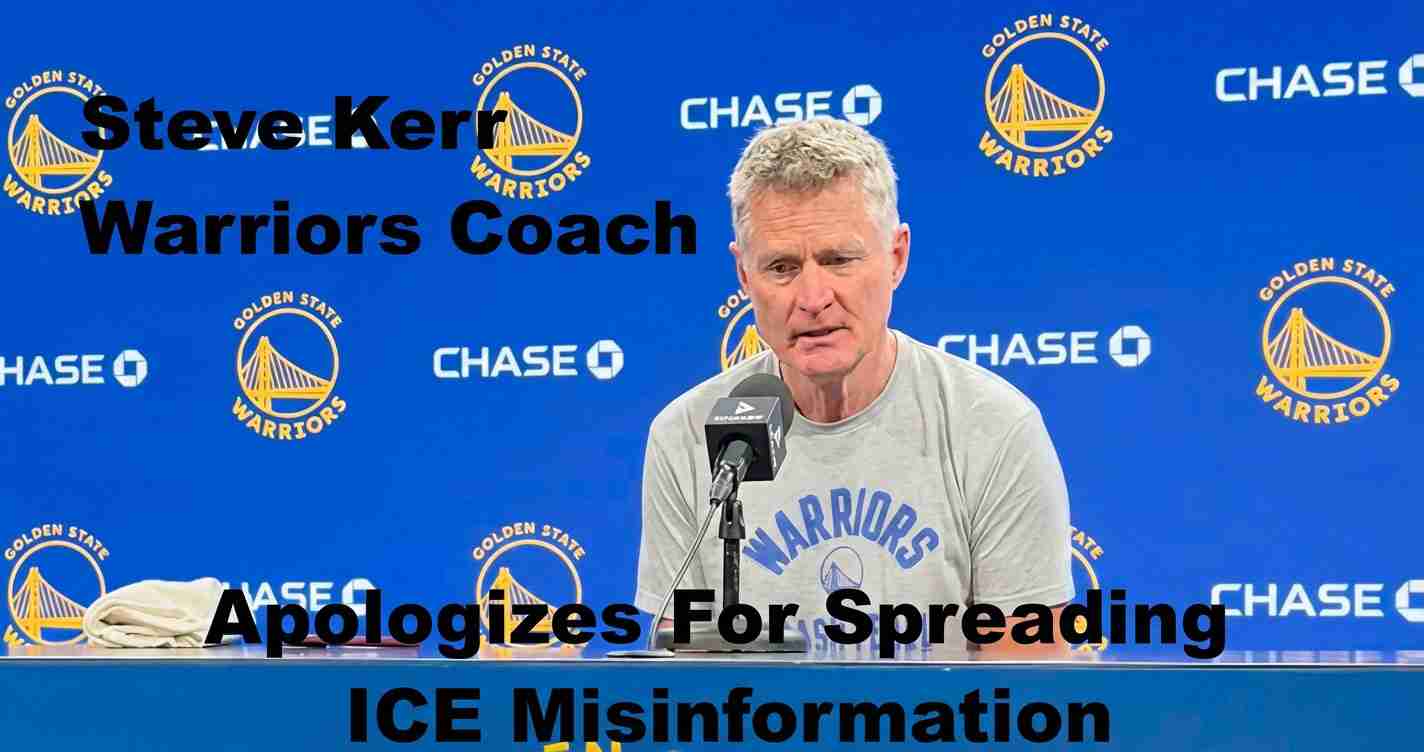
Golden State Warriors coach Steve Kerr apologized Friday at Chase Center for misstating ICE enforcement actions during Minneapolis protests, retracting claims about 5‑year‑old Liam Conejo Ramos and acknowledging he was wrong about ICE not arresting criminals.
Key takeaways
- Apology: Kerr said he “definitely misspoke” and acknowledged ICE was arresting criminals; he publicly apologized Friday at Chase Center (OutKick).
- Initial comments: His remarks came after a postgame press conference following the Warriors’ loss to the Minnesota Timberwolves, when he criticized federal enforcement amid Minneapolis protests (Fox News).
- DHS response: The Department of Homeland Security said agents were attempting to arrest the child’s father and disputed Kerr’s description of the child being taken by agents (OutKick).
- Records: Operation Metro Surge records document arrests of convicted murderers, sex offenders and violent offenders, contradicting a blanket claim that agents were not targeting violent criminals (OutKick).
Context: what Kerr said and why it mattered
Following the Warriors’ Monday-night loss to the Minnesota Timberwolves, Kerr addressed reporters and sharply criticized federal agents working amid Minneapolis protests. He said, “It’s not like they’re rooting out violent criminals. They’re taking 5‑year‑old kindergartners and U.S. citizens and detaining people.” His remarks referenced local tensions after two deaths linked to enforcement operations that month and reflected community concerns about tactics and outcomes (Fox News).
Why the Liam Conejo Ramos detail became central
Kerr invoked the case of 5‑year‑old Liam Conejo Ramos, a detail that holds strong emotional resonance. The image of a small child connected to enforcement actions amplified the criticism of federal tactics — but the accuracy of that description became pivotal in assessing Kerr’s broader assertion (OutKick).
The apology: Kerr’s correction and message on misinformation
At a pregame session Friday at Chase Center, Kerr told reporters he had misspoken and publicly apologized:
“You’re right, I definitely misspoke, and I knew that ICE was arresting some criminals. I immediately regretted it because I knew that to be the case.”
He reiterated his broader concern that some people were being detained who should not be and that the manner of some arrests was inflaming public anger (OutKick).
DHS response and the facts around the Liam Conejo Ramos detention
The Department of Homeland Security disputed Kerr’s description of a child being taken by agents. DHS spokesperson Tricia McLaughlin said agents were attempting to arrest the child’s father, Adrian Alexander Conejo Arias, who allegedly fled on foot and left the child alone in a running vehicle during sub‑freezing temperatures. DHS said agents sought to place the child with his mother, who reportedly refused to take custody despite assurances she would not be arrested; agents then took the child into custody for his safety (OutKick).
Additionally, Operation Metro Surge released records showing arrests that included convicted murderers, sex offenders and violent offenders — evidence that undercuts a sweeping assertion that agents were not targeting violent criminals (OutKick).
The broader irony: warning about misinformation while spreading it
Kerr had recently spoken about the harms of misinformation and a “for‑profit” news cycle that divides the country. Within 24 hours of returning from Minneapolis, he became the center of the dynamic he criticized — a public figure issuing a rapid, widely circulated claim that required correction. That turnaround has prompted discussion about responsibility among public figures, athletes and coaches when addressing charged topics (OutKick).
Accountability and corrective action
Kerr’s prompt correction demonstrates one model for accountability: acknowledge the error, clarify key concerns, and ask others to correct the record. He emphasized his continuing concern about the treatment of detainees while admitting the factual mistake — a response many observers say is necessary but sometimes too late to prevent widespread misinformation.
Reporting standards and the role of public figures
This episode underscores several issues:
- Verification: Public claims about law enforcement must be verified before amplification.
- Amplification risk: A single line from a high-profile figure can accelerate an unverified narrative.
- Clarity: Agencies and reporters should provide timelines and source documents so the public can evaluate events on factual grounds (OutKick, Fox News).
Implications for the United States
Key implications from this incident include:
- Public trust: High-profile misstatements can erode trust in public figures and institutions; corrections help but may not fully reverse first impressions.
- Law enforcement transparency: Clear, timely release of operation reports can help assess whether enforcement targets violent offenders or includes non-criminal detentions (OutKick).
- Political debate: Misstatements can harden positions and complicate bipartisan efforts to address enforcement and humanitarian concerns.
- Media and fact-checking: Outlets must verify and provide context before amplifying charged claims; consumers should look for follow-up reporting and official records (Fox News).
Reporting and transparency moving forward
The Steve Kerr ICE apology highlights the interplay between high-profile voices and government agencies. As immigration enforcement debates continue, clear records — operation logs and official statements — will be essential for the public to understand actions and intent. Journalists, public figures and officials must each work to keep the record straight while addressing legitimate concerns about enforcement methods (OutKick).