
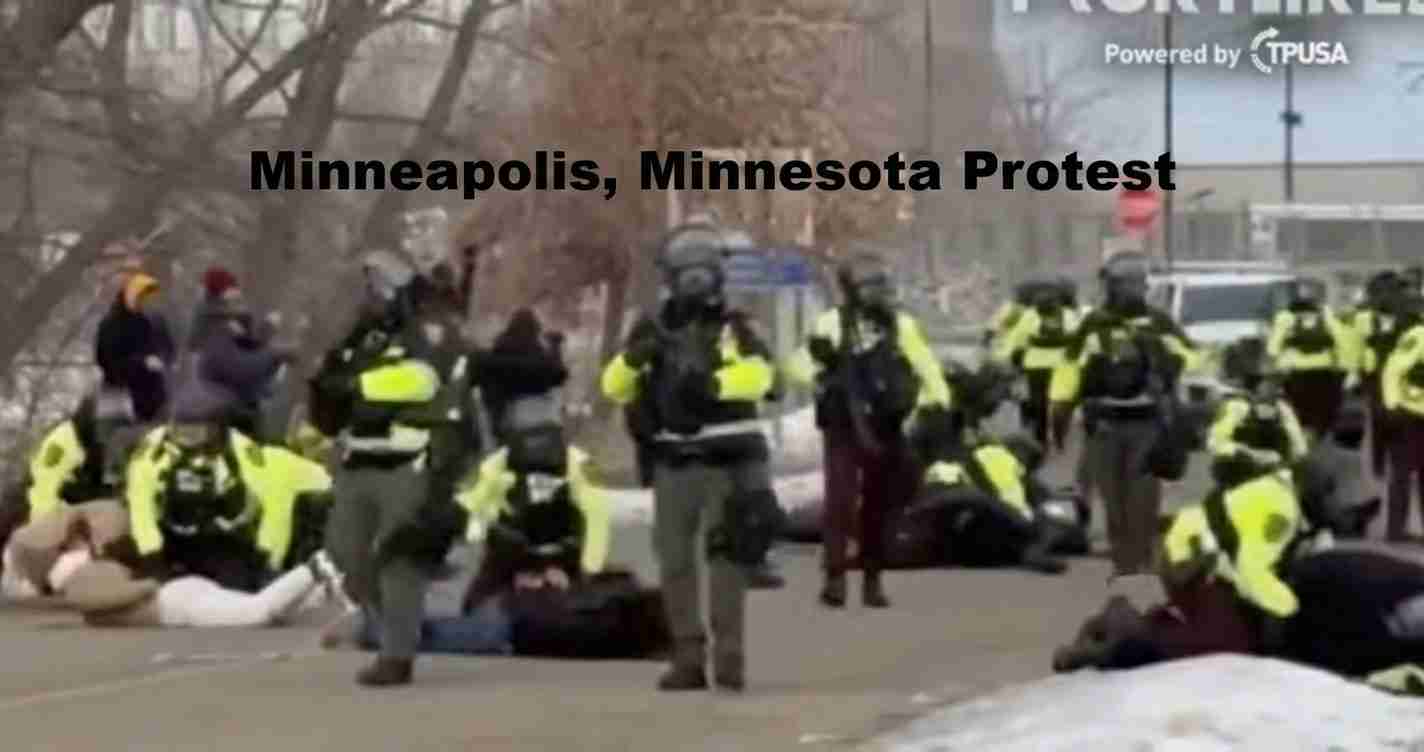
More than 54 arrested after anti-ICE protest declared unlawful outside Whipple Federal Building in Minneapolis
More than 54 anti-ICE protesters were arrested March 1, 2026, outside the Bishop Henry Whipple Federal Building in Minneapolis after authorities declared an unlawful assembly following blocked roadways, thrown projectiles and clashes with law enforcement.
Key takeaways
- More than 54 arrests: Law enforcement reported at least 54 people arrested during the March 1 demonstration; initial coverage is available from Fox News.
- Breakdown of arrests: The Hennepin County Sheriff’s Office said 38 people were cited and released and one was booked on a riot charge, while the FOX 9-reported Minnesota State Patrol confirmed 15 additional arrests.
- Escalation and tactics: Deputies issued dispersal orders after protesters allegedly blocked roads, dumped glass and threw rocks, ice chunks and bottles at officers, per coverage by CBS Minnesota and KSTP.
- Organized campaign: Organizers called the event the culmination of the weeklong “Bring the Heat, Melt the ICE” campaign, reported by Bring Me The News and Fox News.
Main coverage
What happened at the Whipple building
Protesters gathered outside the Bishop Henry Whipple Federal Building — home to the regional ICE field office — after a week of planned actions opposing immigration enforcement. Organizers described the week as focused on resisting ICE operations and calling for abolition of ICE and the Department of Homeland Security, as reported by FOX 9 and Bring Me The News.
Dispersal orders and public-safety concerns
Law enforcement officials said they issued dispersal orders when the demonstration escalated into what deputies described as an unlawful assembly. The Hennepin County Sheriff’s Office posted that deputies acted after individuals “blocked roadways, blocked access to local businesses, dumped glass into the street, and threw rocks, ice chunks and water bottles at law enforcement creating a serious public safety hazard.” Coverage of the order and the cited hazards is available at Fox News and Bring Me The News.
Arrests and police tactics
Totals: Local reports and law enforcement put total arrests at 54 or more. The sheriff’s office accounted for 38 people cited and released and one jail booking; the Minnesota State Patrol reported 15 additional arrests while providing mutual aid (see FOX 9 and Bring Me The News).
Response tactics: Video circulating online and local coverage showed deputies using chemical irritants and securing some detainees with zip ties. State Patrol officers and Department of Natural Resources conservation officers assisted on scene; officers also pushed to clear intersections and restore access to businesses (coverage at Bring Me The News and KSTP).
Protester accounts and organizers
Organizers and participants described the events as a planned escalation tied to the Melt the ICE movement. Organizers claimed roughly 750 people attended events during the weeklong campaign; one participant said the Whipple actions were meant “to show ICE that even as their operations change in Minnesota, our resolve and determination will not.” Reporters documented chants including “Who do you protect? Who do you serve?” (See FOX 9 and Bring Me The News.)
Local officials: A handful of elected officials were visible; Minneapolis City Council member Jason Chavez and Park Board commissioner Kay Carvajal Moran attended and urged continued occupation and efforts to close the building, per local coverage (Bring Me The News).
Context: why Whipple draws protests
The Whipple Federal Building houses ICE’s regional field office and has been a recurring focus for demonstrations following major federal enforcement efforts in the region. It was a flashpoint during Operation Metro Surge and other enforcement operations that drew heavy resources and controversy (background at Operation Metro Surge).
Recent high-profile incidents have intensified anger. Coverage and activist statements cited fatal shootings earlier this year involving federal agents in the Minneapolis area — including the deaths of Renée Good and Alex Pretti — which helped spur demonstrations locally and nationally (see Fox News).
Broader nationwide protests and policy debates
Sunday’s demonstration is part of a larger wave of protests against ICE operations in Minnesota and beyond. The events come amid competing calls in Washington: some lawmakers press for more oversight and funding for immigration enforcement, while critics call for major reform or abolition of the agency. Local clashes and arrests increase urgency in those debates and underscore tensions between public safety and protest rights (coverage at CBS Minnesota and Fox News).
Legal and constitutional considerations
Authorities reiterated that peaceful protest is protected by the First Amendment but said unlawful behavior that endangers the public will not be tolerated. The sheriff’s office pointed to blocking roads, creating hazards and assaultive behavior as grounds for dispersal and arrests.
Defense attorneys and civil liberties groups often challenge dispersal orders and mass arrests, arguing such actions can chill lawful protest if applied too broadly. Those tensions frequently result in legal disputes after large demonstrations; courts may be asked to rule on the scope of dispersal orders, the use of chemical agents and detainment methods.
Implications for the United States
Economic impact
Protests that block roadways and access to businesses can cause immediate financial harm to nearby shops and employees. If demonstrations around federal facilities become frequent, insurance and security costs for local governments and businesses may rise.
Political consequences
These confrontations feed into the national debate over immigration enforcement. Elected officials will face pressure to balance public safety with civil liberties — and local and national campaigns may use incidents like the Whipple protest to argue for stronger law enforcement or for reforms to ICE and DHS.
Social effects
High-profile clashes can deepen divisions within communities. Families and small-business owners may feel torn between sympathy for protest goals and concerns for safety, while protests can also galvanize advocacy networks and boost voter engagement on immigration policy.
Cultural relevance
The Whipple building has become a symbol for competing views about federal power and border policy. For supporters of robust enforcement, demonstrations are seen as threats to order; for activists and immigrant-rights advocates, they are moral responses to perceived injustices.
Practical effects for residents and officials
Cities must plan for peaceful assembly while preparing for potential escalation. Law enforcement will evaluate crowd-control tactics, mutual aid agreements and legal thresholds for unlawful-assembly declarations. Businesses and residents may need clearer guidance on safety procedures during protests.
Federal agencies and enforcement
The incident may influence how ICE and DHS conduct operations and communicate with the public. Increased protests could hamper local enforcement activities and prompt agencies to reassess public-access policies at field offices.
Legal watch
Civil liberties groups and defense attorneys will likely monitor arrests and any use of force. If legal challenges follow, courts could set precedents affecting dispersal orders, chemical agent use and detainment methods during protests.
Reporting notes and sources
This account draws on reporting from multiple local and national outlets that covered the March 1 demonstration and arrests: Fox News, FOX 9, Bring Me The News, CBS Minnesota, KSTP, and an aggregation report at AOL. Background on Operation Metro Surge is available at Wikipedia. These outlets contain video, law enforcement statements and organizer comments cited in this article.
Ongoing coverage
Local and national outlets will continue to track legal filings, official statements and community response as the fallout from the Whipple building arrests develops. Readers seeking more detail can consult the original reporting cited above for videos, law enforcement posts and on-the-ground accounts.


