Berkeley Astronomers Witness Magnetar Birth, Confirm Power Source Behind Ultra‑Bright Supernova SN 2024afav
UC Berkeley astronomers and collaborators observed a magnetar forming in superluminous supernova SN 2024afav, detecting a general‑relativity “chirp” in its light curve; the result, led by Joseph Farah and published in Nature, confirms magnetars power many ultra‑bright supernovae.
Key takeaways
- First direct observation: First direct observation of magnetar formation in SN 2024afav, detected December 2024.
- Theory confirmed: The finding validates a 2010 theory that magnetars power long‑lived, very bright supernovae.
- Distinct signature: Researchers detected a general‑relativity “chirp” — rhythmic bumps in the light curve tied to the magnetar’s spin‑down.
- Magnetar properties: Estimated initial spin ~4.2 milliseconds and a magnetic field ≈300 trillion times Earth’s; results published in Nature (Mar 11, 2026).
What was observed
SN 2024afav is a Type I superluminous supernova (SLSN‑I) — typically >10× brighter than ordinary supernovae and long‑lived. First detected in December 2024, astronomers followed the event for months and observed a pattern of small, rhythmic bumps forming a clear “chirp.”
The chirp matched magnetar predictions: models forecast that a newborn, rapidly spinning magnetar depositing rotational energy into ejecta will produce time‑dependent brightening — a measurable wobble in the light curve consistent with general relativity.
How a magnetar lights a supernova
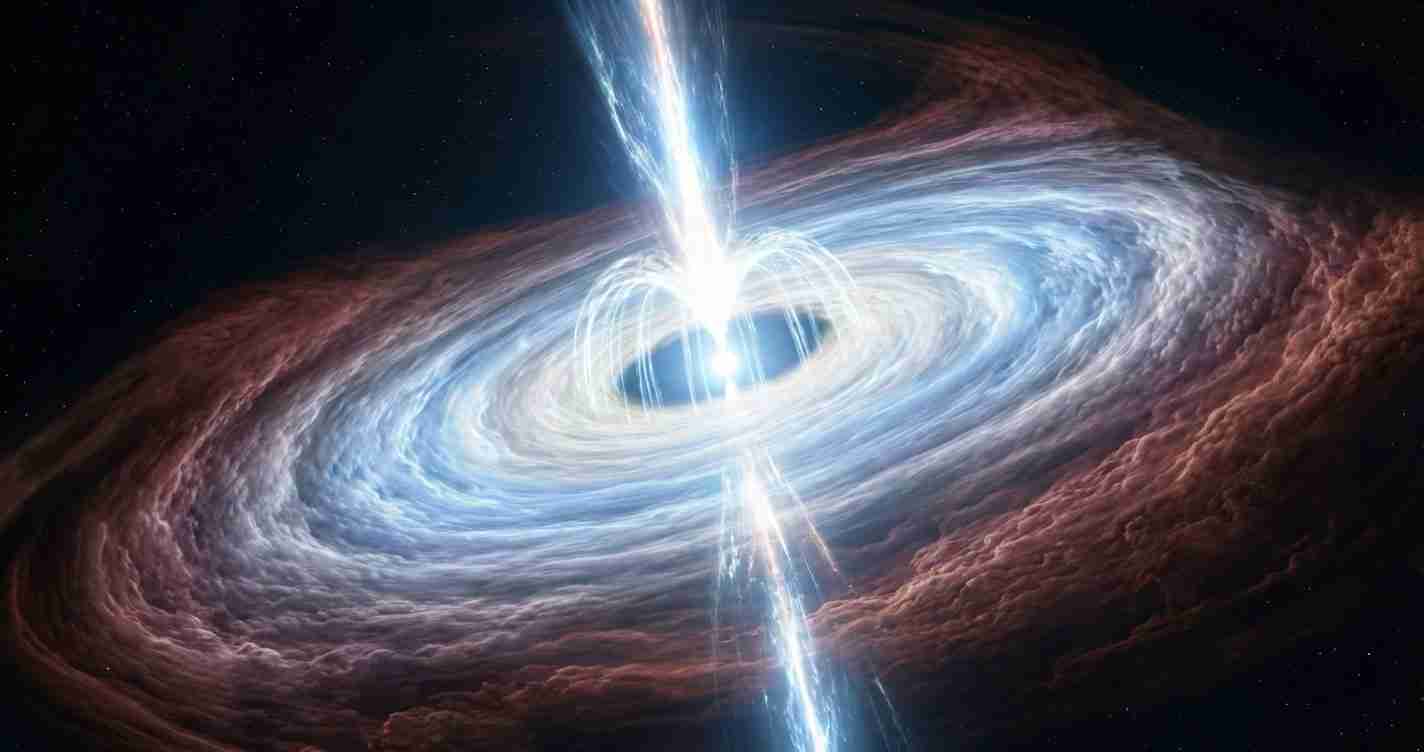
When a massive star’s core collapses, it can form a neutron star instead of a black hole. Under the right conditions that neutron star is born spinning extremely fast with an enormous magnetic field — a magnetar. Although only ~10 miles across, it contains vast rotational energy.
As the magnetar spins, its magnetic field accelerates charged particles that slam into the expanding shell of stellar debris, depositing energy and keeping the explosion bright for months. Measurements for SN 2024afav indicate an initial spin period ≈ 4.2 ms and a field strength on the order of 300 trillion times Earth’s.
Why the “chirp” matters
The light‑curve “chirp” is a new observational signature: as the newborn magnetar spins down (a process described by Einstein’s general theory of relativity), the energy deposition into the ejecta changes and produces periodic brightening features. Detecting this chirp is akin to hearing the newborn star’s engine.
“To see a clear effect of Einstein’s general theory of relativity is always exciting, but seeing it for the first time in a supernova is especially rewarding.” — Alex Filippenko, UC Berkeley
Roots in a 2010 theory
The idea that magnetars could power SLSNe was proposed in 2010 by Dan Kasen, Lars Bildsten and independently by Stan Woosley. Their models showed how a rapidly spinning, highly magnetized neutron star could sustain brightness for months. Until SN 2024afav, direct proof of that engine was missing.
Who made the discovery
The analysis was led by Joseph Farah (then with UC Santa Barbara and Las Cumbres Observatory and a soon‑to‑be UC Berkeley Miller Fellow) with contributions from UC Berkeley faculty including Alex Filippenko and collaborators from the Flatiron Institute, UCSB and other institutions. The team published results in Nature (Mar. 11, 2026).
Reaction from scientists
Joseph Farah called the work “the most exciting thing I have ever had the privilege to be part of… It’s the universe telling us… that we don’t fully understand it yet.” D. Andrew Howell described the result as a “smoking gun” linking observations to theory.
What this means for astronomy
The discovery provides a practical method to identify magnetar‑powered explosions in time‑domain surveys. With the chirp as a filter, astronomers can build larger samples to determine how commonly magnetar births drive SLSNe and to refine stellar‑death models. The result also informs studies of related phenomena, such as fast radio bursts.
Implications for the United States
Economic impact
The discovery underscores U.S. leadership in astronomy and the value of funding telescopes, data analysis, and student training — translating into federal and state grants, private partnerships, and high‑skill jobs in engineering, data science and instrumentation.
Political consequences
Lawmakers can point to this measurable return on public science investment to argue for steady support of agencies, national observatories, university research grants and STEM education programs.
Social effects
Breakthroughs like this inspire students and the public; a clear, dramatic story — the birth of a new compact star and an Einsteinian chirp — supports outreach through museums, planetariums and public talks, strengthening scientific literacy.
Cultural relevance & practical applications
The finding resonates with values of exploration and innovation, and while it has no immediate consumer product, the associated training, technology and partnerships can yield long‑term economic and societal benefits for states with major research universities.
Next steps
Researchers will search for additional SLSNe that display the chirp signature, using ground‑based time‑domain surveys and space telescopes to catch events earlier and follow them longer. Expanding the sample will test whether magnetar birth is the dominant engine for SLSNe and probe links to fast radio bursts and extreme‑field physics.
Sources for this report
- UC Berkeley news
- UC Berkeley College of Letters & Science news
- National Today summary
- Smithsonian Magazine coverage
- Additional reporting and summaries (Perplexity.ai)
- ScienceSparks summary
Report by Times Media Service