Artemis II lifts off for first crewed lunar flyby in more than 50 years, testing Orion spacecraft and SLS for future Moon landings
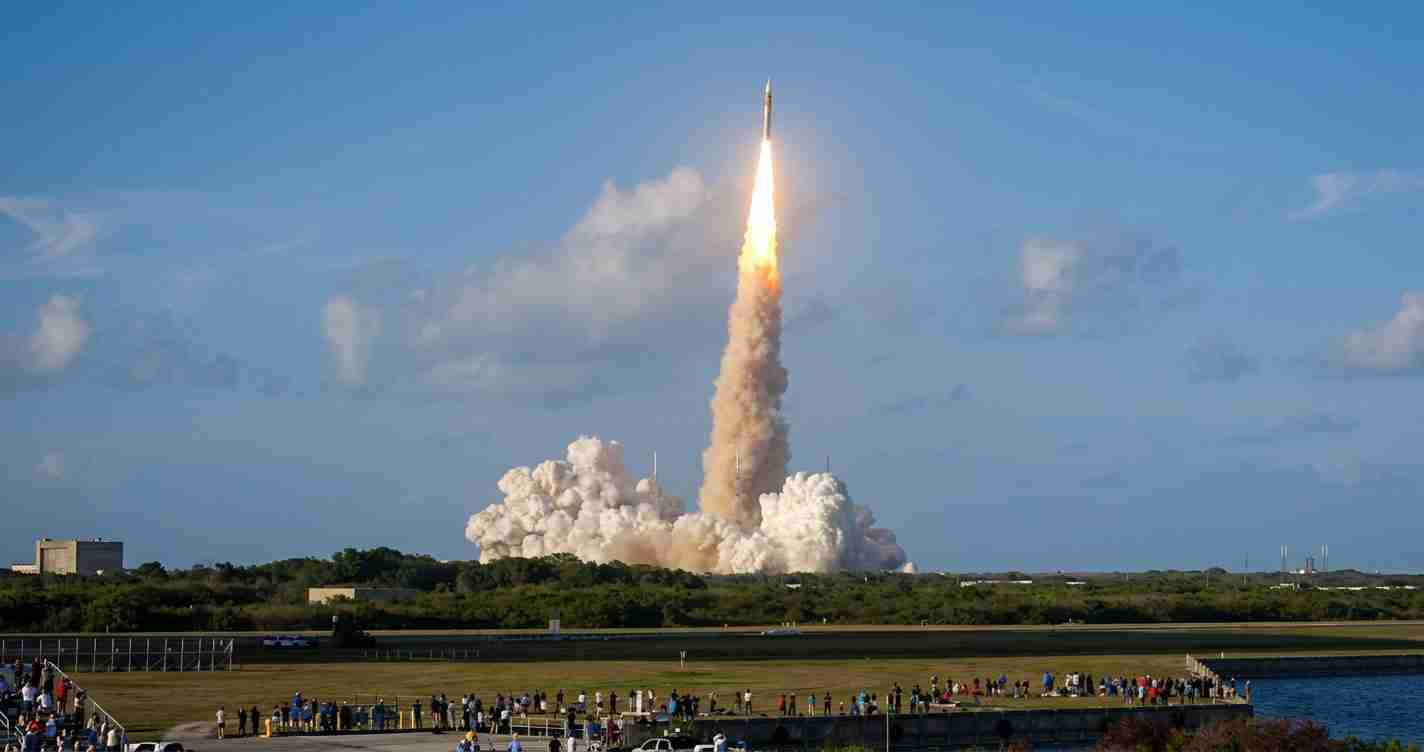
NASA’s Artemis II launched April 1, 2026, from Kennedy Space Center, carrying four astronauts aboard Orion on a 10-day lunar flyby — the first crewed mission beyond low Earth orbit since Apollo 17 — to test SLS and deep-space systems.
- Historic launch: First crewed lunar flyby since Apollo 17, beginning a 10-day free-return mission to validate systems.
- Crew and craft: Commander Reid Wiseman, pilot Victor Glover, mission specialist Christina Koch and CSA astronaut Jeremy Hansen aboard Orion.
- Technical goals: Verify SLS performance and Orion life-support, navigation and communications for future Artemis surface missions.
- Public tracking: Real-time mission data available via official NASA channels and third-party trackers.
Key information and launch details
Launch time: 6:35 p.m. EDT, April 1, 2026 (Kennedy Space Center Launch Complex 39B). Source: NASA live updates.
Mission: 10-day crewed lunar flyby to test the Space Launch System (SLS) and Orion deep-space systems; free-return trajectory passing as close as ~8,000 km to the Moon and reaching more than 400,000 km from Earth. Sources: NASA news release, NASA blog, Wikipedia.
Crew: Commander Reid Wiseman, pilot Victor Glover, mission specialist Christina Koch (all NASA), and Canadian Space Agency astronaut Jeremy Hansen. Sources: NASA blog, Wikipedia.
Public tracking: Trackers include the Artemis Real-time Orbit Website and the NASA mobile app. Source: Wikipedia.
Launch and early flight: what happened
At 6:35 p.m. EDT on April 1, the Space Launch System (SLS) climbed away from Pad 39B and reached supersonic speed as it lifted the Orion spacecraft toward space. The rocket placed Orion into orbit in about eight minutes; the core stage separated and fell away while the upper stage continued to boost Orion to a high Earth orbit.
NASA reported all systems performed nominally during the ascent and early orbit checkout and in the official news release.
“We have a beautiful moonrise, we’re headed right at it,” Commander Reid Wiseman said to mission control minutes after launch, reflecting the crew’s excitement as they began the journey. Source: NASA live updates.
Mission timeline and objectives
Artemis II is a 10-day mission on a free-return trajectory. Flight plans call for about one day in high Earth orbit to check Orion’s systems; if checks are successful, the spacecraft will fire its engines on day two to head toward the Moon. The crew is scheduled to pass closest to the lunar surface and reach their farthest distance from Earth on day six, when Orion swings around the Moon and returns toward Earth. Context: Wikipedia, Space.com.
Primary technical goals: validate the SLS rocket’s performance on a crewed flight and test Orion’s life-support, navigation, communications and other deep-space systems — critical validations for Artemis IV and V. Sources: NASA news release, Kennedy Space Center brief.
Crew details and milestones
The Artemis II crew: Reid Wiseman (commander), Victor Glover (pilot), Christina Koch and Jeremy Hansen (mission specialists). Notable milestones: Glover and Koch are the first person of color and the first woman, respectively, to travel beyond low Earth orbit on this mission. See Wikipedia for crew bios and mission context.
Photos taken during preparations show the crew in orange launch suits at Pad 39B; NASA and partner agencies emphasized training and close teamwork as central to mission success. Source: Wikipedia.
Expert reaction from scientists and program leaders
Planetary scientist Paul Byrne said he watched the launch from about 17 kilometers away and felt the “adrenaline” of the event, calling it historic and expressing hope that Artemis II will be an early step in a sustained human return to the Moon. (Reporting of his comments: Wikipedia.)
Lindy Elkins-Tanton praised the crew’s teamwork and noted that differences in background fade when the team performs well — a point observers say resonates with constituents who value unity and performance. Source: Wikipedia.
NASA Administrator Jared Isaacson called the launch a “defining moment” for the Artemis program, which aims to return humans to the lunar surface and to develop systems for later missions to Mars. Source: NASA news release.
Pre-launch challenges and delays
Artemis II encountered setbacks after an initial early-February target, including hydrogen fuel leaks, a helium flow issue to the upper stage, and weather and technical checks during rollout from the Vehicle Assembly Building to the pad. NASA teams spent weeks troubleshooting before approving a new launch date. Sources: Wikipedia, Space.com.
Investigative note: risk management and program oversight
Artemis II functions as both a demonstration and a test: success will be measured by mission milestones and by how Orion and SLS perform under crewed conditions. The postponed dates and technical fixes underscore the challenge of certifying new heavy-lift rockets and human-rated spacecraft. For taxpayers and lawmakers monitoring costs and timelines, Artemis II is a critical data point for assessing the broader Artemis schedule and budget. Sources: Kennedy Space Center brief, NASA live updates.
Public engagement and how to follow along
NASA provides real-time tracking through the Artemis Real-time Orbit Website and its mobile app, enabling the public to follow the crew’s path. Live mission updates will continue on NASA platforms and partner outlets, offering schools and the public ways to observe experiments and data returns. Source: Wikipedia.
Broader context: next steps for Artemis and deep-space exploration
Artemis II’s primary purpose is to validate systems for Artemis IV and V, which aim to return astronauts to the lunar surface as soon as 2028. The SLS is on its second flight with Artemis II; lessons learned will inform future rocket builds and Orion missions. NASA and international and commercial partners frame this phase as the start of a sustained human presence on and around the Moon, supporting science and Mars-preparatory technologies. Sources: NASA news release, Planetary Society.
Implications for the United States
Economic impact
- Aerospace jobs and local economies around Kennedy Space Center and suppliers may benefit from ongoing Artemis activity; SLS builds and Orion work sustain skilled positions. Source: Kennedy Space Center brief.
- Policymakers will watch costs and schedules as investments drive procurement and contracting nationwide. Source: NASA news release.
Political consequences
- A successful Artemis II can be framed as a bipartisan win for American leadership in space and an opportunity for lawmakers to support STEM funding and international partners like Canada.
- Oversight committees will likely press NASA on schedule and budget transparency as the agency advances toward crewed landings.
Social and cultural effects
- The mission highlights STEM careers and can support workforce development, internships and recruitment into aerospace fields.
- Diverse crew representation may boost interest among communities underrepresented in aerospace, supporting inclusion goals.
- Artemis II revives a national symbol of exploration and U.S. leadership in space.
Sources and further reading
- NASA live updates
- NASA news release
- Artemis II Wikipedia overview
- Space.com mission coverage
- Kennedy Space Center Artemis II brief
- Planetary Society background
The Artemis II mission will relay crucial data over the next 10 days. Officials and independent observers will be watching system performance closely as NASA seeks to turn this flyby into a steady cadence of crewed lunar missions.