Trump officials invoke Defense Production Act to restart California’s Sable Offshore project, calling foreign oil dependence a national security threat
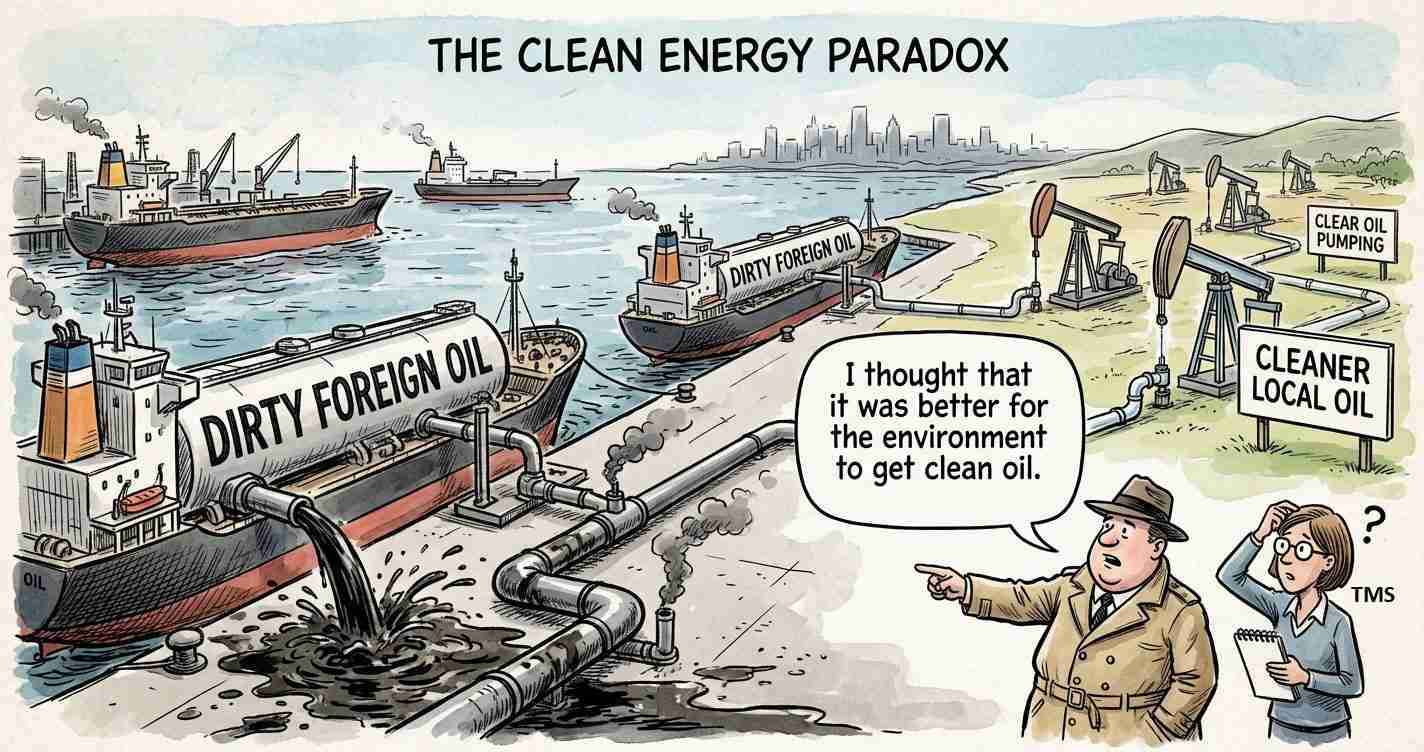
The Trump administration has ordered the restart of California’s Sable Offshore Project by invoking the Defense Production Act, arguing that more than 60% of California’s refined crude comes from abroad and poses a national security risk.
Key takeaways
- Federal directive: The Department of Energy and Interior ordered restart of the Sable offshore pipeline and related operations near Santa Barbara after a 2015 shutdown.
- Security rationale: Officials say >60% of California’s refined oil is imported, creating a national security threat for roughly 30 military installations in the state.
- Legal clash: California officials call the move unlawful and promise litigation, setting up a major test of the DPA versus state environmental authority.
- Economic debate: Administration argues domestic barrels can improve fuel security; critics note global market dynamics and environmental risks.
Restart order and the Sable Oil Project
The Department of Energy and the Interior issued directives clearing the way for Sable Offshore Corp. to restore its pipeline and associated platforms near Santa Barbara — infrastructure that has been offline since a major 2015 spill. Reporting and agency statements describe the order as a move to quickly return drilled but idle barrels to West Coast supply; see coverage from E&E News and Politico.
Officials emphasize that the Sable system “connects three offshore platforms near Santa Barbara to onshore facilities via a pipeline” and that the restart would not require new drilling approvals, potentially allowing faster additions to West Coast crude supplies than building new infrastructure. The Energy Department’s directive is presented as narrowly targeted to existing assets.
Use of emergency powers and the Defense Production Act
President Trump delegated emergency authority to the Energy Secretary, who then invoked the Defense Production Act (DPA), a Cold War–era statute that allows the federal government to direct domestic industry for defense needs. Officials point to risks from disrupted transit routes — including the Strait of Hormuz — as justification; see reporting from E&E News and analysis in Politico.
Administration position: DOE and Interior officials say the DPA action is limited to existing infrastructure and to supplies needed by defense installations. Critics counter that using the DPA to override state regulators stretches the law and could create a precedent for federal intervention in state energy policy.
Administration’s national security argument
Energy Secretary Chris Wright has said that “more than 60% of the crude refined in California now comes from overseas” and called that dependence a “serious national security threat”, noting California hosts about 30 U.S. military installations. For the administration, restarting idle wells and pipelines would bolster fuel security for bases and communities; see statements and context from Fox Business and the Department of Energy fact sheet.
Interior Secretary Doug Burgum has criticized California policies under Gov. Gavin Newsom for shrinking refinery capacity and increasing imports, calling the state an “energy desert” and warning of national security consequences; his remarks are reported via Fox Business and framed in DOE materials linked above.
California’s response and the legal fight
Governor Gavin Newsom and state regulators condemned the federal action as unlawful and dangerous to the coast, accusing the administration of “exploiting the Iran war crisis” to force open a pipeline closed after an environmental disaster. The governor’s office vowed to fight the order in court; see the California governor’s office statement.
Legal analysts say the case will test the scope of federal DPA authority against state powers over environmental protection and public safety. A ruling either way could set a pervasive precedent about federal interventions in state energy and environmental regulation; see reporting by Politico.
Context: production decline, refinery limits and imports
California is a large fuel consumer but in‑state production has declined for decades due to mature fields, local opposition, and strict regulations. A dwindling number of refineries that meet California’s strict fuel standards has increased reliance on imported crude that fits those specs — a dynamic the administration cites in DOE materials and public statements (DOE fact sheet).
Implications for the United States
Economic and consumer effects: Federal officials say adding regional barrels could relieve local supply pressure and, over time, help damp price spikes tied to shipping delays. Economists caution, however, that U.S. pump prices are largely set by global benchmarks and localized supply gains may be limited without broader refinery changes (Fox Business).
National security: The administration argues that securing domestic supply strengthens readiness for ~30 military bases in California and reduces exposure to vulnerable chokepoints like the Strait of Hormuz; reporting and agency materials provide the administration’s rationale (E&E News, DOE).
Federal-state relations: The dispute could reshape limits on federal emergency powers when invoked for energy security, or it could reinforce state control depending on litigation outcomes; analysts highlighted this potential in Politico.
Environmental and safety risks: Opponents warn that reopening infrastructure shut after a spill carries real coastal risks to ecosystems and tourism, and they emphasize that state safety standards exist to prevent recurrence — arguments underscored by the governor’s office statement (California governor’s office statement).
Ongoing developments
The dispute is moving rapidly toward litigation and regulatory fights that will test the balance between the DPA and state environmental authority. As courts and agencies weigh the claims, industry, consumers, and military planners will watch whether the Sable restart materially alters West Coast supply or mainly reshapes federal‑state authority (Politico, E&E News).
“Restarting previously drilled offshore wells could help reduce that dependence while strengthening energy security for military operations across the state,” Energy Secretary Chris Wright said, calling the action narrowly tailored to existing infrastructure (Fox Business).