Tiny glow-in-the-dark find: Scientists identify American pocket shark in Gulf of Mexico
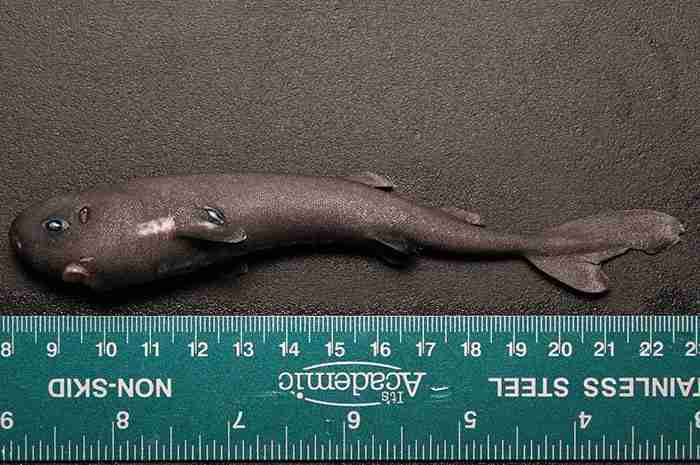
A groundbreaking Gulf of Mexico discovery identified the tiny, bioluminescent American pocket shark (Mollisquama mississippiensis) from a 2010 specimen — a 14‑cm, hand-sized deep‑sea species that underscores vast unexplored ocean biodiversity and the need for continued marine research.
Key takeaways
- Species: American pocket shark (Mollisquama mississippiensis), ~14 cm (5.5 in).
- Discovery: Specimen collected Feb. 2010 in the Gulf of Mexico; formally identified in 2013 by Tulane and NOAA researchers.
- Unique feature: Pectoral “pockets” with luminous fluid and bioluminescent glands near the gills.
- Rarity and significance: Only the second pocket shark species recorded worldwide, highlighting vast unexplored ocean life.
Discovery and how scientists identified the shark
The tiny shark was collected in February 2010 during a Gulf research mission that also studied sperm whales. The preserved animal was later examined and, in 2013, researchers concluded it represented a new species. See the Tulane University news release for the formal announcement.
Because the specimen measured only about 14 centimeters, scientists relied on advanced imaging to study its anatomy. They used X-rays, CT scans and high-resolution synchrotron imaging — including work at international facilities — to reveal bones, skin and internal structures that regular tools could not resolve. For additional context on imaging and specimen details, see the Wikipedia entry for Mollisquama mississippiensis.
Why it’s called the pocket shark
The common name “pocket shark” refers to a pair of small pockets or grooves located behind the pectoral fins. Those pectoral pockets contain a luminous fluid, produced by specialized glands. Scientists hypothesize the fluid can be released or displayed to produce light — possible uses include confusing predators, attracting prey, or communicating with other sharks. See coverage from IFLScience for discussion of these behaviors.
Physical description and bioluminescence
At roughly 14 cm (5.5 inches), the American pocket shark is among the smallest documented sharks. It has a rounded, whale-like head, a gray body with darker fins, and cream-colored areas around the gills. Notable anatomical features include bioluminescent glands near the gill area and within the pectoral pockets. Because live observations are lacking, researchers infer likely behaviors from anatomy and comparisons with related deep-sea species.
“The specimen’s tiny size and luminous structures underscore both its rarity and the degree to which deep-sea life remains mysterious.”
Classification and relation to other sharks
The American pocket shark belongs to the family Dalatiidae, which includes small, deep-sea species such as the cookiecutter shark. Genetic and morphological analyses indicate relationships with other dalatiid sharks, but the ecology and behavior of pocket sharks remain largely unknown due to the scarcity of specimens.
Only two pocket sharks recorded worldwide
Before this Gulf specimen, the only other described pocket shark was Mollisquama parini, first recorded in the Eastern Pacific in 1979. The American pocket shark is only the second species formally recorded, making each specimen extremely valuable for science and conservation.
Why this discovery matters
Finding a new species in U.S. waters expands knowledge of ocean biodiversity, informs deep-sea ecosystem science, and highlights the importance of ongoing, funded research. Collaboration between academic institutions and federal agencies enabled discovery from a mission that was not solely focused on new species collection; see the Tulane University news release for institutional details.
Economic impact
Discoveries like this can stimulate scientific tourism, grant opportunities, technology development, and job growth in science and engineering. High-tech imaging and research infrastructure support workforce and innovation.
Political consequences
The find underscores the role of federal science agencies such as NOAA and supports arguments for continued ocean research funding and cooperative government-academic programs.
Social and cultural effects
A hand-sized, glow-in-the-dark shark captures public imagination, boosting outreach, K–12 education interest, aquarium programming, and local pride — particularly in Gulf communities connected to marine science.
Practical applications for residents
While the species poses no direct public use, improved deep-sea knowledge supports fisheries management, pollution tracking, and ecological forecasting that can affect commercial and recreational fishing and coastal livelihoods.
Research tools and future study
Advanced imaging was essential to identifying this species, demonstrating the value of CT, synchrotron, and other high-resolution tools. Continued investment in ship-based science, delicate sampling gear, submersibles, and international partnerships (including imaging centers) will be key to discovering and studying more rare deep-sea species.
Sources and further reading
- Tulane University news release: Researchers identify new species of pocket shark
- Wikipedia entry for Mollisquama mississippiensis
- IFLScience coverage of pocket sharks
- The Archaeologist blog on the discovery and ocean biodiversity
Bottom line: Researchers say the American pocket shark is a reminder that the ocean still holds many surprises. Continued investment in marine science and cooperative research can help the United States better know and wisely manage those resources.