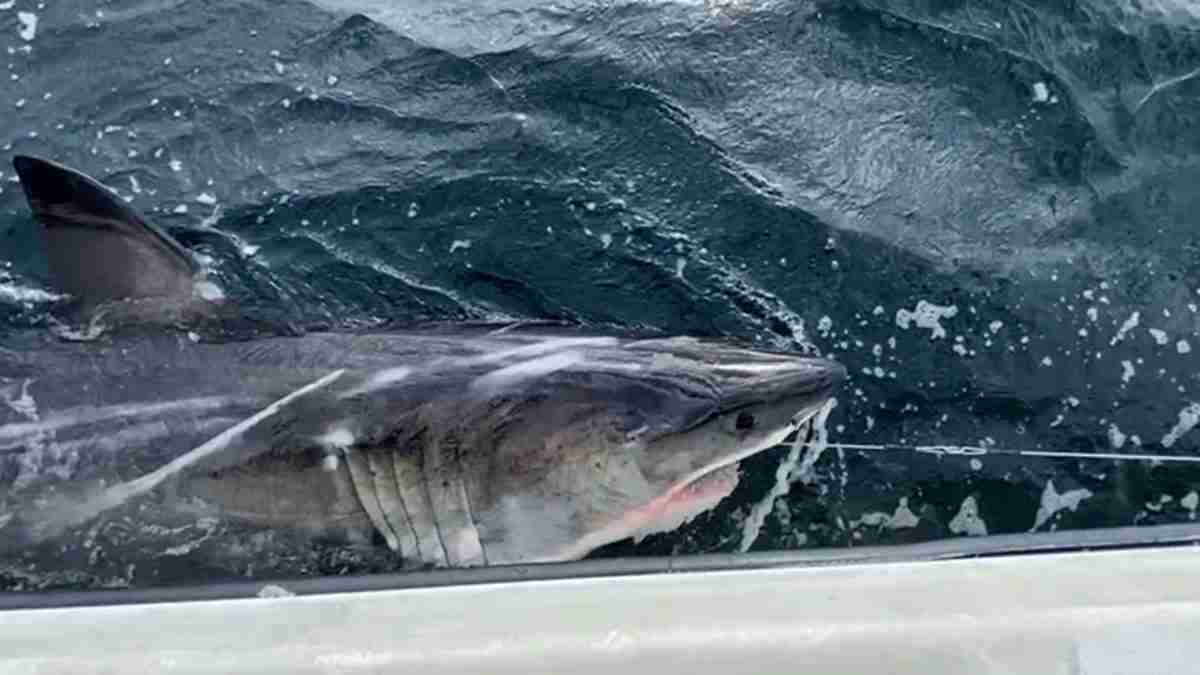
SYDNEY, Canada, July 18 (Nationwide Times) — Ripple is a sub-adult male great white shark whose tracking history has turned into a useful case study in how far these animals can move, and how much of that movement scientists can document with electronic tags.
According to OCEARCH tracking data reported by Fox Weather and other outlets, Ripple was tagged off Mahone Bay, Nova Scotia, on Sept. 30, 2025. He was measured at more than 11 feet long and at nearly 780 pounds. Since then, the shark has shown up at multiple points along the eastern side of North America and into the Gulf, including a ping off the Florida Panhandle on March 3 and another track near the southern Gulf, between Naples and the Florida Keys, on April 15.
What the tracking shows is a broad migration route, not a continuous live map. Tags like the one OCEARCH uses provide location fixes when the shark surfaces and the tag sends a signal. That makes the data valuable for identifying patterns, but it also means exact mileage depends on how the route is measured.
What is Ripple’s route?
The reports supplied with the tracking data describe Ripple moving from Atlantic Canada down the U.S. East Coast and into southern waters. One report said he had traveled from Mahone Bay to New Orleans. Another said he pinged off Jacksonville after traveling nearly 1,770 miles in 25 days. Those figures do not fully match the later Florida and Gulf sightings, and the sources do not explain whether they reflect straight-line distance, route distance, or a total based on tracker-to-tracker locations.
Because of that, the safest conclusion is simple: Ripple has covered a long stretch of the Western North Atlantic and Gulf region since being tagged, but the exact mileage in some secondary reports should be treated carefully.
The specific figure mentioned in the prompt — 350 miles in a week — is not confirmed in the supplied sources.
Why do scientists track sharks like this?
OCEARCH scientists say they track sharks like Ripple to understand migration patterns and how the animals interact with the ocean. In Fox Weather’s reporting, OCEARCH also pointed to a broader dataset from 92 white sharks, saying the Gulf serves as a consistent winter habitat for the Western North Atlantic population.
In that same reporting, OCEARCH said 57 individuals across all life stages spent significant time in the Gulf or the Straits of Florida between December and May. That does not mean every white shark uses the Gulf the same way, but it does suggest the region is a regular stop for a substantial share of the sharks OCEARCH has tracked.
What can a single shark tell us?
Ripple’s path does not prove why white sharks choose one route over another. It does, however, add another data point to a growing picture of seasonal movement. A single shark can show that a corridor is being used, but scientists usually need many tracked animals over time before they can say a pattern is common.
That is why OCEARCH’s broader tracker data matters more than any one shark’s trip. Ripple is notable because his route links Canada, the eastern seaboard, Florida, and the Gulf, but the larger value of the tracking program is the pattern across many sharks.
What should readers take away?
The strongest finding here is not the exact number of miles Ripple has traveled. It is that OCEARCH’s tracking data places a young male white shark moving through a very large stretch of the Atlantic and Gulf, and that the organization says many white sharks use the Gulf region seasonally.
At this point, the public record supplied in these reports supports a broad migration story, not a precise day-by-day route. The data show movement; they do not fully explain the causes behind it.