
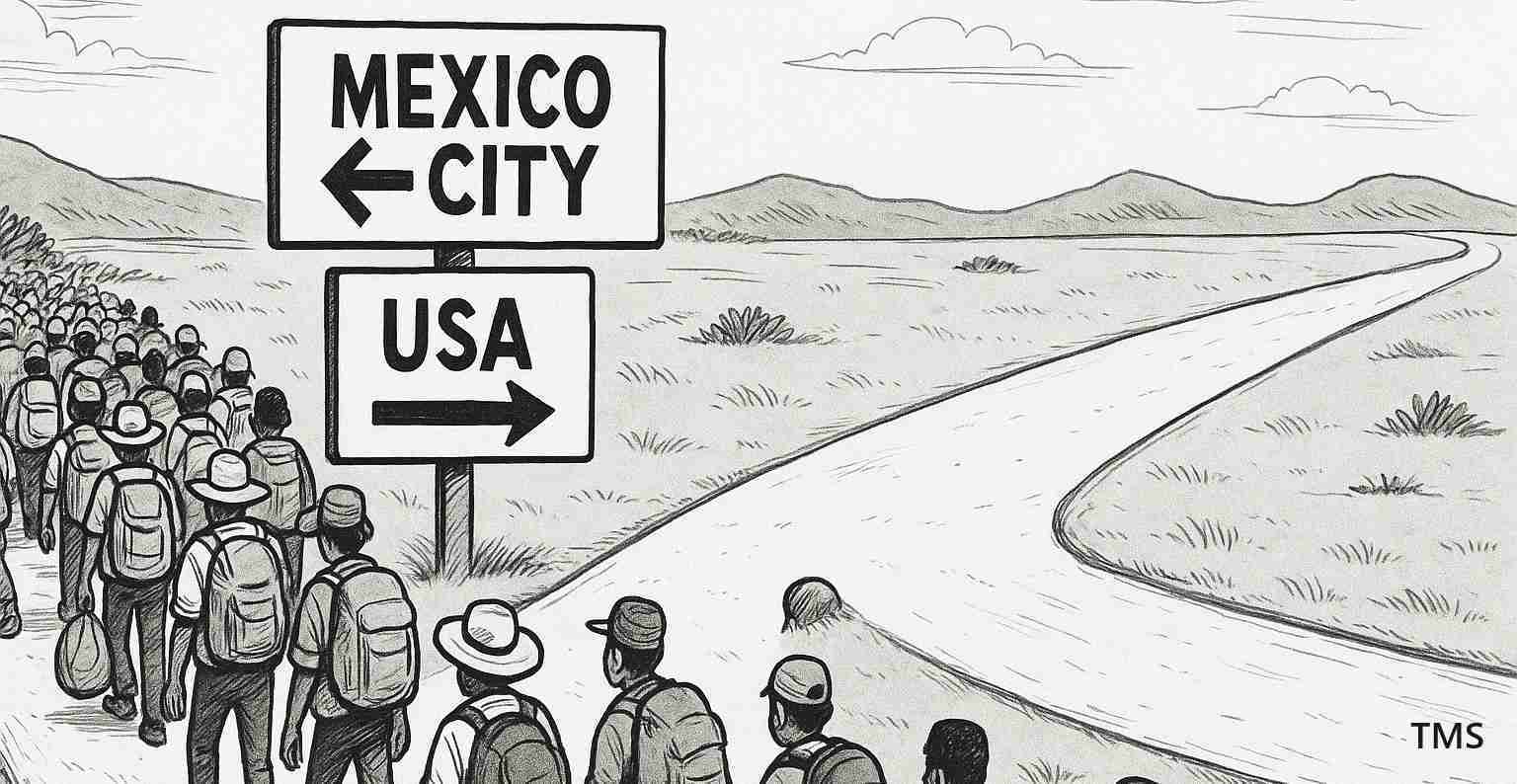
Cuban-led caravan aims for Mexico City as Trump policies deter migrants from US
About 1,200 migrants — mostly Cubans alongside people from several Latin American and African countries — left Tapachula bound for Mexico City, reflecting a migration shift driven by stricter US policies that make the United States a less viable destination.
Key takeaways
- Size and origin: Approximately 1,200 people departed Tapachula, led largely by Cuban migrants; others come from Nicaragua, Venezuela, Haiti, Colombia, Peru and several African countries. Sources: Fox News, Anadolu Agency.
- New destination: The caravan is headed to Mexico City rather than the US border, signaling a shift in long‑standing caravan goals. Reporting: WOLA, El País.
- Drivers: Migrants cite tighter US enforcement, increased deportations and loss of legal entry channels as reasons to seek life in Mexico instead of the United States. Sources: Anadolu Agency, El País.
- Challenges ahead: Migrants face bureaucratic hurdles, corruption and scarce local jobs; some report bribery demands to speed paperwork. Reporting: Fox News, Mexico News Daily.
Main content
Origins and composition
The caravan assembled in Tapachula, a city on Mexico’s border with Guatemala that has long been a bottleneck for migrants arriving from Central and South America. Local reporters and aid groups estimate about 1,200 people took part, with Cubans forming the majority. Additional nationalities include Nicaragua, Venezuela, Haiti, Colombia, Peru and several African countries — coverage on the departures appears in Fox News and Anadolu Agency.
Many caravan members said they left Tapachula to seek stable work and documentation in Mexico City. The capital’s larger informal economy and existing migrant support networks are attractive to people who formerly would have tried to reach the US border, as reported by Mexico News Daily and El País.
A political recalibration: The “Trump effect”
Organizers and migrants point to policy changes under President Donald Trump as a central push factor. They cite tighter enforcement, faster deportations and the rollback of legal entry pathways — including removal of the CBP One appointments system — as reasons many now view the United States as a less realistic destination. Reporting and analysis appear in Anadolu Agency and WOLA.
“Migrants say, ‘And why would I want to go to the United States? They hate us there!’” — field researchers, cited in reporting by WOLA and El País.
Advocacy groups monitoring the region report measurable shifts: some estimate an ~80% drop in northward movement toward the US since the newest policies took effect, with more migrants choosing to remain in Mexico or attempt regularization there (El País, Anadolu Agency).
Mexico as destination, not just transit
For many caravan members, Mexico is no longer a stopover. They hope to secure residency, work permits or asylum status in Mexico City. The capital’s relative economic potential and existing migrant communities promise better prospects than remaining in Tapachula, where jobs are scarce and services overloaded (Mexico News Daily, Fox News).
Yet the road to legal status is complex. Humanitarian groups and reporters describe long waits, confusing rules and corrupt intermediaries who offer to fast‑track paperwork for fees. Several migrants said they were approached by people outside government offices demanding between 3,000 and 20,000 pesos (~$150–$1,000) to “help” with documents (Fox News, WOLA, El País).
Self-organization and information flows
Unlike some past caravans with visible NGO or political backers, this movement appears largely self-organized via social media and word of mouth. Decentralized mobilization enabled rapid movement but left participants vulnerable to misinformation and logistical shortfalls, aid organizations warn (Fox News, El País).
Tapachula’s growing strain
Tapachula remains a pressure point as it continues to host new arrivals and receive deportees returned from the United States, worsening the humanitarian picture. Officials and activists warn that without improved processing and additional resources, more migrants will undertake risky journeys toward central Mexico or move in large groups (Fox News, WOLA).
Policy reactions and cross-border dynamics
Mexican authorities have faced criticism for inconsistent approaches. Some officials pledge to process asylum and residency requests, while others note resource constraints and local resistance. On the US side, officials maintain that strict enforcement reduces irregular arrivals; analysts say those policies shift flows into Mexico and create a regional challenge requiring coordination (Anadolu Agency, Mexico News Daily).
Sources and reporting
This report draws on multiple outlets and regional experts: Fox News, Anadolu Agency, WOLA, El País, Mexico News Daily, and Power Line Blog.
Implications for United States of America
Economic impact: Fewer migrants attempting to cross into the US could ease short‑term pressures on border processing and local budgets in border states, while shifting costs and labor competition concerns to Mexico. Analysts note potential effects on US employers who rely on immigrant labor (El País, WOLA).
Political consequences: Stricter border policies may reduce arrivals — a win for enforcement‑focused constituencies — but they also transfer humanitarian and logistical burdens into Mexico, creating a political tradeoff for US policymakers (Anadolu Agency, WOLA).
Social and cultural effects: The perception that the US is closed or hostile may harden expectations, reduce future northward movement, and alter family reunification dynamics and diaspora engagement (El País).
Practical applications: US agencies may need to adapt planning assumptions: fewer immediate arrivals at the border, continued contingency planning for shifts back north, and expanded cooperation with Mexico on asylum processing, work authorization and anti‑corruption efforts could help address root causes and reduce irregular flows (WOLA, Mexico News Daily).
The Cuban‑led caravan from Tapachula is a visible sign migration patterns are shifting. How long the change will last, and whether it prompts coordinated regional policy responses, remains uncertain — but the movement raises immediate questions for US border strategy, labor markets and humanitarian planning (Fox News, El País).



