Adamuz high-speed crash: Iryo train derails, strikes Renfe service in Córdoba
A high-speed Iryo train derailed near Adamuz in Córdoba province on January 18, 2026, crossing onto an adjacent line and colliding with a Renfe service, killing at least 39 people and injuring about 245 amid large rescue operations.
- Collision: Iryo 6189 derailed on a straight section and struck a Renfe train bound for Huelva.
- Casualties: At least 39 dead and roughly 245 injured, with dozens seriously hurt and many hospitalized.
- Site and timing: Crash near Adamuz on Jan. 18, 2026 — about 10 minutes after Iryo left Córdoba‑Julio Anguita station.
- Investigation: Officials probe causes on a recently renovated stretch; probes will examine recorders, track work and signaling.
What happened
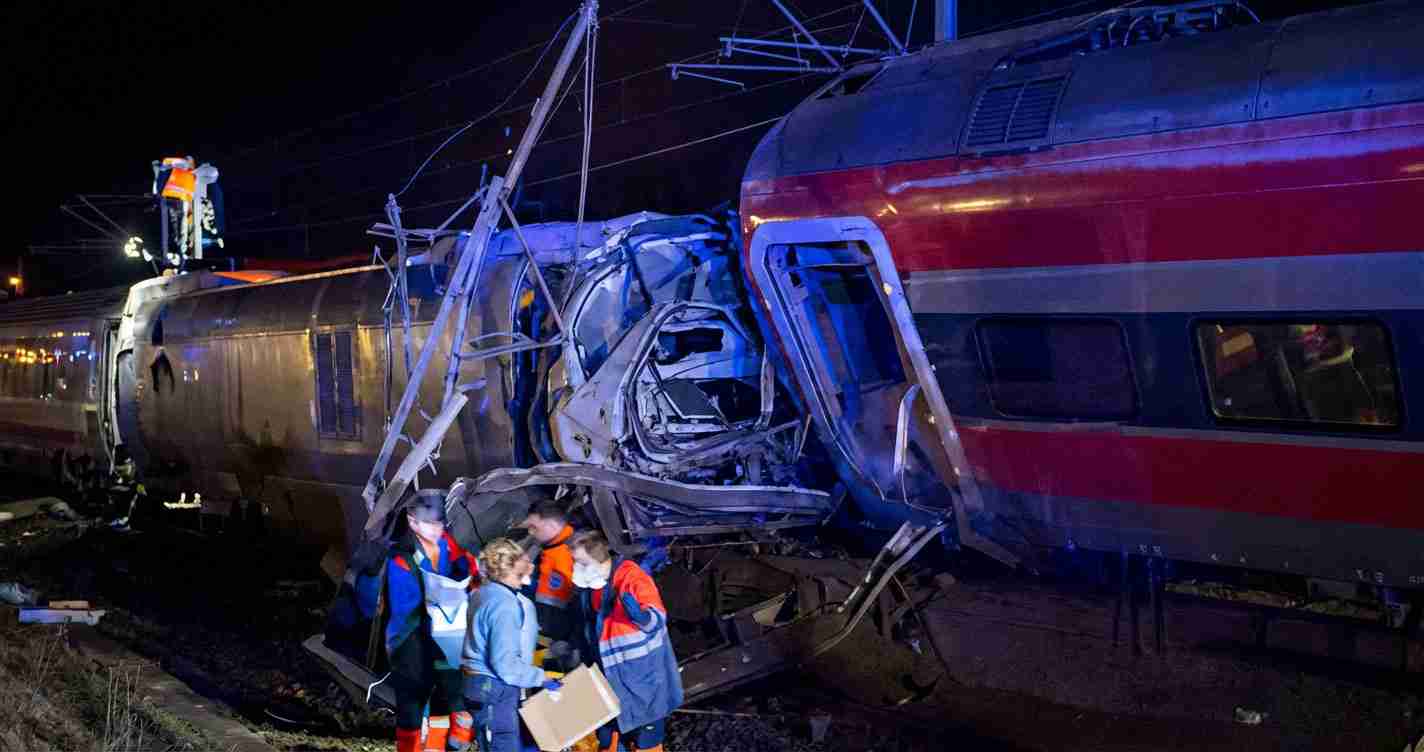
On January 18, 2026, the high-speed Iryo service Iryo 6189, traveling from Málaga to Madrid, derailed on a straight stretch of track near Adamuz and crossed onto an adjacent line, where it struck an oncoming Renfe train bound for Huelva. The impact caused the Renfe train to leave the rails and descend a roughly 4‑metre (13‑foot) embankment, with the first two carriages suffering the worst damage.
Eyewitness accounts described mangled carriages and emergency teams working through the night, including specialized units to reach trapped passengers. Spanish authorities coordinated a major rescue and recovery operation at the scene. (Sources: The Independent, Wikipedia, WGLT.)
Timing and location
The derailment occurred near the town of Adamuz in Córdoba province on January 18, 2026. Reports place the incident roughly 10 minutes after the Iryo departed Córdoba‑Julio Anguita station — about 360 km south of Madrid — on a straight section of recently renovated track.
Casualties, injuries and hospital response
Authorities reported at least 39 fatalities and about 245 injured, with roughly 75 hospitalized and around 15 in critical condition in some accounts. Rescue teams continued searching as medical centers treated dozens; the hardest-hit areas were the front carriages of the Renfe train, where the descent down the embankment complicated extraction. Among the confirmed dead was the Renfe driver, reported to be 27 years old. (Sources: The Independent, Wikipedia, WGLT.)
Accident details
Officials and early media accounts indicate the Iryo train derailed on a straight section and crossed onto a neighboring track, colliding head-on with the Renfe service. The Renfe train left the rails and plunged down a steep embankment; the first two carriages absorbed most of the force, complicating rescue efforts and access to trapped passengers.
Transport Minister Óscar Puente described the derailment as “really strange,” noting the incident occurred on a straight section rather than a curve — and on a corridor renovated in May 2025 that officials said was in “perfect condition.”
The Iryo train was relatively new (around four years old), intensifying questions about how a modern train could derail on recently upgraded track. Investigators will examine mechanical systems, track and switch components, signaling and human factors to determine how multiple safeguards might have failed or been bypassed.
Investigation and government response
Spanish authorities suspended high-speed services between Madrid and Andalusia the day after the crash to secure the scene for forensic and technical teams. Prime Minister Pedro Sánchez cleared his schedule to focus on the disaster; the Defence Ministry mobilized the Military Emergencies Unit, deploying 15 vehicles and 40 personnel to assist rescue and recovery. Adif, the rail infrastructure operator, established assistance centers for relatives at stations including Atocha (Madrid), Seville, Córdoba, Málaga and Huelva.
Investigators plan to analyze onboard data recorders, signaling logs, track components, crew interviews and maintenance records from the May 2025 renovation. Officials cautioned that a full technical inquiry could take weeks to complete — Transport Minister Puente estimated around one month — and urged the public to avoid speculation while evidence is gathered. (Sources: Wikipedia, WGLT.)
Accountability and industry implications
The crash has raised immediate calls for transparent public reporting and accountability from political leaders, rail operators and contractors involved in the recent renovation. Questions will focus on whether installation, maintenance, oversight or contractor performance contributed to the disaster — and whether regulatory standards were met. The involvement of a private operator (Iryo) and the national carrier (Renfe) could complicate legal and operational responsibility as families seek answers and compensation.
Implications for the United States
Economic: U.S. firms that supply rail components or services may be affected if technology or parts are implicated, and insurance or liability ripple effects could touch American investors in European rail suppliers.
Political: The Adamuz crash may influence U.S. debates about rail oversight, federal funding, and accountability for infrastructure projects — especially among audiences emphasizing fiscal responsibility and safety.
Practical lessons: Transit agencies and state DOTs in the U.S. can review maintenance records, safety protocols, redundancy in systems, emergency plans, third-party audits and whistleblower protections to reduce risk in major projects.
Reporting and ongoing coverage
Rescue operations and forensic work continued after initial reports as officials updated casualty figures while recovering victims and treating injured passengers. Final tallies and definitive causes await the completion of technical investigations and data analysis.
For this story: initial detailed reporting and updates were sourced from The Independent, a compiled timeline and aggregated reporting on Wikipedia, and local coverage of casualty updates including WGLT. Investigations by Spanish authorities remain active, and additional official statements and technical findings are expected in the coming weeks.