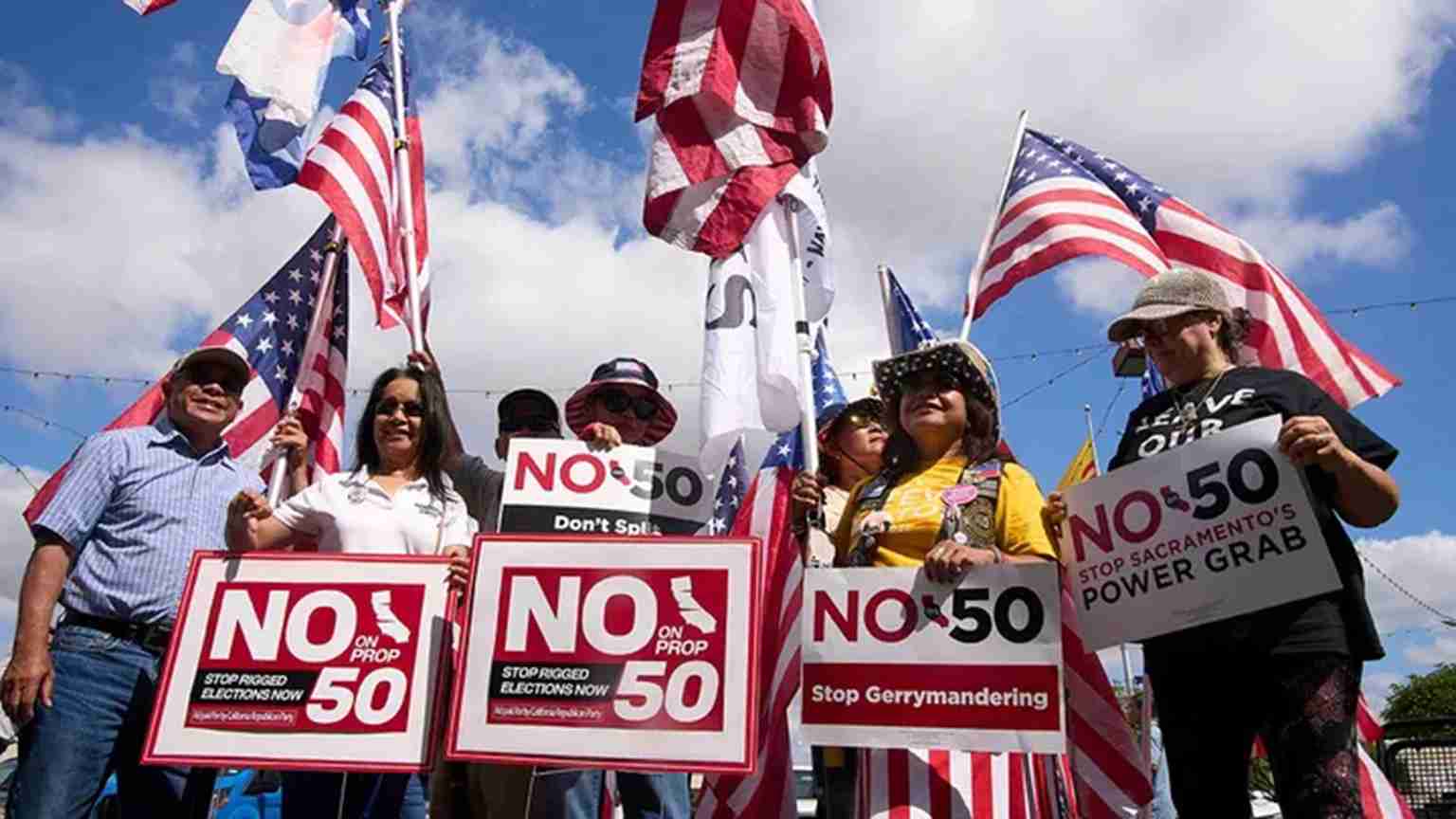
DOJ Joins Lawsuit Challenging California’s New Congressional Map, Alleges Racial Gerrymandering
The Department of Justice has intervened in a challenge to California’s new congressional map, accusing Gov. Gavin Newsom and Secretary of State Shirley Weber of racial gerrymandering under Proposition 50 and seeking an injunction to block the plan for 2026.
- DOJ intervention: Federal Civil Rights lawyers joined the GOP suit arguing race — particularly Latino data — was used to shape districts and gain partisan advantage.
- Proposition 50: Passed Nov. 4, 2025, it returned map-making to the legislature, prompting the contested new map.
- Potential impact: Plaintiffs say the plan could shift up to five Democratic-leaning House seats and reduce Republican representation sharply.
- Relief sought: DOJ asks a federal court for an injunction to stop the map from being used in the 2026 elections.
DOJ Intervention and the Case Overview
On Thursday the Department of Justice filed to join a lawsuit that began as a challenge by the California Republican Party to California’s new congressional map. The federal filing expands the dispute into federal court, joining the existing case Tangipa et al. v. Newsom and seeking an injunction to prevent the map’s use in the 2026 congressional elections.
Key phrase: DOJ lawyers are arguing that map-drawing prioritized racial demographics over traditional redistricting principles and thus violates the Equal Protection Clause.
What the DOJ Alleges
Federal Civil Rights Division attorneys contend the legislature and officials placed too much weight on race — especially Latino population data — as a proxy for shaping districts, rather than following neutral criteria such as compactness and preserving communities of interest. The complaint warns that using race as the predominant factor runs afoul of the Fourteenth Amendment.
“The complaint says officials prioritized racial demographics over traditional mapmaking rules like compactness and keeping communities intact.”
DOJ and allied plaintiffs also contend the effect is partisan: filings say the plan could add up to five Democratic-leaning seats while shrinking Republican representation, potentially reducing Republicans from nine seats to as few as four in California’s 52-member delegation. Reporting and summaries of the filings note these partisan-impact claims in detail (see Long Island NY summary and San Francisco Standard).
How Proposition 50 Changed the Map Process
Proposition 50, approved by voters on Nov. 4, 2025, suspended California’s independent redistricting commission and returned congressional map‑drawing authority to the Democratic‑controlled state legislature and governor. Supporters framed Prop 50 as a check on Republican-drawn maps elsewhere; opponents warned it opened the door to partisan mapmaking in California.
Coverage of Prop 50’s passage and its role in this dispute is available from the San Francisco Standard and other outlets including WRAK / iHeart.
Newsom’s Defense and Public Reaction
Democratic response: Gov. Newsom and allies say the map responds to long‑standing concerns about minority representation and argue attention to Latino population concentrations was intended to protect communities’ voting strength. Supporters framed Prop 50 as “California’s answer” to perceived GOP gerrymanders in other states.
Critics’ response: Republicans, civil-rights groups and conservative legal organizations backing the challenge call the map a partisan power grab cloaked as minority protection, arguing the legislature used race as a proxy to create districts likely to elect Democrats. See coverage from Fox News and Townhall.
Newsom’s office publicly criticized the lawsuit, saying challengers “lost at the ballot box” and urging courts to respect the voters’ decision on Proposition 50 (reported in multiple outlets).
Legal Remedies and the Case Path
The DOJ has asked a federal court for an injunction to block California from implementing the new map in 2026. The federal filing joins the existing state-court litigation and expands review under federal constitutional standards. If a court finds race was the predominant factor and strict scrutiny is not met, the plan could be struck down and the losing side is expected to appeal — potentially up to the U.S. Supreme Court.
Practical note: If a court pauses the map, California may revert to last cycle’s lines or an interim plan, creating uncertainty for campaigns and voters who must plan for multiple possible maps as litigation proceeds (see coverage in ACLJ and San Francisco Standard).
National Stakes and Political Significance
The dispute intersects a broader national fight over redistricting. While recent high-profile cases in states such as Texas and North Carolina involved maps critics say favored Republicans, California’s case flips the script by raising questions about whether race-based considerations can be used to achieve partisan results. The DOJ’s involvement signals heightened federal interest in policing the line between protecting minority voting rights and preventing racial gerrymandering that masks partisan aims.
Potential consequences: A ruling for the DOJ could limit how states may use race in redistricting and curb efforts that mix racial data and partisan goals; a ruling for Newsom could embolden legislatures to redraw maps with demographic aims and weaken independent commission models.
Implications for Policy, Politics and Voters
Electoral and economic impacts: If the map stands, Democrats could gain several House seats, shifting narrow majorities that determine federal policy on taxes, spending, regulation and immigration.
Social and cultural effects: The case will shape perceptions about minority representation — some advocates fear maps that split communities reduce influence while others worry race-focused mapmaking could be used mainly for partisan advantage.
Practical advice for voters and campaigns: Expect uncertainty: campaigns, party organizations and election officials should plan for multiple possible maps and timelines while litigation proceeds.