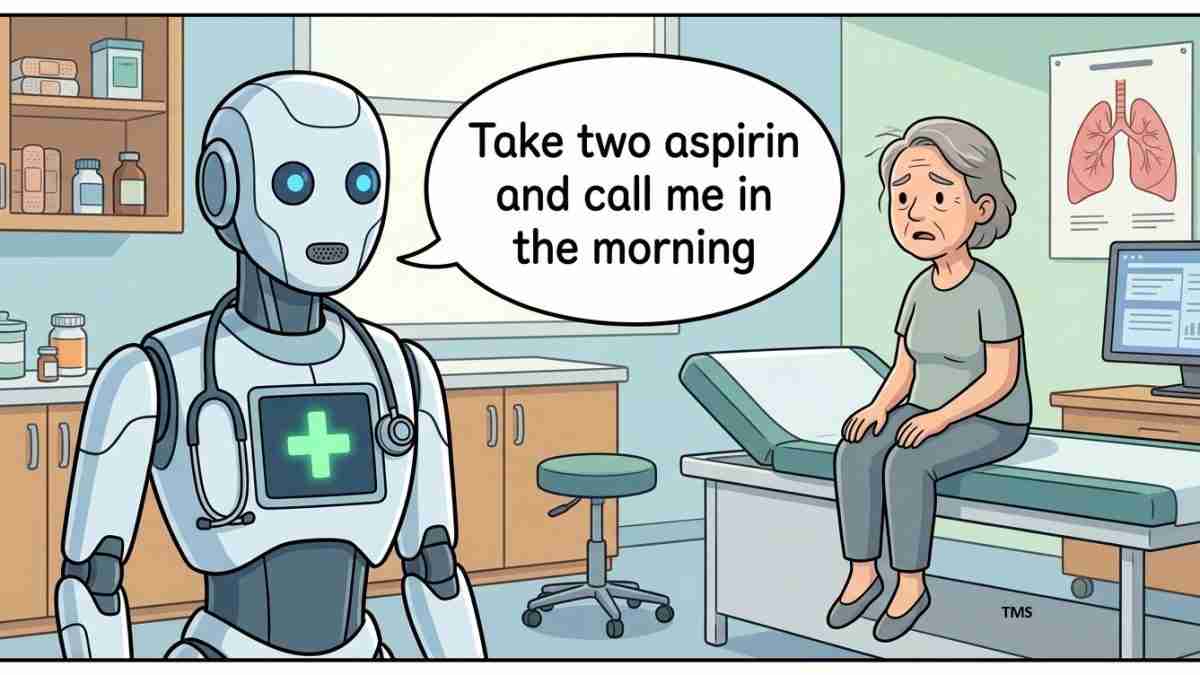
NEW YORK, July 29 (Our New York News) — For many patients, the biggest change from AI may not be a robot in the exam room. It may be a doctor who has better tools to spot disease earlier, match treatment more closely to a person’s body, and watch for problems between visits.
An IEEE report says the areas most likely to matter are personalized medicine, genetic engineering and gene therapy, and accessible early disease diagnostics and biomarkers. The report ranked those areas highest for impact, likelihood of success, maturity and adoption.
In plain terms, personalized medicine means care shaped around the individual rather than the average patient. Biomarkers are measurable signs in the body, such as signals in blood or tissue, that can help point to disease or track how it is changing. The IEEE report says advances in these areas could help reduce preventable chronic disease and improve personalized clinical outcomes over the next five to 10 years.
The report also says health technology could spill into everyday life in other ways. It points to better food safety and greater access to high-quality, nutrient-dense foods, with AI-enhanced tools helping support personalized nutrition.
Peer-reviewed review articles on PubMed Central say AI is already being used in modern medicine for disease detection, personalized care, drug discovery, predictive analytics, telemedicine and wearable health technologies. Those reviews say AI can analyze electronic health records, medical images and genomic profiles to find patterns, predict how disease may progress and recommend better treatment strategies.
That is why many researchers see AI and precision medicine as closely linked. One review says the two fields are converging in a way that could greatly expand highly personalized diagnostic and therapeutic information for clinicians and patients. Another says AI-enabled tools may improve diagnostic accuracy, optimize treatment strategies and improve patient outcomes.
The IEEE report also says the shift will not depend on technology alone. It lists biotechnology, digital health, agricultural drones and personalized nutrition as enablers. It also names privacy and security worries around health data, especially data used for public-health prevention, along with a status-quo culture, as major barriers.
For a normal patient, the clearest near-term change may be in when care happens, not just how. Reviews in PubMed Central say short-term uses of AI include precision imaging, while medium-term uses could include larger-scale precision imaging, synthetic biology and healthcare customization. Longer-term uses could include genomics medicine, AI-driven drug discovery and new curative treatments.
The bottom line is that AI is more likely to change healthcare by making it more targeted and more proactive than by replacing doctors. The strongest signals in the sources point to earlier diagnosis, more tailored treatment and better monitoring as the changes people are most likely to notice first.