
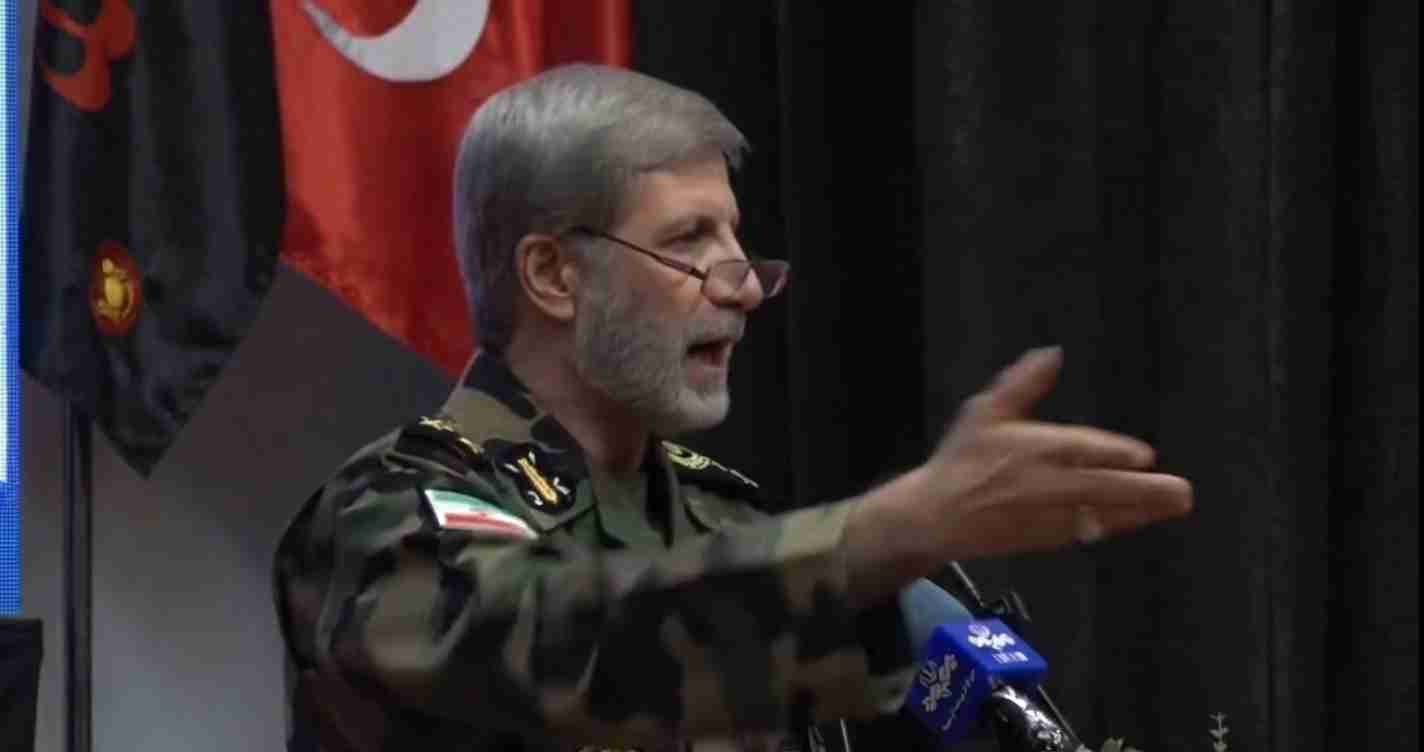
Iran Army Chief Warns of Preemptive Action After Trump’s “Locked and Loaded” Warning
Iran’s army chief, Maj. Gen. Amir Hatami, warned Tehran may take preemptive military action in response to escalating hostile rhetoric and perceived meddling by the United States and Israel after President Trump said the U.S. was “locked and loaded.”
Key takeaways
- Preemptive warning: Maj. Gen. Amir Hatami said Iran could respond with preemptive military action if hostile rhetoric and perceived interference continue (Military.com, Euronews, PressTV).
- Tied to U.S. rhetoric: Hatami’s comments followed President Trump’s “locked and loaded” remark about intervening if Iran violently suppresses protesters (Military.com, Euronews, CGTN).
- No verified strike: Reporting so far documents threats and readiness claims; there is no open-source evidence of a new preemptive strike (Military.com, Euronews, CGTN).
- Risk of escalation: Analysts warn rhetoric can deter but also raises miscalculation risks between Tehran, Washington and regional actors.
Who is Maj. Gen. Amir Hatami and why his role matters
Maj. Gen. Amir Hatami leads Iran’s regular army (Artesh). He assumed the post after a June conflict that Iranian outlets described as a 12‑day war, in which Israeli strikes damaged facilities and killed senior commanders. Hatami is the first regular army officer to hold a top role historically dominated by the Islamic Revolutionary Guard Corps (IRGC), a development analysts interpret as an attempt to balance military command and demonstrate unified defense capability (Military.com, Euronews, PressTV).
What Hatami said and how state media framed it
Speaking to military students at Iran’s Army Command and Staff University, Hatami warned that Tehran views the “intensification of the enemies’ rhetoric” as a real threat and said Iran “will not leave its continuation without a response.” State and state‑aligned outlets quoted him:
“I can say with confidence that today the readiness of Iran’s armed forces is far greater than before the war. If the enemy commits an error, it will face a more decisive response, and we will cut off the hand of any aggressor.”
State media coverage emphasized defense and deterrence, framing the remarks as a warning to adversaries rather than a declaration of imminent offensive action (Military.com, Euronews, PressTV, CGTN).
Why Hatami linked his warning to Trump’s “locked and loaded” remark
President Trump publicly said the U.S. would “come to [the protesters’] rescue” and was “locked and loaded” if Tehran used violence against demonstrators. Iranian officials and state media cited those public comments — along with statements from Israeli leaders — as direct interference and justification for Hatami’s deterrent framing. Tehran presents the response as raising the costs for any external actor seeking to exploit domestic unrest (Military.com, Euronews, NDTV, CGTN).
Context: June 12‑day conflict and Iran’s military posture
In June, a confrontation described by Iran and some foreign reports as a 12‑day war left Iranian facilities damaged and senior military figures killed. Iran said it launched missile and drone strikes and later retaliatory operations. Iranian commanders now claim the country has rebuilt and improved readiness; Hatami’s remarks stress that Iran’s deterrent is stronger now than before June, intended to warn adversaries that new attacks or perceived violations could meet faster and tougher responses (Military.com, PressTV, Euronews).
Domestic pressures: economy and protests
Iran faces severe economic strain: the rial has plunged, and prices for food and basics have risen sharply, fueling protests across multiple cities. International outlets describe unrest as a challenge to the theocratic system; Iranian officials acknowledge protests but say some unrest is “planned by the enemies.” The government has offered limited cash relief while warning it will crack down on what it labels riots (PressTV, TheNewRegion, CGTN, Euronews).
How international and Iranian sources differ
International outlets such as Military.com (AP), Euronews and NDTV frame Hatami’s language as deterrence linked to Trump’s comments and the June conflict. State and state‑aligned Iranian outlets emphasize defense, sanctions and foreign plots as causes of economic pain and downplay popular support for rioters (PressTV, CGTN). The sources agree on the content of Hatami’s remarks but differ in emphasis.
No open evidence of new military action — so far
Verified reporting to date documents warnings, readiness claims, and deterrence messaging; there is no verified open‑source evidence that Iran has launched a preemptive strike in direct response to the rhetoric. Analysts caution rhetoric can shore up domestic support or deter adversaries, but it also increases the risk of miscalculation (Military.com, Euronews, CGTN, PressTV).
Implications for the United States of America
National security risks: Hatami’s warning raises the prospect of miscalculation among Tehran, Washington and Israel. U.S. officials must weigh the credibility of Iran’s threats against the danger of being drawn into wider conflict; measured diplomacy and deterrence planning are likely priorities (Military.com, Euronews).
Policy and posture: U.S. leaders face choices between public signaling (e.g., “locked and loaded”) that supports protesters and private diplomacy that seeks to lower tensions; public rhetoric can deter but may also be cited by Tehran as justification for escalation (NDTV, CGTN).
Regional stability and allies: Rising rhetoric may force increased vigilance across the Gulf, Eastern Mediterranean and cyberspace. Israel is likely to remain on high alert; missteps could disrupt oil markets and raise costs for consumers (Military.com, Euronews).
Domestic politics: U.S. lawmakers and voters prioritizing stability will scrutinize the administration’s balance of deterrence and diplomacy; the situation tests the ability to protect U.S. interests without triggering open war.
Reporting notes and sources
This report is based on international coverage and statements carried by Iranian state media. Primary reporting and analysis were drawn from Military.com (AP), Euronews, PressTV, CGTN, TheNewRegion, and NDTV. Additional video and documentary material referenced: YouTube.
Further developments may change the picture quickly; reporting will continue as officials on all sides issue new statements or actions.



